

Tires don't wear out evenly on their own.
Some spots take more stress than others, based on how your car sends power to the wheels.
That's why tire rotation matters, and why the right pattern depends on your vehicle.
This guide walks you through tire rotation patterns for FWD, RWD, AWD, 4WD, and trucks.
You'll also learn the difference between directional and non-directional tires, plus a few tips to keep your tires healthy for longer.
I've spent enough time under cars and reading tread wear to know one wrong rotation can cost you months of tire life.
So if you've ever wondered which pattern fits your car, or how often to do it, you're in the right place.
Let's clear it up, step by step.
What Is a Tire Rotation Pattern?
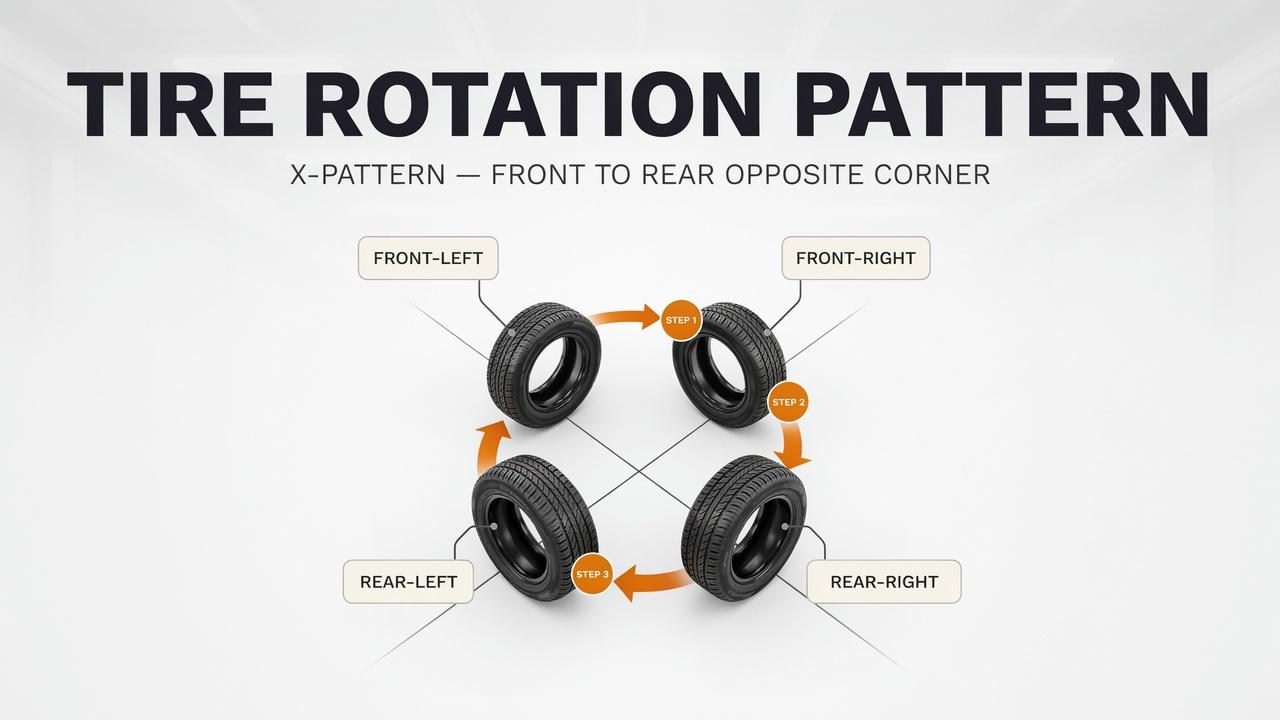
A tire rotation pattern is the plan that decides how tires move around your car.
Each tire wears differently. Front tires handle more steering. Rear tires handle more braking. This causes uneven wear over time.
A rotation pattern fixes this. It moves each tire to a new spot. This spreads the wear more evenly across all four tires.
Common patterns include a front to back swap or an X shaped swap.
The right pattern depends on your car's drive type and tire design. Some tires are directional, so they can only be placed certain ways.
Following the correct pattern helps tires last longer and keeps handling steady.
Most car or tire makers list the right pattern in the owner's manual.
Tire Rotation Pattern for Front-Wheel Drive (FWD)
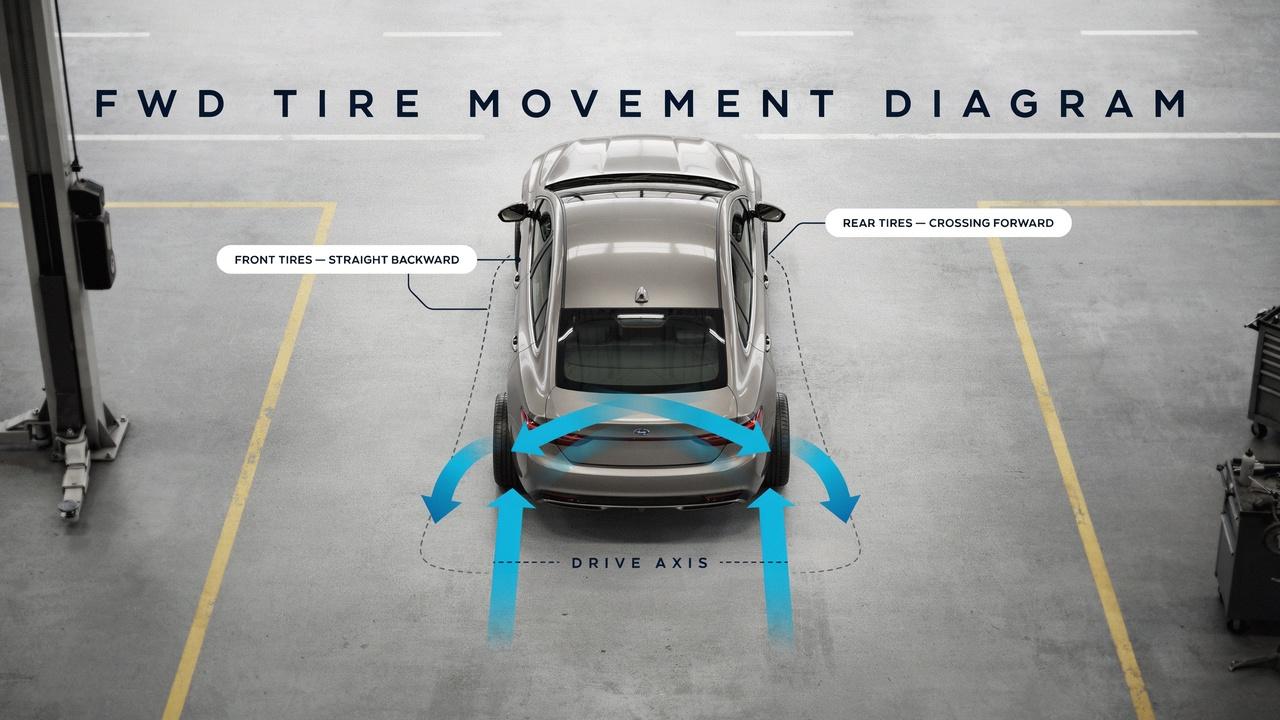
FWD vehicles put more strain on front tires, so rotation moves them to the back while crossing the rear pair forward. This keeps wear balanced.
Forward Cross Pattern
In a forward cross pattern, the front tires move straight back to the rear axle.
The rear tires move up to the front, but they switch sides as they go.
This crossing step matters. Front tires wear faster because they steer and carry more engine weight.
Moving them straight back, without crossing, would not fix the wear difference fast enough.
FWD Tire Rotation Pattern Chart
Here is a simple way to picture the movement
| Starting Position | Moves To |
|---|---|
| Front Left | Rear Left |
| Front Right | Rear Right |
| Rear Left | Front Right |
| Rear Right | Front Left |
This pattern works for most FWD cars and crossovers with non-directional tires of the same size on all four corners.
Tire Rotation Pattern for Rear-Wheel Drive (RWD)
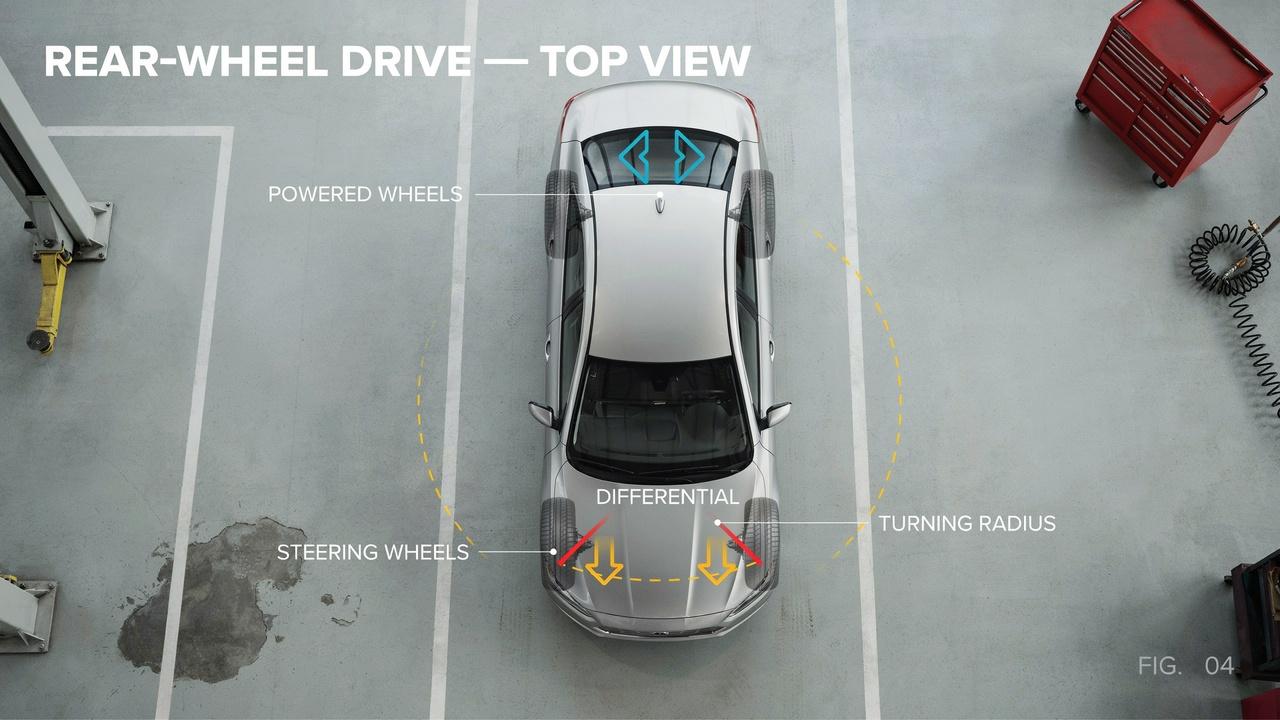
RWD vehicles wear their rear tires faster since power runs through them. Rotation crosses the front tires to the back to spread that wear out.
Rearward Cross Pattern
The rearward cross pattern works in the opposite direction of the forward cross. Rear tires move straight up to the front axle.
Front tires move to the back, crossing sides as they go.
This balances the extra grip and traction demand placed on the rear tires.
RWD Tire Rotation Pattern Chart
| Starting Position | Moves To |
| Rear Left | Front Left |
| Rear Right | Front Right |
| Front Left | Rear Right |
| Front Right | Rear Left |
This pattern suits sports cars, trucks with rear-wheel drive only, and other RWD setups with matching tire sizes front and back.
AWD, 4WD, and 4×4 Tire Rotation Pattern
All four wheels share power in AWD and 4WD vehicles, so every tire needs a turn at each position to wear evenly over time.
AWD Tire Rotation Pattern
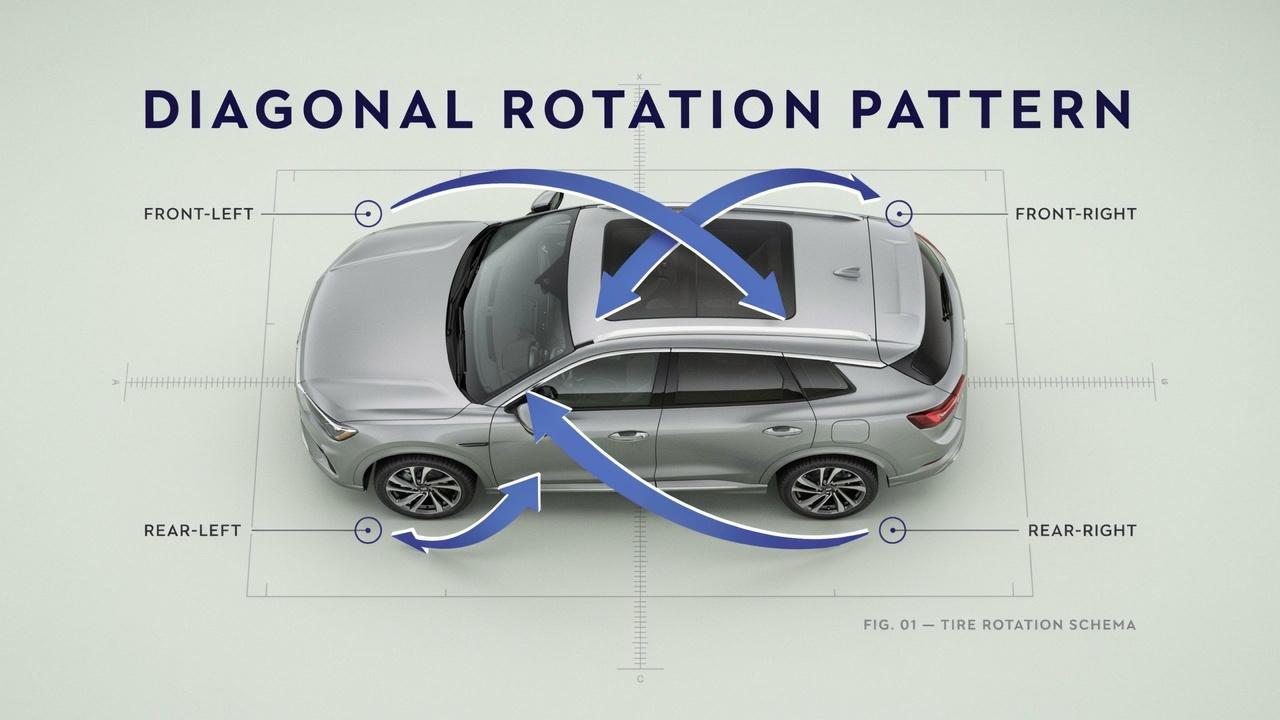
AWD systems send power to all four wheels at once, often shifting torque based on road conditions.
This causes wear patterns that differ slightly at each corner.
A full X-pattern rotation works best here.
Each tire moves diagonally across the vehicle, touching every position over a few rotation cycles.
4WD and 4×4 Tire Rotation Pattern
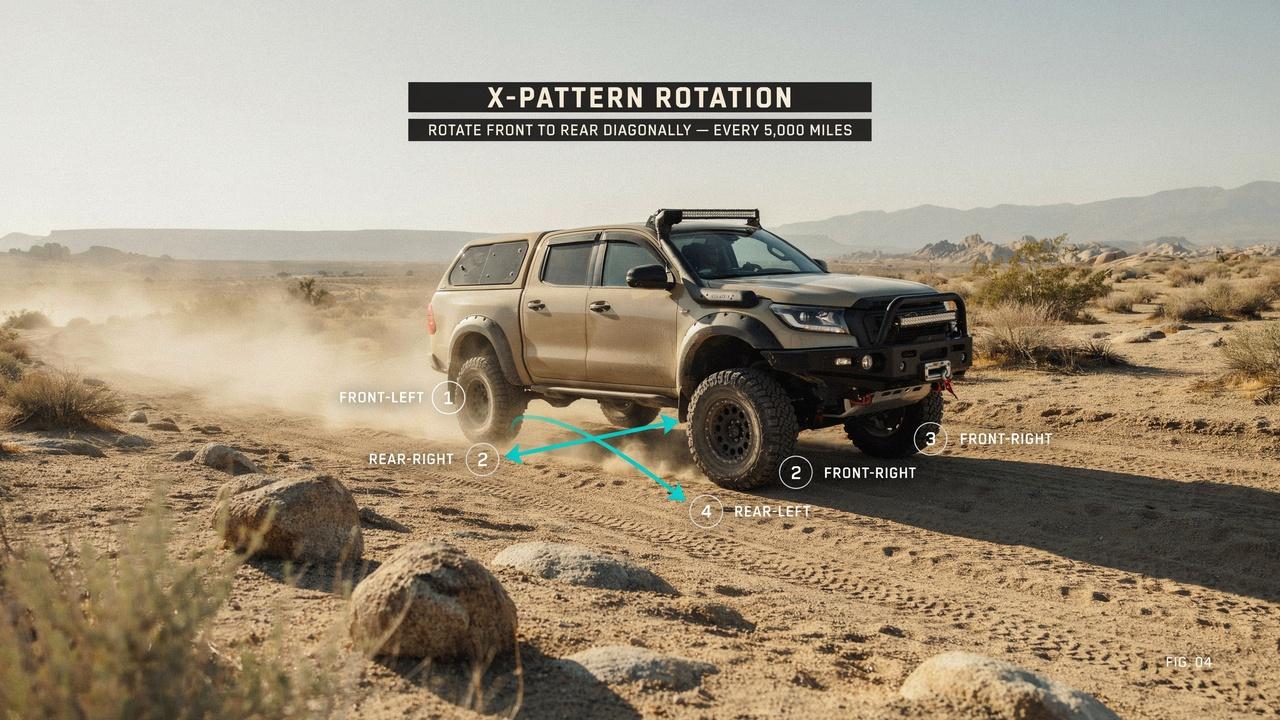
4WD and 4×4 trucks often use this same X-pattern, since power can reach any wheel depending on the drive mode selected.
Front and rear tires also sometimes carry different loads due to towing or off-road use.
Checking tire size and tread depth before rotating helps confirm the X-pattern is still the right fit.
AWD/4WD Tire Rotation Pattern Chart
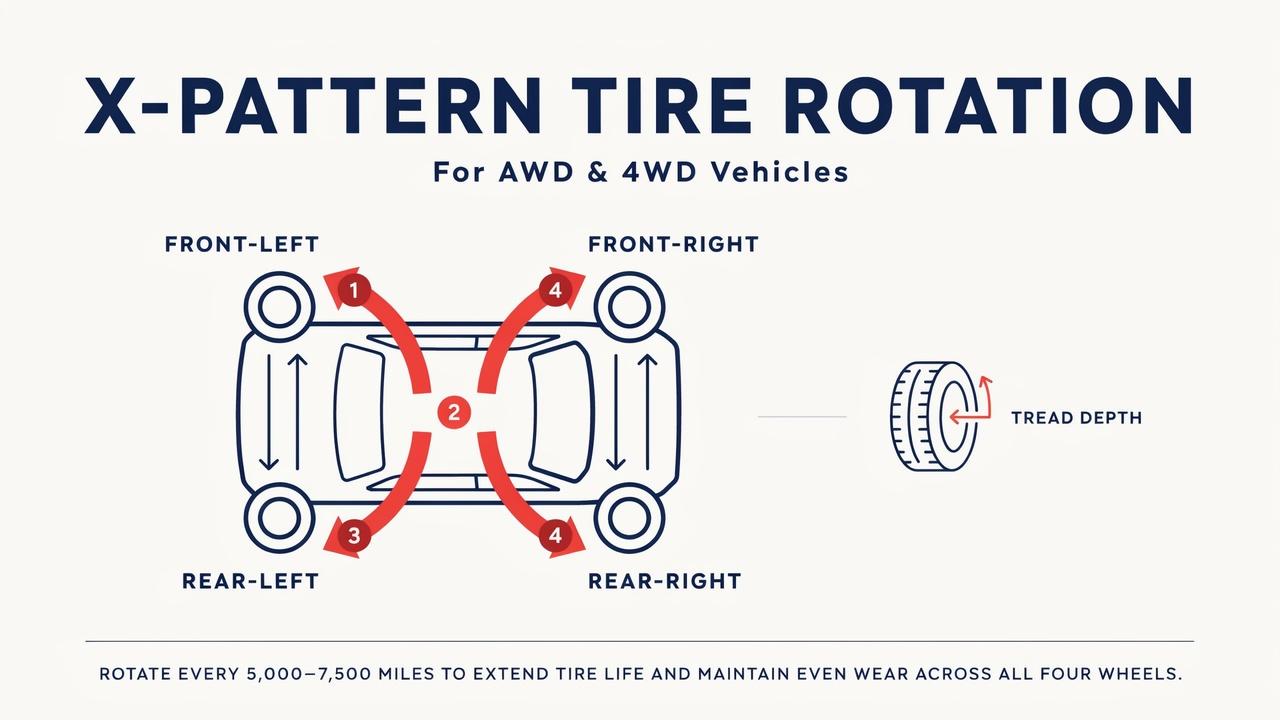
| Starting Position | Moves To |
| Front Left | Rear Right |
| Front Right | Rear Left |
| Rear Left | Front Right |
| Rear Right | Front Left |
This X-pattern rotation gives every tire a turn on each axle and on each side of the vehicle.
Truck and 5 Tire Rotation Pattern
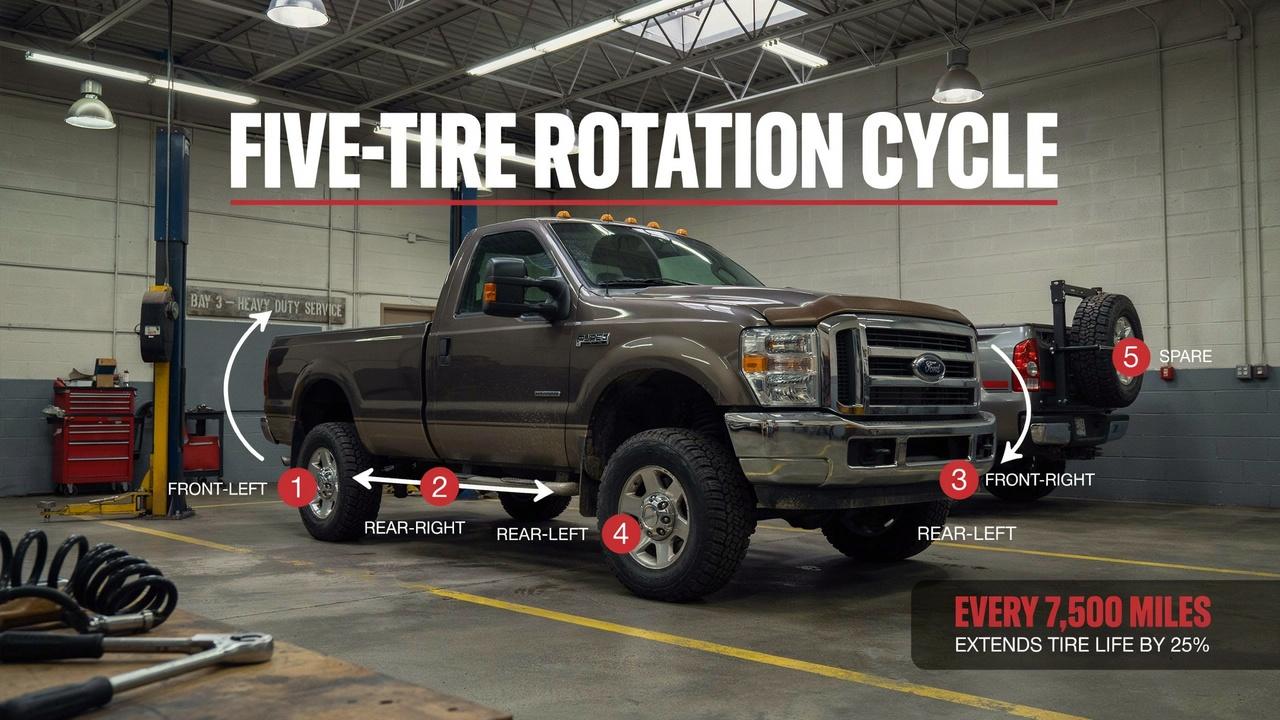
Trucks carry heavier loads and often include a matching spare, so their rotation pattern can involve five tires instead of just four.
Truck Tire Rotation Pattern
Trucks, especially those used for towing or hauling, often follow the same cross pattern as their drive type, FWD, RWD, or 4WD.
The heavier load up front or in the bed can change wear speed, so checking tread depth before rotating is a good habit.
Dual rear wheel trucks need a separate approach, since the inner and outer rear tires wear differently from each other.
5 Tire Rotation Pattern
If the spare matches the other four tires in size and type, it can join the rotation.
This way, no single tire stays unused while the others wear down.
A common method brings the spare in to replace one tire each rotation cycle, then sends the removed tire back as the new spare.
Over time, all five tires share the same amount of wear.
Directional vs Non-Directional Tire Rotation Pattern
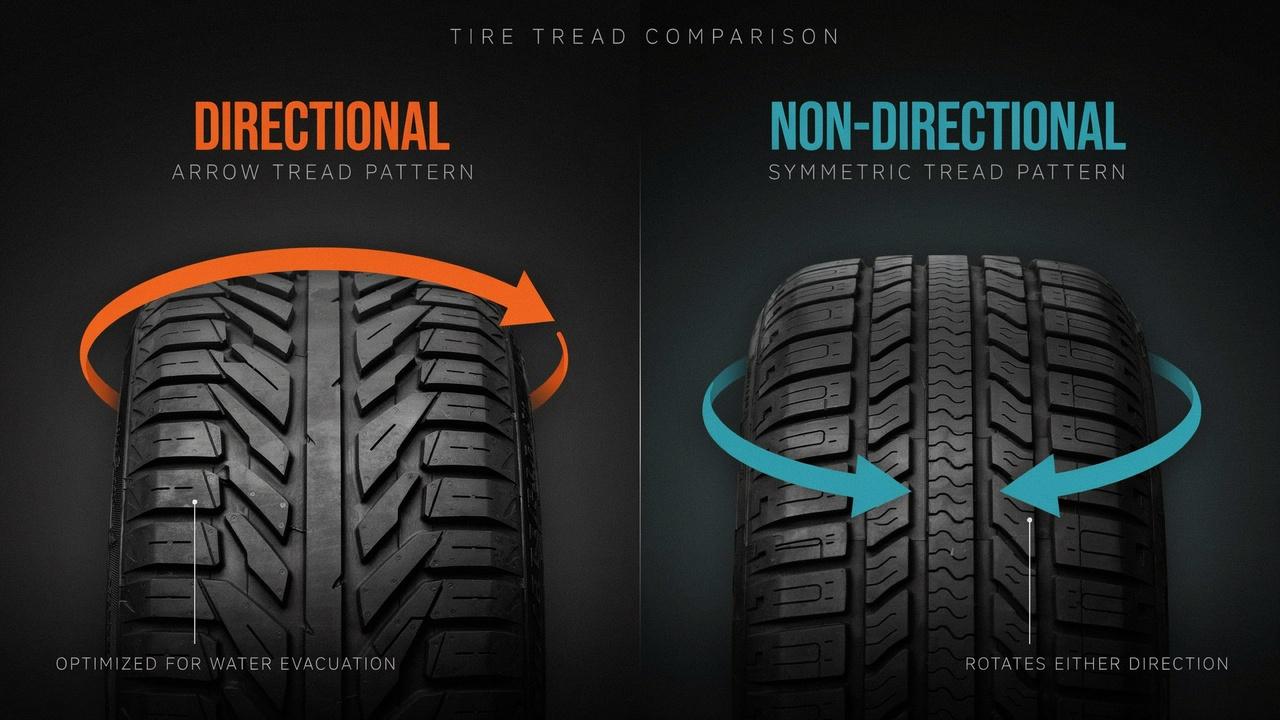
Tread design limits rotation choices.
Directional tires only move front to back, while non-directional tires can move to any position on the vehicle.
Directional Tire Rotation Pattern
Directional tires have tread designed to spin one way only, often shaped like an arrow or a V.
These tires can only move from front to back on the same side of the vehicle.
Switching a directional tire to the opposite side would point the tread the wrong way, which reduces grip in wet conditions.
Non-Directional Tire Rotation Pattern
Non-directional tires have a tread pattern that works in any direction.
These tires can follow the forward cross, rearward cross, or full X-pattern without any limits.
This flexibility makes non-directional tires a common choice for drivers who want simpler rotation options.
Tips for Proper Tire Rotation
A few simple checks before and after rotation help tires last longer, ride smoother, and wear more evenly over time.
- Check tire pressure before rotation and set it to the level listed on the door jamb sticker, not the number printed on the tire.
- Low or high pressure causes uneven wear no matter how often tires get rotated.
- Watch for alignment issues, such as a vehicle pulling to one side or uneven wear on one edge of a tire.
- Most automakers suggest rotating tires every 5,000 to 8,000 miles, though this can change based on the vehicle and tire type.
- Check the owner's manual for the exact mileage and pattern recommended for that specific model, and stick to that schedule to help tires wear evenly and improve fuel use over time.
Conclusion
I used to skip tire rotations until I saw how lopsided my tread wear had gotten on one car. That fix taught me a lesson I still follow today.
Picking the right tire rotation pattern for your vehicle is a small habit that pays off in mileage, safety, and money saved down the road.
Check your manual, follow the pattern that fits your drive type, and stick to a schedule.
Have you rotated your tires lately? Drop a comment with your experience, share this with a friend who needs the reminder, or check out our other car care guides.
Frequently Asked Questions
How often should I rotate my tires?
Most automakers recommend every 5,000 to 8,000 miles. Check your owner's manual for the exact mileage suited to your vehicle.
Can I rotate directional tires to any position?
No, directional tires only move front to back on the same side. Switching sides would point the tread the wrong way.
What happens if I never rotate my tires?
Tires wear unevenly, with some wearing out much faster than others. This can affect handling, fuel use, and tire lifespan.
Is the 5 tire rotation pattern necessary if I have a spare?
It's optional, but including a matching spare spreads wear across five tires instead of four. This keeps one tire from sitting unused.
Does tire rotation improve gas mileage?
Yes, even tread wear helps tires roll smoothly and grip properly. This can lead to better fuel efficiency over time.