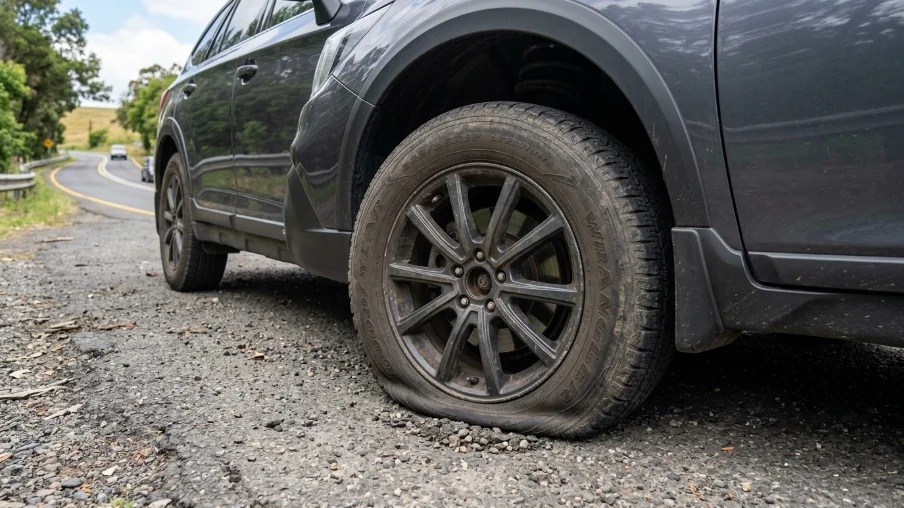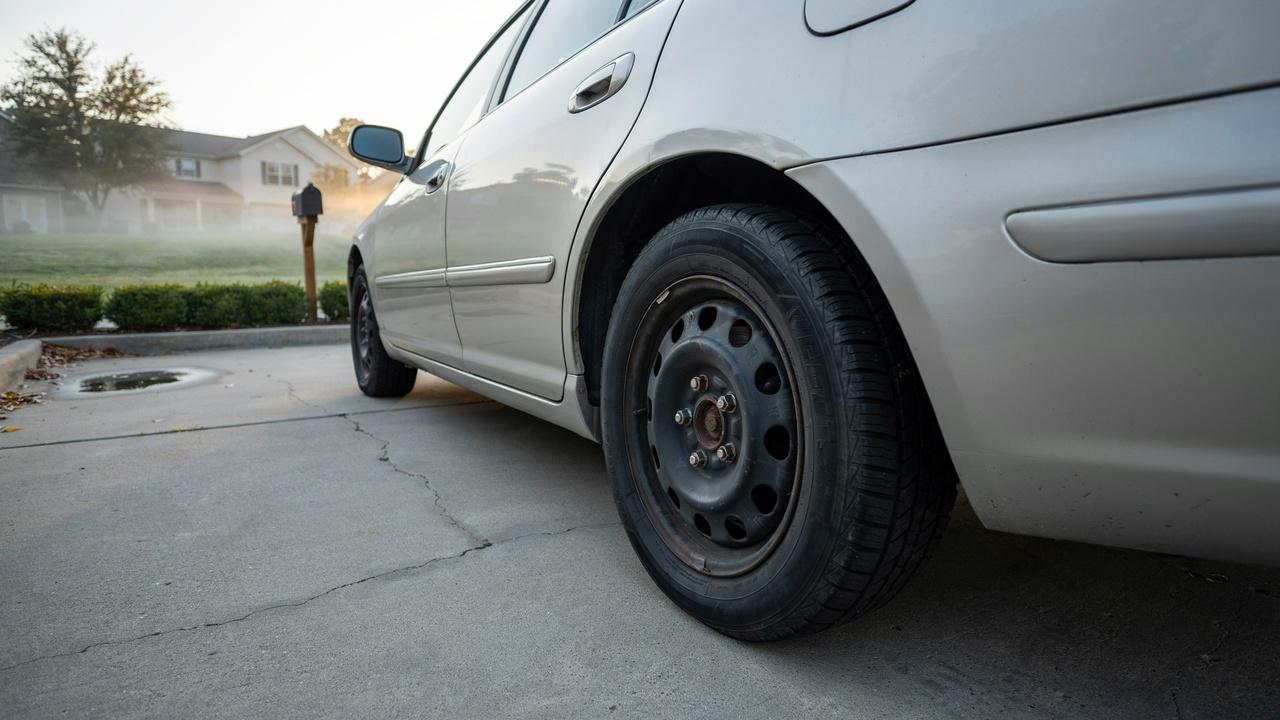

If you’re confused about why your car shakes or pulls to one side, this guide will help you understand the real difference and fix the issue with confidence.
In this article, you’ll learn what tire balancing and wheel alignment mean, how they work, and how to tell when your car needs each one.
I’ll also clear up common myths so you don’t waste time or money on the wrong service.
This guide is based on clear automotive knowledge and real service practices trusted by mechanics.
By the end, your confusion will be gone.
What Is Tire Balancing?
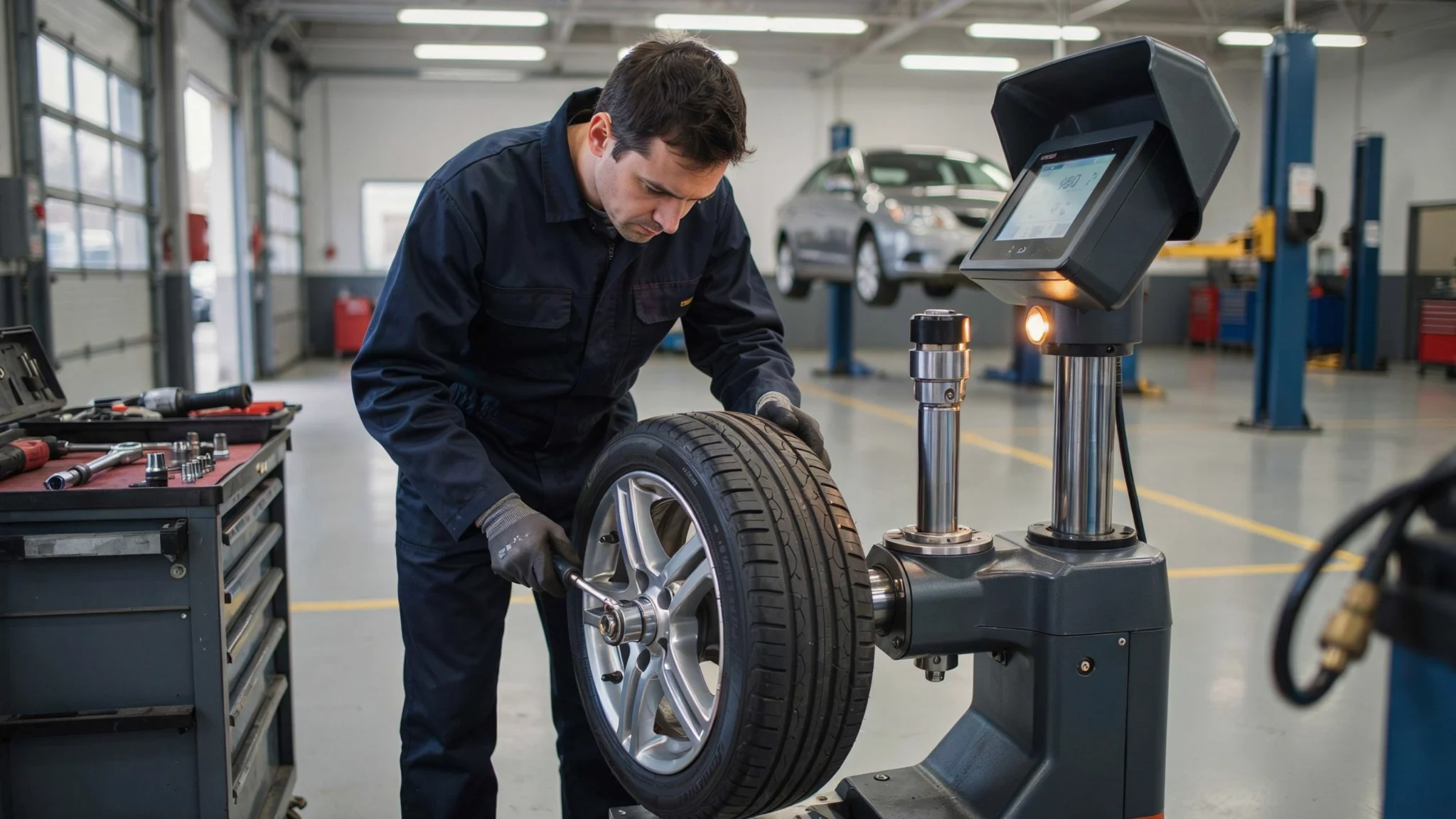
Tire balancing is the process of making sure a tire and wheel spin evenly without vibration. When a wheel is not balanced, small weight differences can cause shaking while driving.
Mechanics use a balancing machine to find uneven spots. Small weights are then added to the wheel to fix the balance. This helps the tire rotate smoothly at all speeds.
Common signs of unbalanced tires include vibration in the steering wheel, especially at higher speeds, and uneven tire wear over time.
If your ride feels shaky or unstable on smooth roads, it may be a balancing issue that needs quick attention to avoid further damage.
What Is Wheel Alignment?
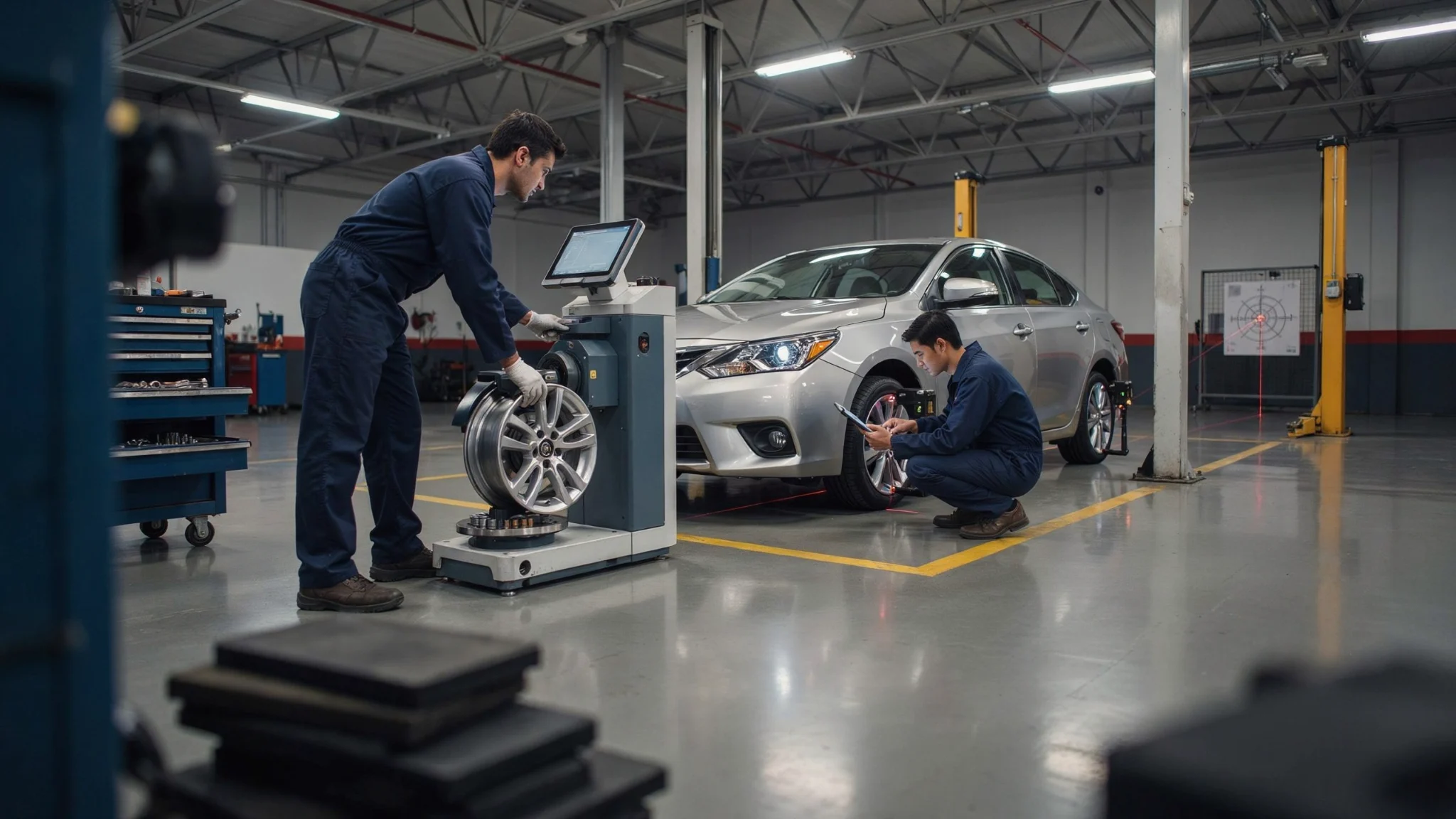
Wheel alignment is the adjustment of your car’s wheel angles so they point in the correct direction. It focuses on three key angles: camber, toe, and caster.
Proper alignment ensures the tires meet the road evenly and the vehicle moves straight.
Mechanics use special tools and machines to adjust suspension parts and correct the wheel position.
Signs of poor alignment include the car pulling to one side, uneven tread wear, and an off-center steering wheel even when driving straight.
If ignored, it can affect handling, safety, and tire life, making driving less smooth and more costly over time.
Is Tire Balancing the Same as Alignment?
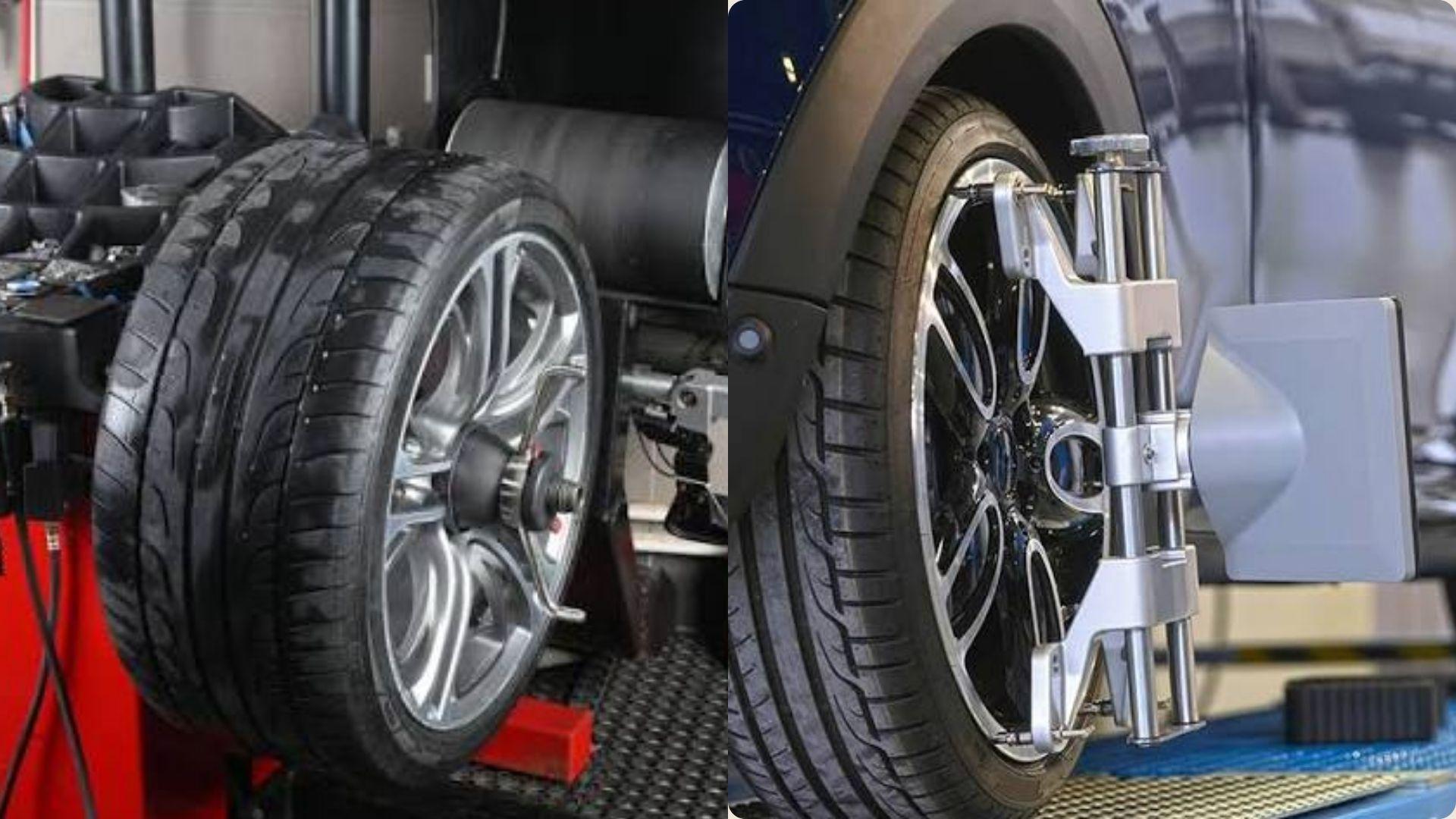
No, tire balancing and wheel alignment are not the same. They both affect how your car feels on the road, but they fix completely different issues.
Balancing deals with smooth wheel rotation, while alignment focuses on correct wheel direction.
Understanding this difference helps you avoid wrong repairs and keeps your vehicle safe, stable, and comfortable to drive.
Key Differences Explained Simply
Tire balancing and wheel alignment solve different problems. Balancing focuses on fixing weight issues in the tire and wheel so they spin smoothly.
Alignment focuses on adjusting how the wheels point and sit on the road. One controls vibration, while the other controls direction and handling of the vehicle.
Balancing = Weight Distribution
Balancing means spreading the weight evenly around the tire and wheel. Small metal weights are added to correct uneven spots.
This helps the tire rotate smoothly at high speeds. If balance is off, you may feel shaking in the steering wheel or seat, especially on highways or smooth roads.
Alignment = Wheel Positioning
Alignment adjusts the angle and direction of the wheels. It ensures all wheels point correctly and work together.
This helps the car drive straight and improves control. Poor alignment can cause the car to pull to one side or wear tires unevenly over time.
Why People Confuse the Two
People often confuse balancing and alignment because both affect tire wear and driving comfort. Also, symptoms like vibrations or uneven tires can overlap.
However, the causes are different. Balancing is about rotation smoothness, while alignment is about wheel direction and road contact.
Tire Balancing vs Alignment
Here’s a simple comparison to help you clearly understand how both services are different and when each one is needed.
| Factor | Tire Balancing | Wheel Alignment |
|---|---|---|
| Purpose | Ensures even weight distribution in the wheel | Adjusts wheel angles for correct direction |
| Process | Uses a machine to detect imbalance and adds small weights | Adjusts suspension parts like camber, toe, caster |
| Symptoms | Vibration in steering wheel, uneven rotation | Car pulling to one side, off-center steering |
| Frequency of service | After new tires, or when vibration starts | After suspension work, accidents, or drifting issues |
When Should You Get Tire Balancing?
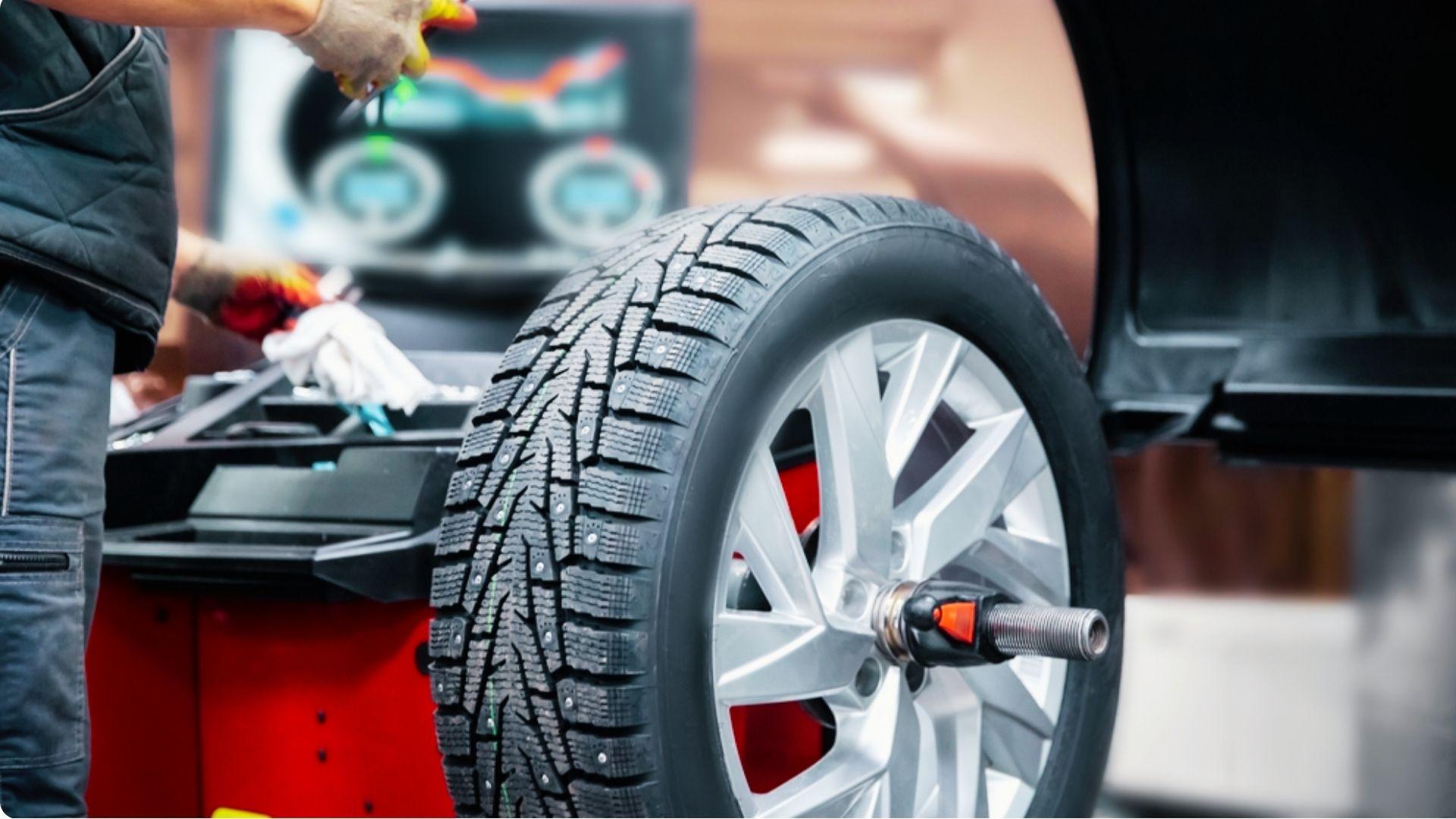
You should get tire balancing whenever your tires are newly installed or replaced. It ensures the wheels spin evenly from the start.
If you hit a pothole or a rough road, the balance can shift and cause vibrations, so checking it again is important.
You should also get it done every few months, especially if you notice shaking in the steering wheel at higher speeds.
Regular balancing helps improve driving comfort, reduces tire wear, and keeps your vehicle stable on different road conditions.
When Should You Get Wheel Alignment?
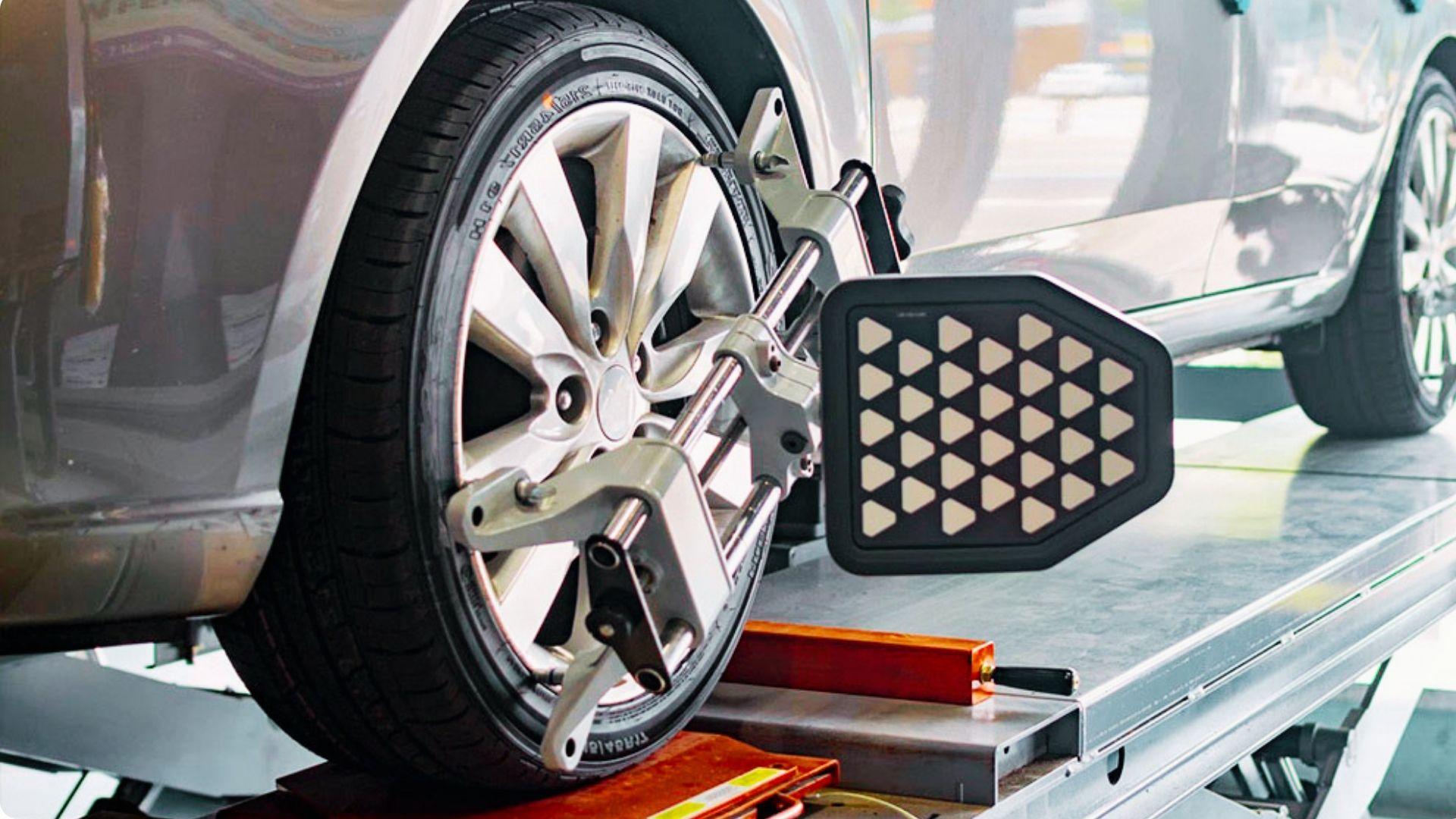
Wheel alignment is needed after any suspension repair or part replacement to ensure proper wheel angles.
You should also get it checked after accidents, bumps, or hitting deep potholes, as these can disturb alignment.
If your car starts pulling to one side or the steering wheel feels off-center while driving straight, it’s a clear sign.
Regular alignment helps improve control, safety, and tire life by keeping all wheels pointed correctly on the road.
What Happens If You Ignore Them?
Ignoring tire balancing or wheel alignment can slowly damage your car. It may lead to unsafe driving and higher repair costs over time.
- Reduced tire life: Tires wear out faster and unevenly
- Poor fuel efficiency: Engine works harder due to resistance
- Unsafe driving conditions: Less control, vibration, and poor stability
Can You Need Both at the Same Time?
Yes, in many cases. Both issues can happen together, especially after rough road conditions or suspension damage.
- Common overlap: Potholes or accidents affect both balance and alignment
- Professional check: Technicians inspect vibration, steering, and tire wear
- Complete fix: Both services may be done to restore smooth, safe driving
Conclusion
After learning is tire balancing the same as alignment, you can now clearly see they are two different services that solve different problems.
If your car feels shaky or pulls, now you know what to look for instead of guessing. From experience, many drivers first assume alignment, but the real issue is often simple balancing.
I’ve seen small checks save both time and cost. Next time you notice symptoms, take action early.
Share your experience in the comments or try more helpful guides on car care.
Frequently Asked Questions
What is the difference between tire balancing and alignment?
Tire balancing fixes uneven weight in the wheel. Alignment adjusts the wheel angles for straight driving.
What are the signs you need tire balancing?
Steering wheel vibration at higher speeds is common. You may also notice uneven tire wear over time.
What are the signs you need wheel alignment?
The car may pull to one side while driving straight. An off-center steering wheel is another clear sign.
Can balancing and alignment be done together?
Yes, both are often checked during the same visit. This depends on the condition of your tires and suspension.
How often should you get them checked?
Balancing is often needed with new tires or vibrations. Alignment is checked after impacts or every few months.