

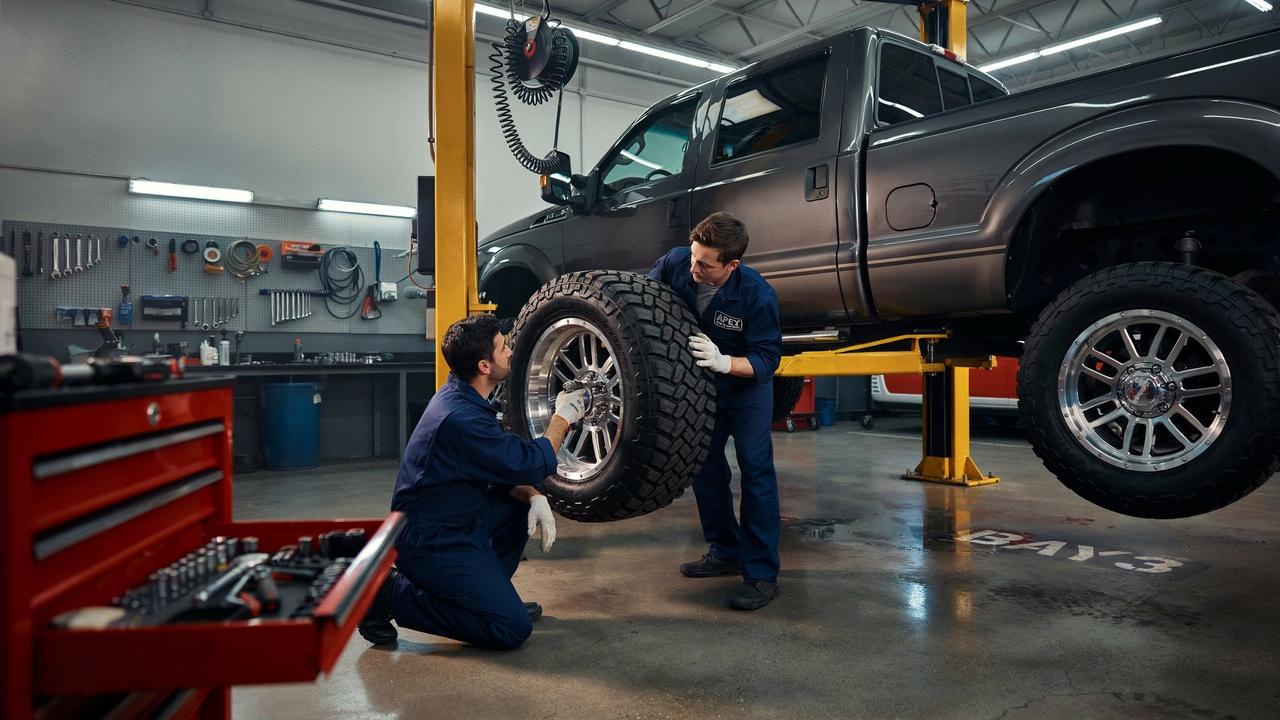
If your 4×4 pulls to one side or your tires wear out faster than they should, you're not alone.
This guide breaks down the right tire rotation pattern 4×4 owners can trust, step by step.
I've spent years working on trucks and SUVs, and I've seen firsthand how the wrong rotation habits shorten tire life fast.
In this post, you'll learn the best rotation patterns, how often to rotate, common mistakes to avoid, and a simple step-by-step process you can follow at home.
We'll also cover truck-specific tips for Chevy and Ford models.
By the end, you'll know exactly how to keep your tires lasting longer and your ride handling better.
What is a Tire Rotation Pattern 4×4?

A tire rotation pattern for a 4×4 is the order in which you move each tire to a new spot on the vehicle.
The goal is even wear across all four tires.
Since power goes to all four wheels, tires on a 4×4 wear differently than on a two-wheel drive car.
Front tires often wear faster due to steering and extra load.
Common patterns include the X-pattern, rearward cross, and forward cross.
Most 4x4s do well with the X-pattern, since it moves each tire to a different axle and side.
This keeps tread wear balanced, improves traction, and helps your 4×4 handle better on rough roads.
Benefits of Following the Correct Tire Rotation Pattern 4×4

Rotating your 4×4 tires the right way keeps wear even, boosts grip, and saves fuel.
Prevents Uneven Tire Wear and Extends Tire Life
Front tires often wear faster due to steering and braking.
Regular rotation spreads this stress evenly, helping tires last longer.
Improves Traction, Handling, and Fuel Efficiency
Even tread means better grip and a more stable ride.
It also lowers rolling resistance, helping your 4×4 run more efficiently.
Proper Tire Rotation Pattern 4×4 Explained
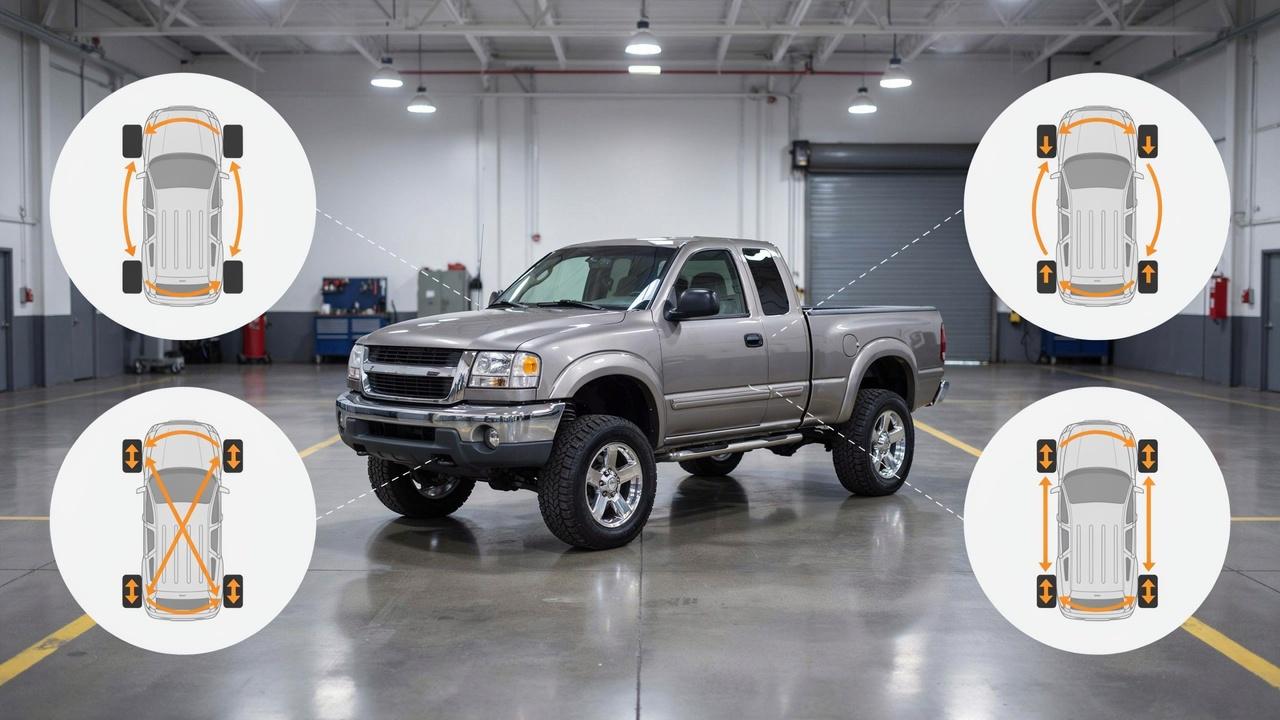
A proper rotation pattern moves each 4×4 tire to a new spot, balancing wear across the front, rear, and sides.
Rearward Cross Pattern
This pattern moves front tires straight back.
The rear tires move forward and cross to the opposite side.
It works well for 4×4 vehicles with four-wheel drive, since all tires share similar wear patterns.
X-Pattern
In an X-pattern, each tire moves diagonally to the opposite corner.
Front left goes to rear right, and so on.
This pattern is common for vehicles without directional tires.
Side-to-Side Pattern for Directional Tires
Directional tires have tread designed to spin one way only.
For these, tires stay on the same side but switch between front and back.
This keeps the tread direction correct.
Best Tire Rotation Pattern 4×4
For most 4×4 trucks and SUVs, the rearward cross pattern works best.
It matches how power moves through all four wheels.
Always check your owner's manual, since some manufacturers recommend a specific pattern.
Tire Rotation Pattern 4×4 Cross Rotation Diagram
These diagrams show exactly how each tire moves during a cross rotation, making the process easy to follow at home.
Rearward Cross Rotation Diagram
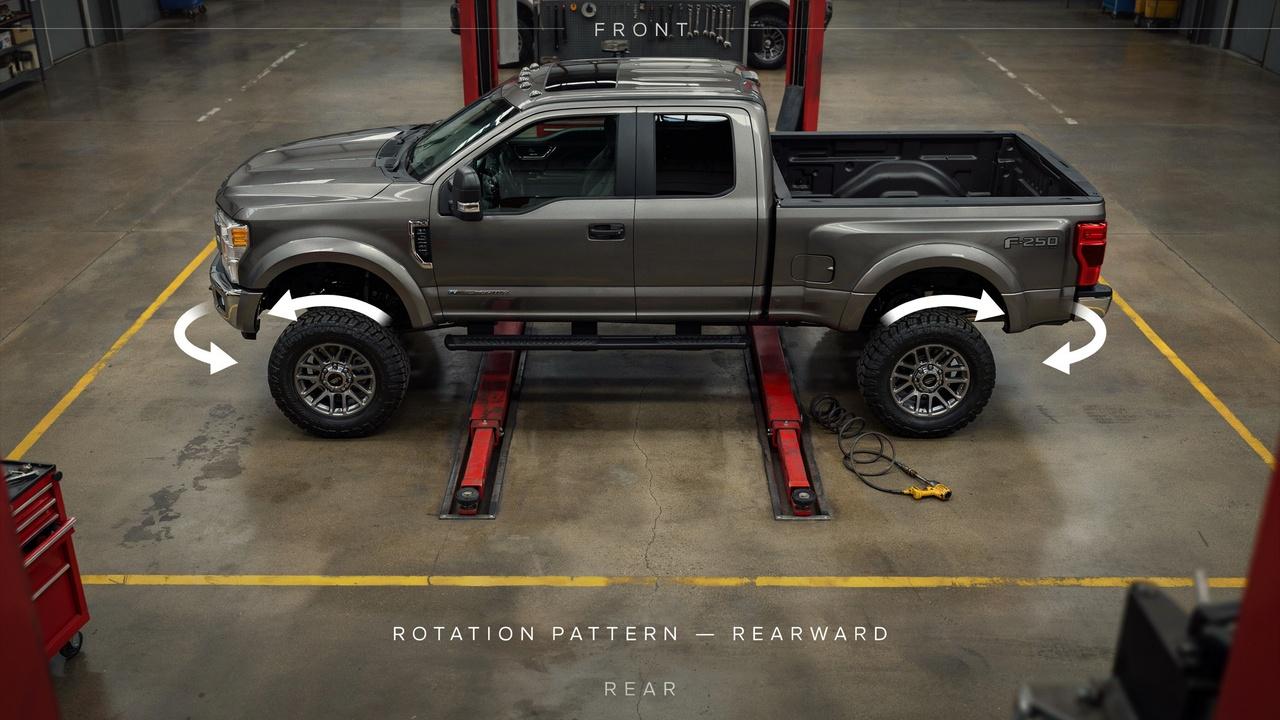
In this layout, front tires move straight to the rear on the same side.
Rear tires move forward and switch to the opposite side.
This forms a simple crossing motion at the back.
X-Pattern Rotation Diagram
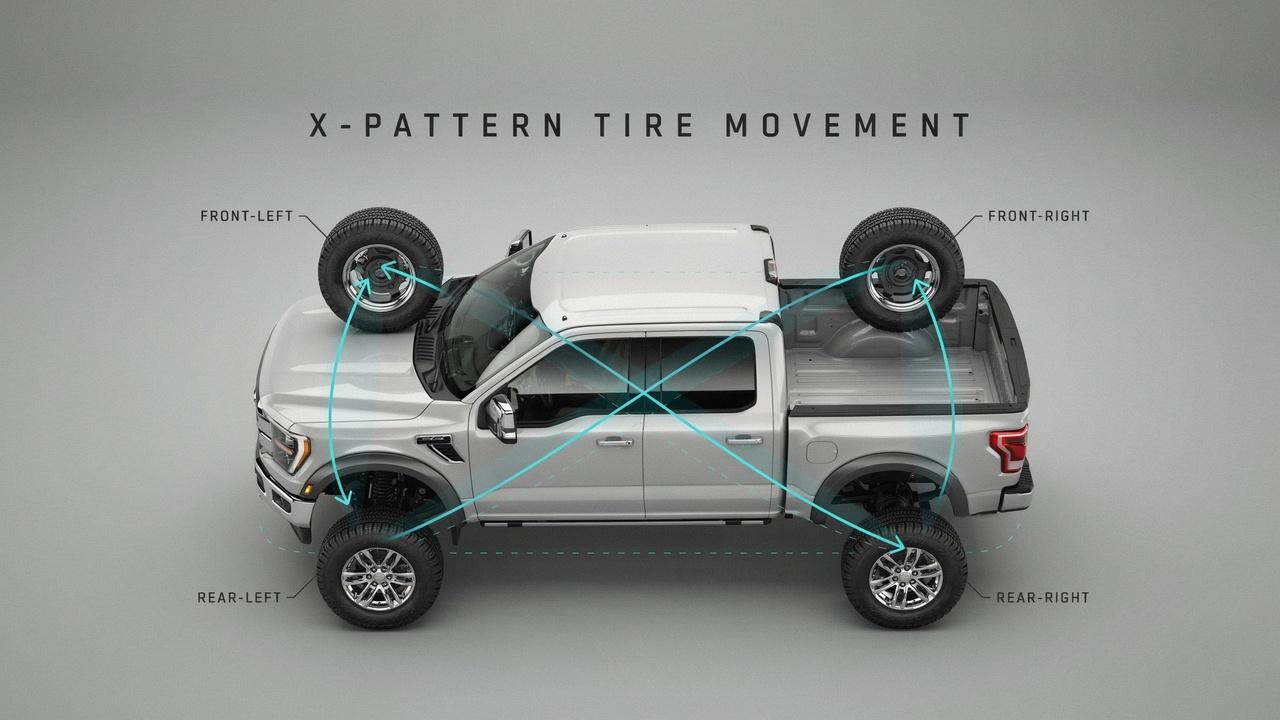
Here, all four tires move diagonally.
Front right swaps with rear left, and front left swaps with rear right.
The crossing happens through the middle of the vehicle.
Directional Tire Rotation Diagram
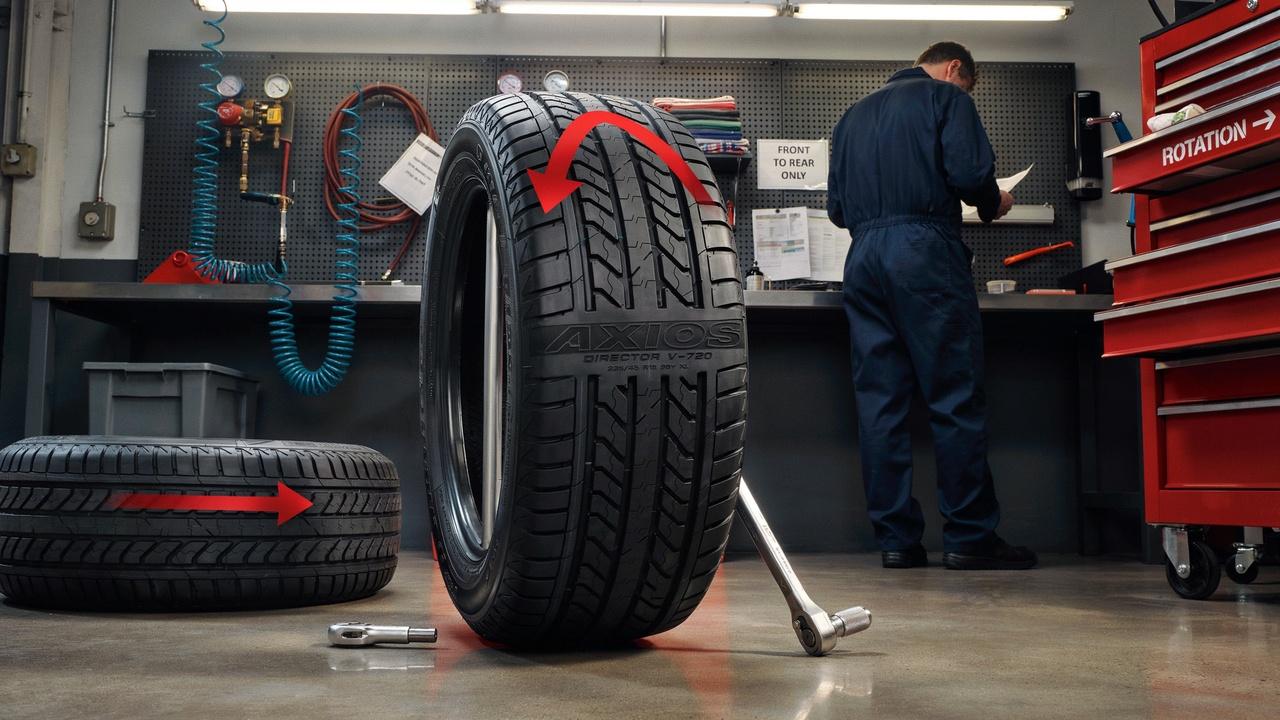
For directional tires, the diagram shows a front-to-back swap only.
Left side tires stay on the left. Right side tires stay on the right.
No diagonal movement happens here.
4 Tire Rotation Pattern 4×4 vs 5 Tire Rotation Pattern 4×4

This section compares rotating four tires against including the spare, showing how each method affects wear and overall tire balance.
| Standard 4-Tire Rotation | 5-Tire Rotation (With Spare) | |
|---|---|---|
| What it does | Rotates only the four tires currently mounted on the vehicle | Brings the spare into the cycle, replacing one mounted tire each rotation |
| Best for | Daily drivers; vehicles where the spare is rarely used | Vehicles with a full-size matching spare, especially those driven off-road often |
| Tread wear | The spare stays unused while the other four wear down | All five tires wear at a similar rate, avoiding one tire with noticeably deeper tread |
| Spare condition | Spare may age or degrade without ever being used | Spare stays in usable, road-ready condition |
| Common use case | Most everyday city/highway driving | Off-road or heavy-use vehicles needing a reliable backup tire |
How Often Should You Rotate Tires on a 4×4?

Knowing when to rotate your 4×4 tires helps you catch wear early and keep every tire performing at its best.
Recommended Mileage for Tire Rotation
Most manufacturers suggest rotating tires every 5,000 to 7,500 miles.
This often lines up with routine oil changes, making it easy to remember.
Heavy off-road use may call for more frequent rotations.
Signs Your Tires Need Rotation
Watch for uneven tread depth, vibration while driving, or a pull to one side.
These signs often mean wear has already become uneven.
Catching them early helps avoid bigger tire problems later.
How to Rotate 4×4 Tires
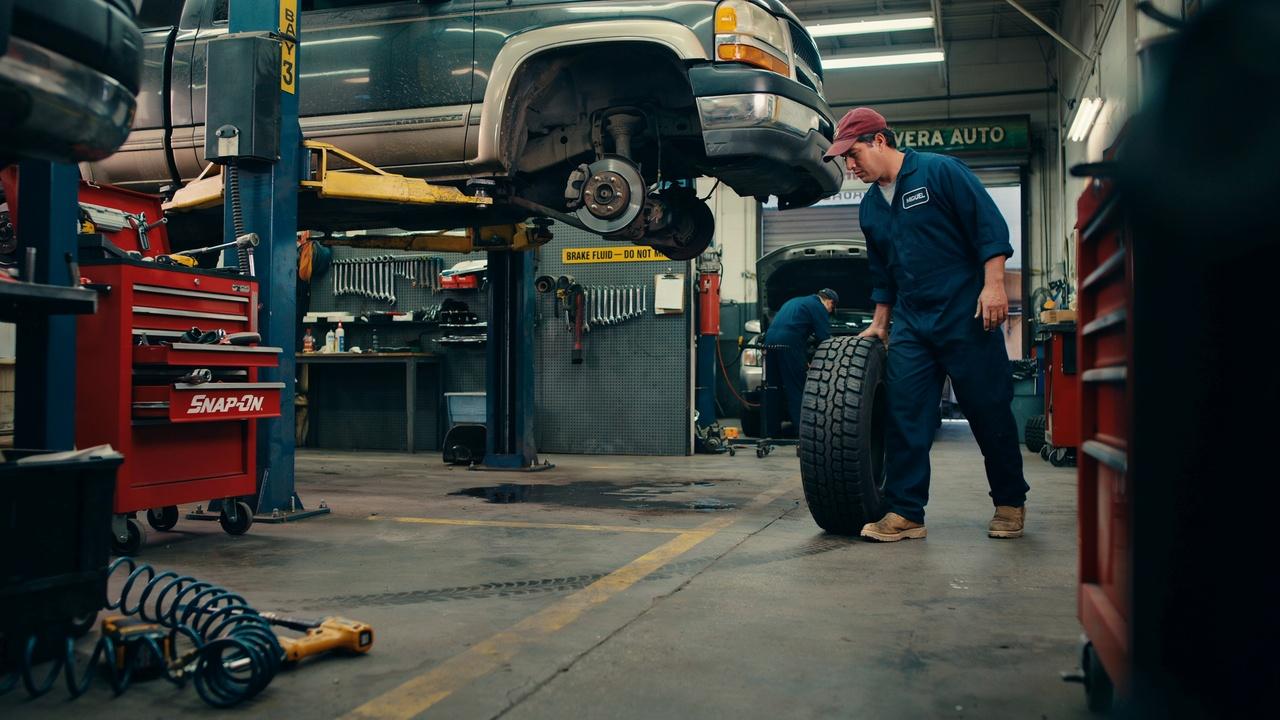
A quick guide to rotating 4×4 tires safely at home with basic tools.
Tools You'll Need and Safety Tips Before You Start
You'll need a jack, jack stands, a lug wrench, and a torque wrench.
Park on flat ground, use jack stands, and loosen lug nuts slightly before lifting each wheel.
Tire Rotation Process
Loosen the lug nuts, lift the vehicle, and place it on jack stands.
Move each tire to its new spot based on your rotation pattern.
Tighten the lug nuts in a star pattern once done.
Tire Rotation Pattern 4×4 Truck Guide

This guide breaks down rotation patterns for popular 4×4 trucks like Chevy Silverado models and the Ford Excursion lineup today.
Tire Rotation Pattern 4×4 Chevy
Chevy 4×4 trucks generally follow the rearward cross pattern.
This works well with their four-wheel drive setup.
Always confirm with your specific model year, since patterns can shift slightly.
Tire Rotation Pattern 4×4 Chevy Silverado 1500
The Silverado 1500 typically uses the rearward cross pattern for non-directional tires.
If your Silverado has directional tires, use the front-to-back pattern instead.
Check your tire sidewall for direction arrows.
Ford Excursion Tire Rotation Pattern 4×4
The Ford Excursion, being a heavier 4×4 vehicle, also benefits from the rearward cross pattern.
Its larger tires need consistent rotation to avoid early wear.
Regular rotation also helps with this vehicle's overall ride stability.
Common Tire Rotation Mistakes to Avoid
Many drivers make small mistakes during tire rotation that lead to faster wear and poor handling.
- Rotating tires too late. Waiting too long lets uneven wear set in, and rotation alone can't fix it later.
- Ignoring tire direction. Mounting directional tires the wrong way hurts grip. Always check the sidewall arrows first.
- Skipping tire pressure checks. Wrong pressure causes uneven wear even after a fresh rotation. Check it before and after.
- Mixing tires with uneven wear. Pairing deep and shallow tread tires can affect handling, especially on 4×4 vehicles.
Tips for Rotating 4×4 Tires Safely and Effectively
These practical tips help you rotate 4×4 tires the right way while staying safe.
- Check tire pressure before rotation. Check pressure cold, before driving, and set it to the level listed in your owner's manual.
- Inspect tires for uneven wear. Uneven wear can point to alignment or suspension issues, so catching it early saves money later.
- Follow the manufacturer's recommendations. Every 4×4 model may need a slightly different pattern, so check your owner's manual.
- Keep a tire rotation record. Note the date and mileage each time, so you stay on schedule and spot wear patterns.
- Tighten lug nuts in a star pattern. This spreads pressure evenly across the wheel and helps prevent the rotor from warping.
Conclusion
I learned this the hard way after replacing a set of tires almost a year early, all because I skipped a few rotations.
Once I started following the right tire rotation pattern 4×4 owners actually need, my tires wore evenly and lasted much longer.
It really is a small habit that pays off.
So next time you're due for maintenance, give your tires a proper rotation. Got questions or your own tire story?
Drop a comment below, share this post with another truck owner, and check out our other 4×4 maintenance guides.
Frequently Asked Questions
What is the best tire rotation pattern for a 4×4?
The rearward cross pattern works best for most 4×4 vehicles. It matches how power moves through all four wheels.
How often should I rotate tires on a 4×4 truck?
Most experts suggest every 5,000 to 7,500 miles. Heavy off-road use may need more frequent rotations.
Can I rotate directional tires the same way as regular tires?
No, directional tires should only move front to back on the same side. Switching sides can reduce grip and performance.
Should I include my spare tire in the rotation?
Including a full-size spare can help all five tires wear evenly. It also keeps the spare ready if you ever need it.
What happens if I don't rotate my 4×4 tires regularly?
Skipping rotations leads to uneven wear and shorter tire life. It can also affect handling and fuel efficiency over time.