
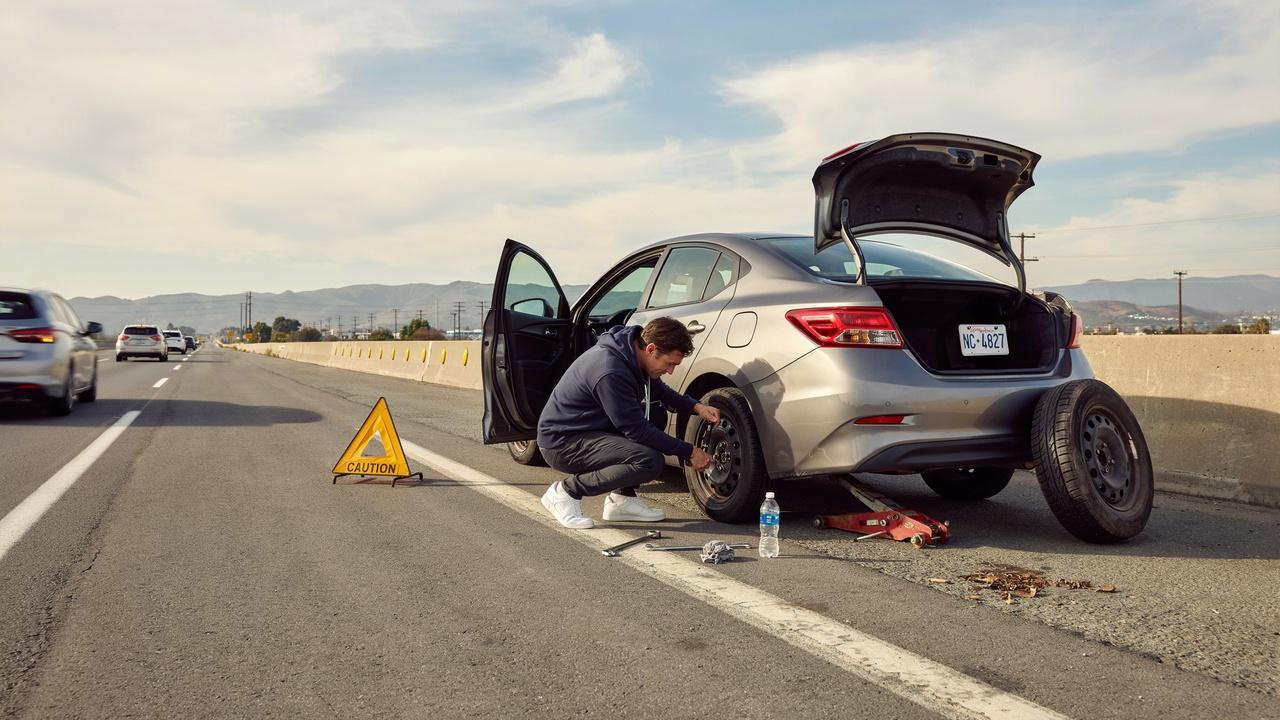
A flat tire is stressful enough without wondering what comes next.
How far can you actually go on a spare? How fast is safe? Most drivers have no idea, and that's how small problems turn into bigger ones on the road.
This guide answers all of that, plainly and clearly.
You'll learn how long each spare tire type lasts, the safest speeds to drive, and the warning signs that mean it's time to stop.
We'll also cover highway driving and simple tips to keep you safe along the way.
I've changed my fair share of spare tires over the years, so this comes from real experience, not guesswork.
By the end, you'll know exactly what to do next.
How Long Can You Drive on a Spare Tire?
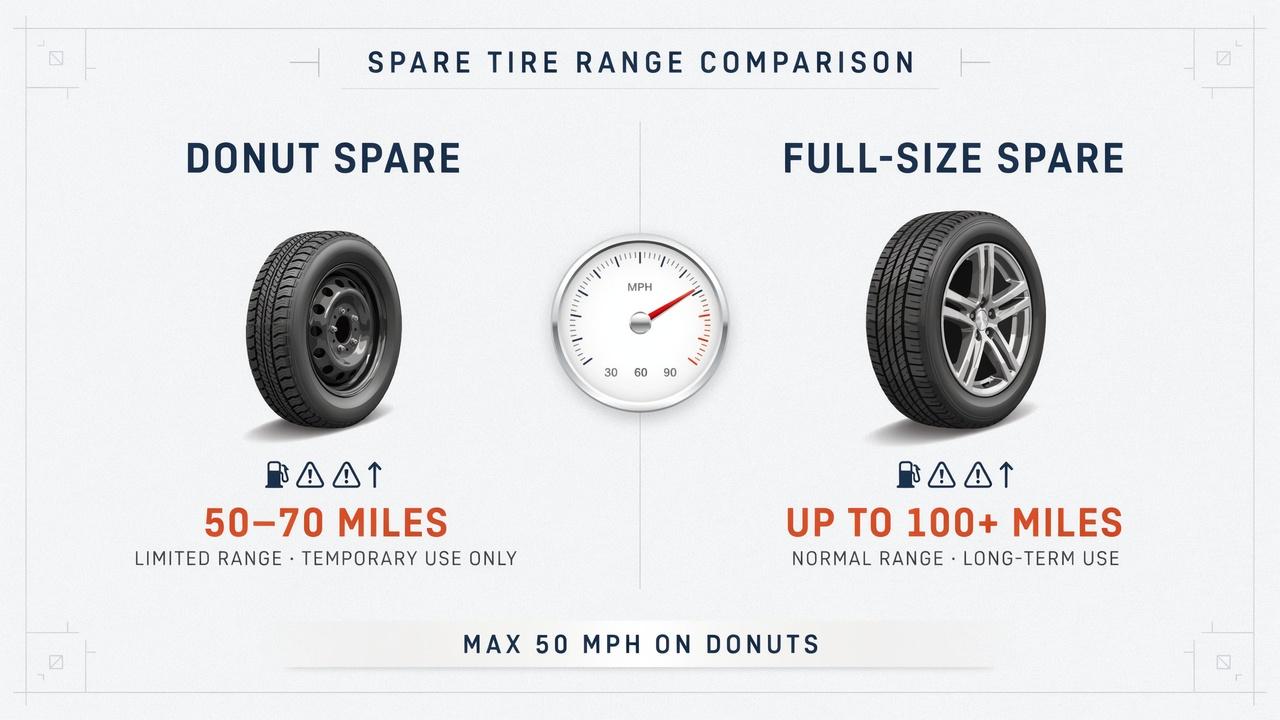
A donut spare tire is smaller than a regular tire.
It is built for short-term use only.
Most manufacturers recommend driving no more than 50 to 70 miles on one before you get your original tire fixed or replaced.
Full-Size Spare Tire
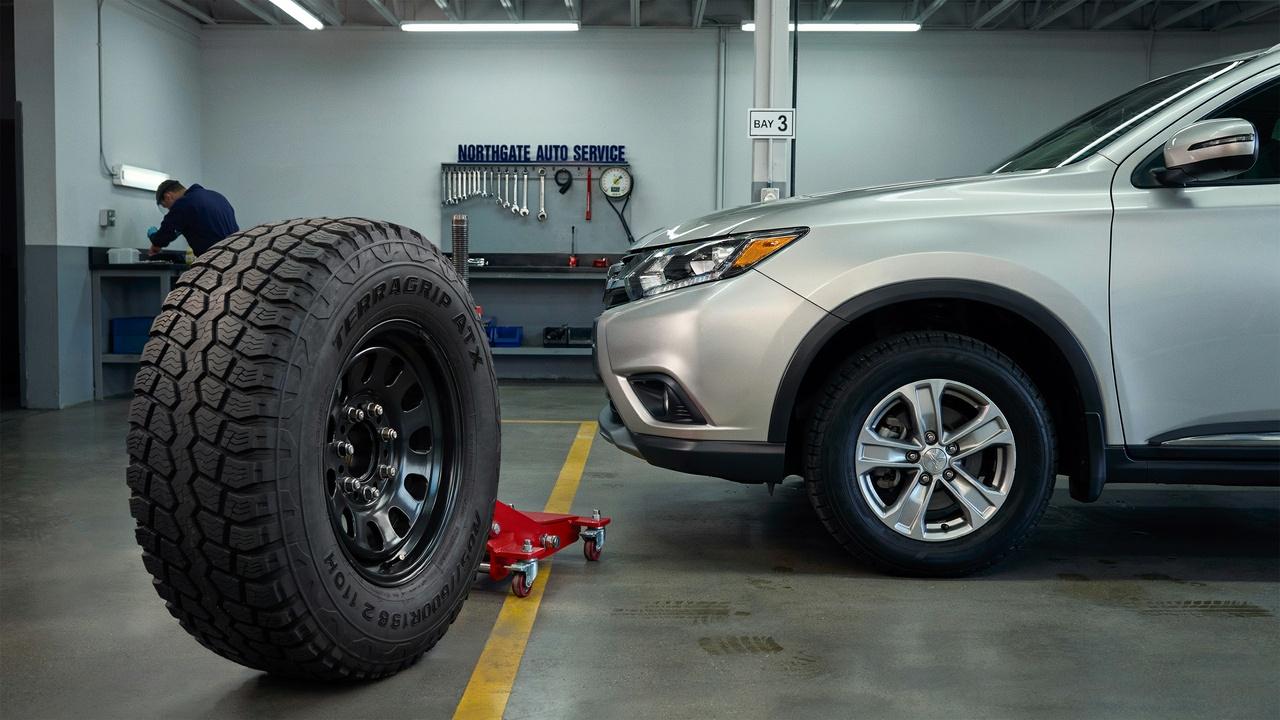
A full-size spare matches the size of your other tires.
It can be used for a longer period of time. Still, it is best to replace your original tire as soon as you reasonably can.
Run-Flat Tire
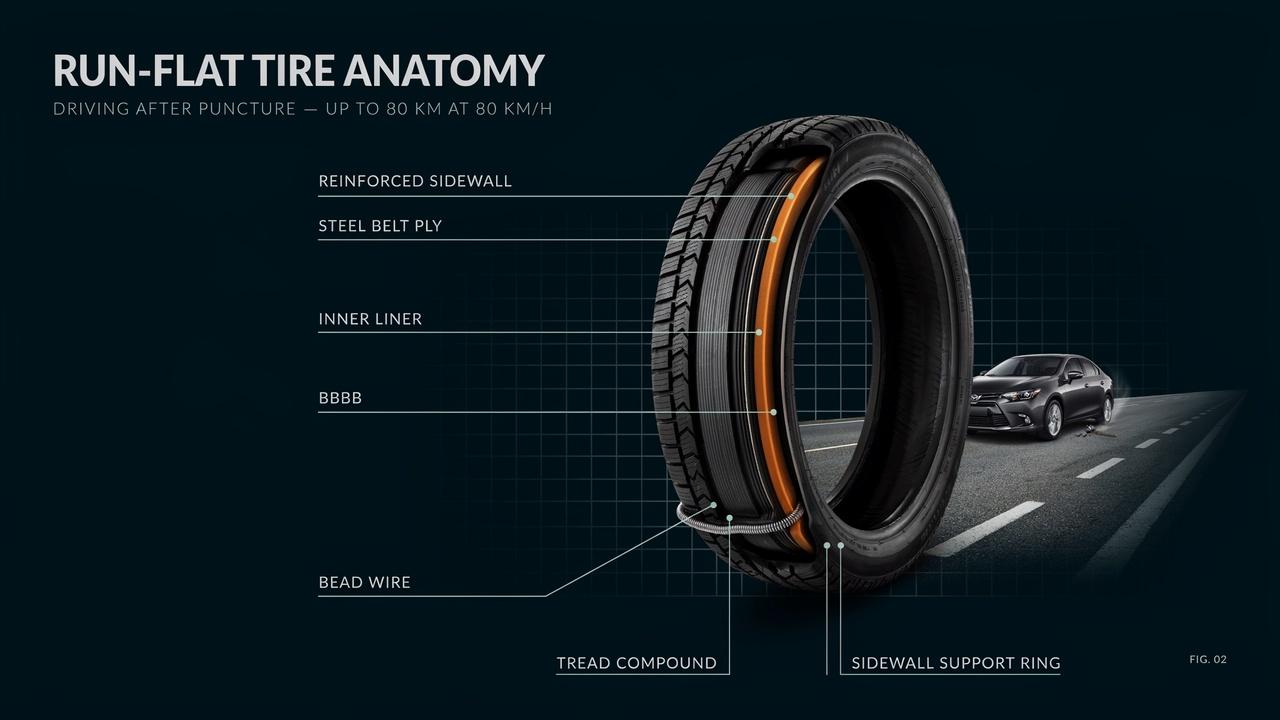
A run-flat tire lets you keep driving even after a puncture.
Most run-flat tires are rated for about 50 miles after losing air.
After that point, the tire structure can start to break down.
How Fast Can You Drive on a Spare Tire?
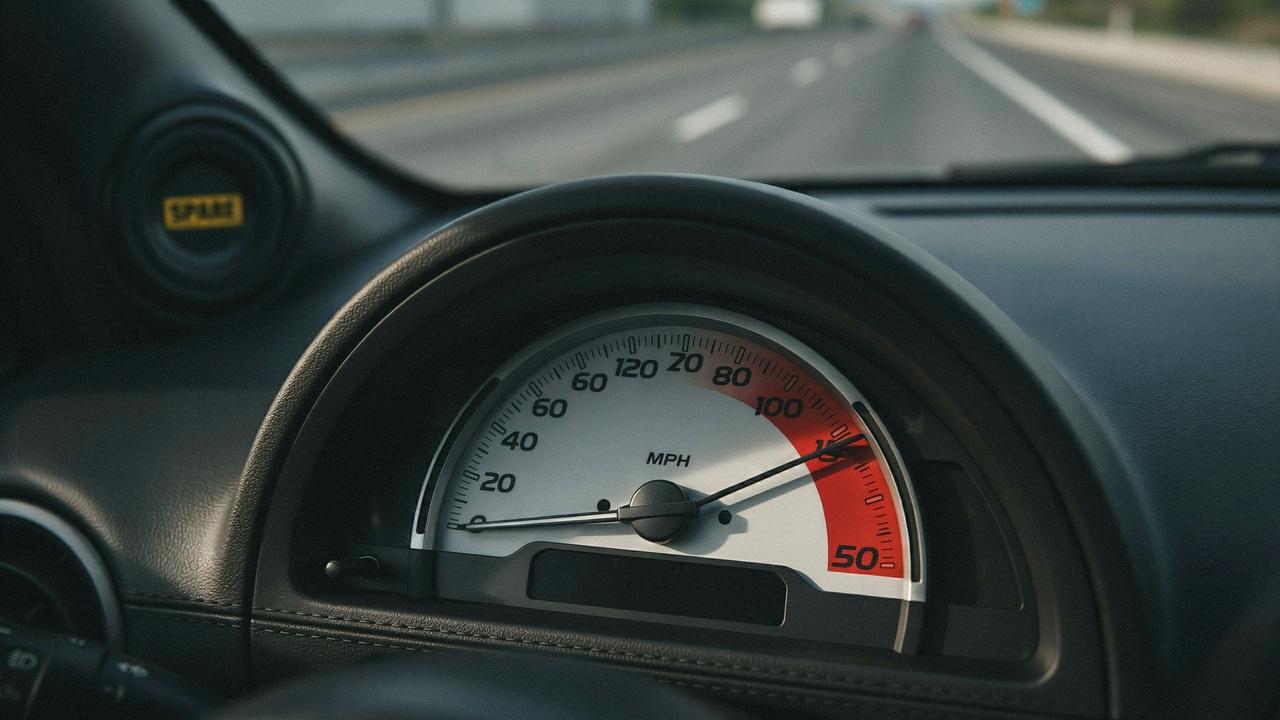
Using a spare tire for an extended period can cause more harm than people expect. Several parts of your car can suffer if the spare stays on too long.
Reduced Traction and Vehicle Stability
Spare tires, especially donuts, often have less grip than standard tires.
This can make your car less stable, particularly on wet or uneven roads.
Increased Risk of Tire Failure
The longer a spare stays in use, the more wear it takes on.
This raises the chance of a blowout, often without much warning.
Damage to Suspension and Drivetrain Components
A spare tire is usually a different size than your other tires.
This size difference can put uneven stress on your suspension and drivetrain over time.
Uneven Tire Wear and Poor Handling
Driving with a mismatched spare can cause your other tires to wear unevenly.
It can also make your car pull slightly to one side, which affects overall handling.
Can You Drive on the Highway With a Spare Tire?
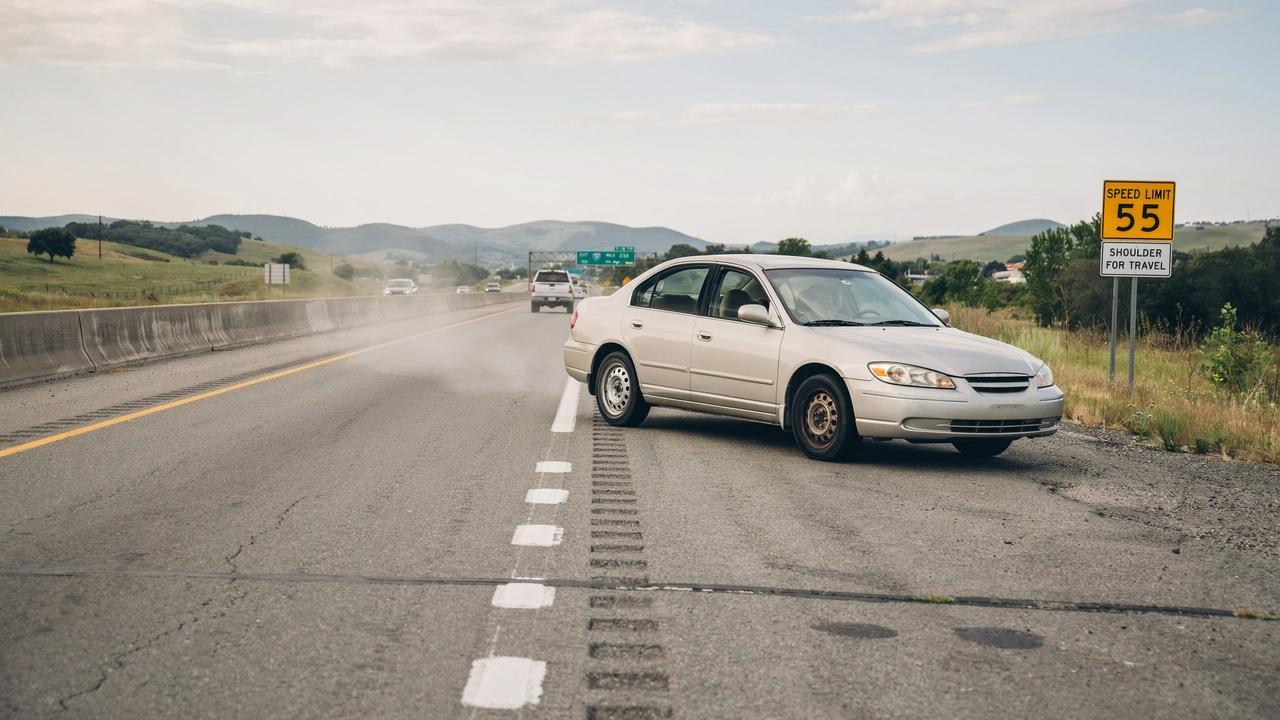
Highway speeds bring extra risk when one of your tires is not the original, and the type of spare you have plays a big role in how safe this is.
A donut spare can handle the highway for a short distance, but you should keep your speed at or below its rated limit and avoid long stretches of high-speed driving.
A full-size spare is generally safer for highway use and can handle higher speeds more comfortably, though caution is still recommended.
That said, you should avoid the highway altogether if your spare shows any sign of damage, if tire pressure is low, or if you notice unusual vibration.
In these cases, slower local roads are the safer choice.
Signs You Should Stop Driving on a Spare Tire Immediately
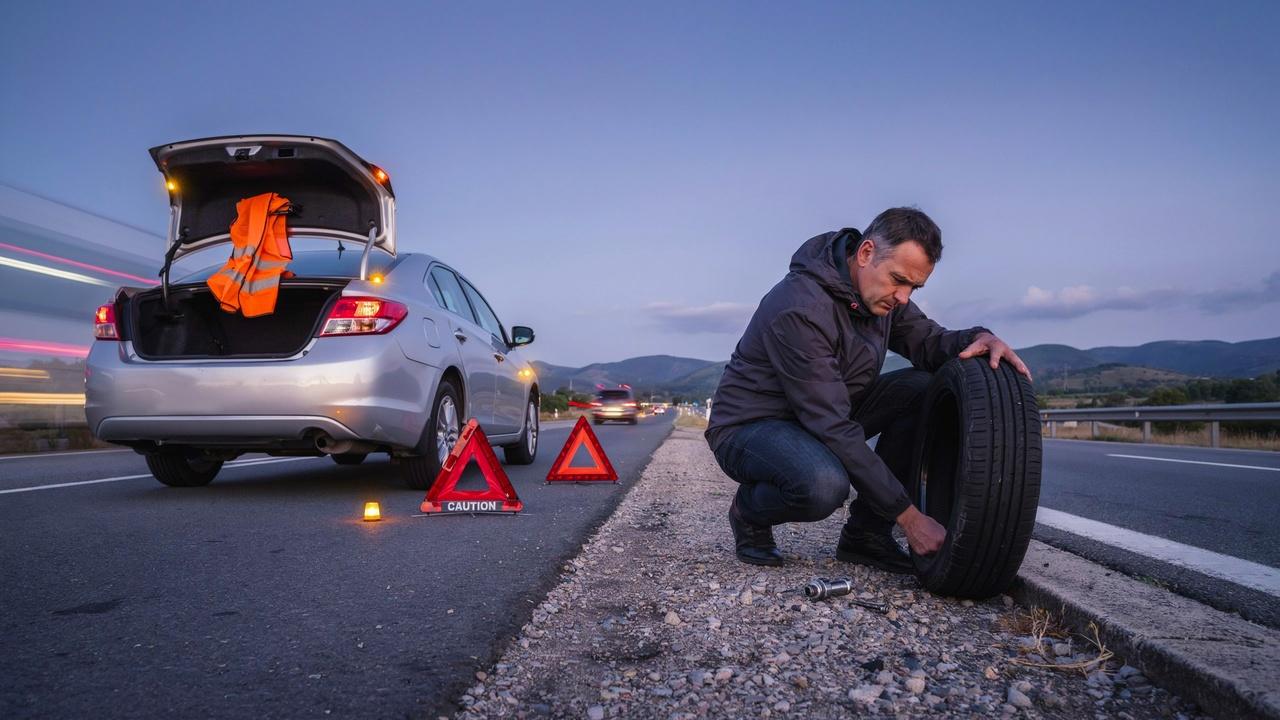
Certain warning signs mean it is time to pull over and stop driving. Ignoring these signs can lead to a dangerous situation on the road.
Low Tire Pressure
If the spare feels soft or the pressure gauge shows a low reading, stop driving.
A spare with low pressure can fail quickly under normal driving conditions.
Excessive Vibration or Shaking
Unusual shaking in the steering wheel or seat often signals a tire problem.
This can mean the spare is damaged or not properly balanced.
Visible Tire Damage
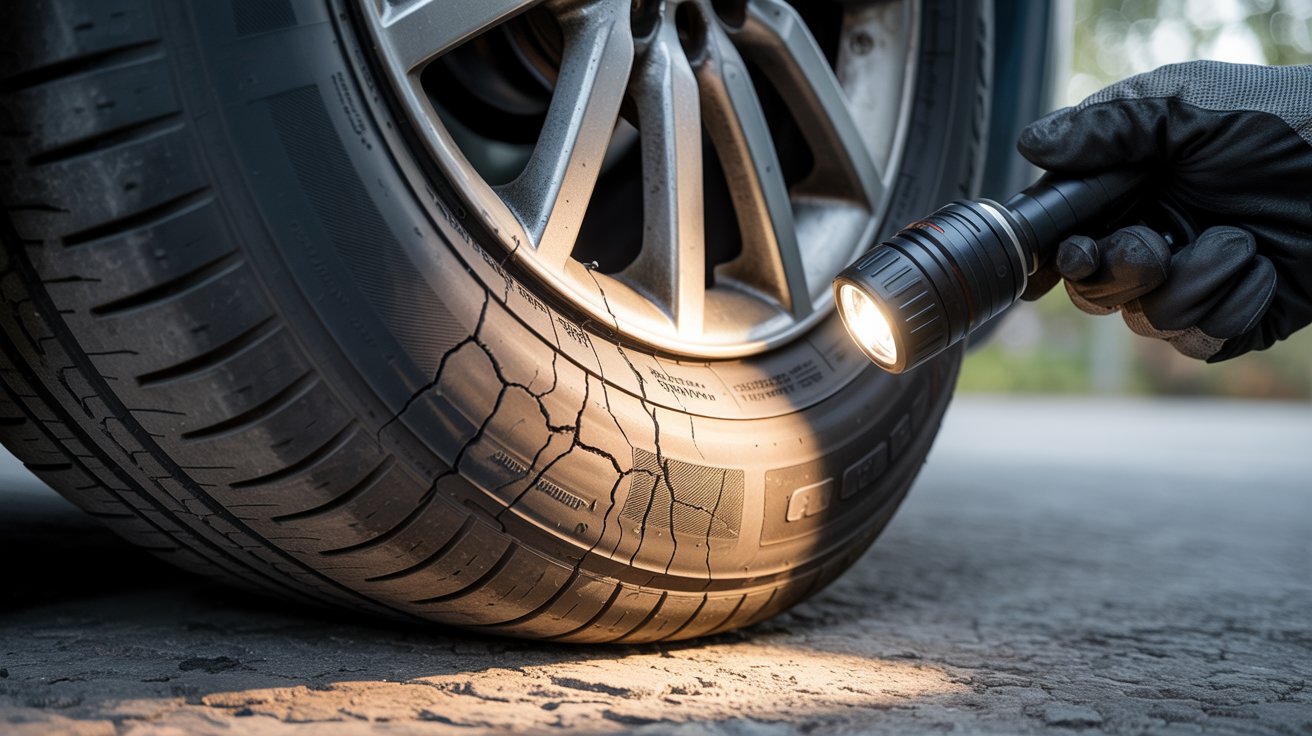
Check the spare for cuts, bulges, or cracks.
Any visible damage means the tire should not be trusted for further driving.
Poor Handling or Pulling to One Side
If your car feels harder to control or keeps pulling to one side, stop and check the spare.
This often points to uneven pressure or tire damage.
Tips for Driving Safely on a Spare Tire
A few simple habits can help you stay safe while using a spare tire. These steps reduce risk and protect your vehicle.
- Always check the spare's pressure before you start driving. Correct pressure helps the tire perform as it should.
- Follow the speed limit listed for your specific spare tire. This single habit lowers the risk of a tire failure significantly.
- Sudden stops and sharp turns put extra stress on a spare tire. Drive smoothly and give yourself more space to slow down.
- Keep an eye on the spare during your drive. Stop right away if you notice shaking, low pressure, or visible damage.
- The spare is only a temporary fix. Get your original tire repaired or replaced as soon as possible to avoid the risks listed above.
Conclusion
A flat tire always seems to happen at the worst time.
I've been there myself, stuck on the shoulder, fumbling with a spare tire while traffic rushed by.
What helped was knowing exactly how far and how fast I could safely go.
Now you know it too. So next time a flat catches you off guard, you'll handle it with confidence instead of panic.
Got a spare tire story of your own? Drop it in the comments, share this with a friend who needs it, and check out our other car care guides.
Frequently Asked Questions
Can I drive on a spare tire every day?
No, a spare tire is meant for short-term use only. Driving on it daily increases the risk of a blowout and adds strain on your car.
How do I know if my spare tire is a donut or full-size?
A donut spare is noticeably smaller and narrower than your regular tires. A full-size spare matches the size and look of your other tires.
Is it safe to drive on a spare tire in the rain?
Yes, but you should drive slower and avoid sudden braking. Spare tires often have less grip, so wet roads need extra caution.
Can a spare tire go flat too?
Yes, spare tires can lose air over time, even if they're rarely used. Check the pressure regularly so it's ready when you need it.
What should I do if my spare tire feels wobbly while driving?
Pull over safely and check the tire right away. Wobbling can mean low pressure, damage, or an improperly mounted spare.