
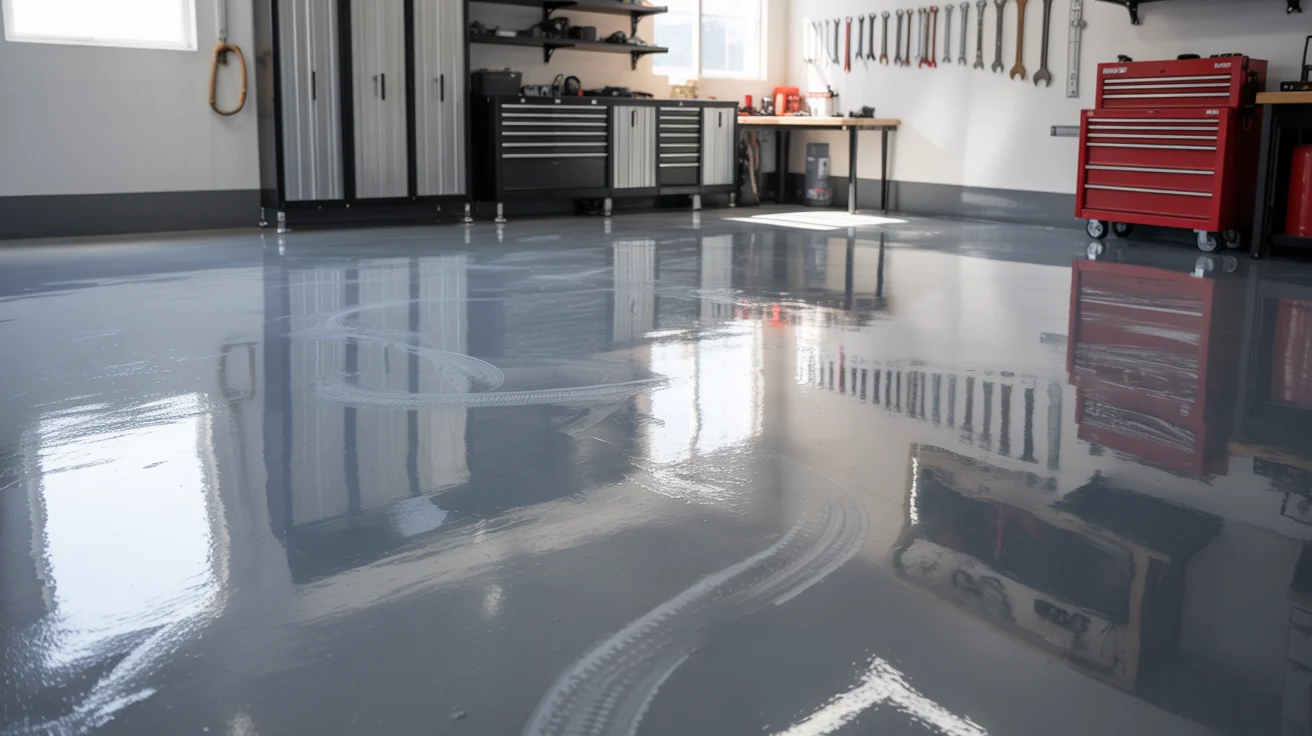
Your concrete garage floor takes a beating every day. Oil drips, tire marks, and heavy equipment can make it look worn and dirty. But there’s a solution that can change everything: epoxy garage flooring.
More homeowners are choosing epoxy because it offers real, lasting results. This coating turns a plain concrete slab into a tough, good-looking surface that can handle years of hard use.
Understanding the benefits of epoxy garage floor options means looking at both the good and the bad. This guide gives you a full picture of what epoxy can do for your space.
We’ll cover the major advantages, the downsides you should know about, and practical tips to help you succeed. By the end, you’ll have the facts you need to make a smart choice for your home.
What is Epoxy Garage Flooring?

Epoxy is a strong, resin-based coating that you apply directly to concrete surfaces. It creates a chemical bond with the concrete underneath, forming a solid, protective layer. This isn’t just paint that sits on top. It becomes part of the floor itself.
The application process involves mixing resin and hardener. When combined, these materials create a chemical reaction that hardens into an extremely tough surface. The result is a seamless coating that covers every inch of your concrete.
This coating turns a basic concrete floor into a polished, professional-looking space. Homeowners use it in garages, workshops, and basements. Businesses apply it in warehouses and commercial garages, too. You can choose from several types, including standard epoxy, flake systems, metallic finishes, and and fast-curing polyaspartic coatings.
Key Benefits of Epoxy Garage Floor

When you look at the benefits of epoxy garage floor coatings, several advantages stand out. These features make epoxy a smart investment for homeowners who want a floor that lasts and performs well.
Exceptional Durability and Longevity
Epoxy creates one of the toughest floor surfaces you can install. It resists wear and tear from vehicles, heavy tools, and daily foot traffic. When a car rolls over it thousands of times, the coating stays intact. Drop a heavy wrench? The epoxy won’t chip or crack like plain concrete would.
A properly installed epoxy floor can last 10 to 20 years or more. With regular care, some floors stay in great shape for even longer. This makes it a solid investment that saves you money over time. You won’t need to replace or repair your floor every few years like you might with other options.
Superior Chemical and Stain Resistance
One of the top benefits of epoxy garage floor systems is how they handle spills. The coating acts like a shield against oil, gasoline, brake fluid, and other automotive chemicals. These liquids just sit on the surface instead of soaking in.
This protection prevents ugly stains that would normally ruin concrete. If you spill motor oil, you can wipe it up without leaving a mark. The floor keeps looking clean and new even after years of use. For anyone who works on cars or uses chemicals in their garage, this feature alone makes epoxy worth considering.
Easy Maintenance and Cleaning
Keeping an epoxy floor clean takes almost no effort. A quick sweep removes dust and dirt. For deeper cleaning, a damp mop with mild soap does the job. That’s it. No special products or hours of scrubbing needed.
The smooth, sealed surface doesn’t trap dirt or absorb stains. When something spills, you just wipe it away. This simple maintenance routine fits perfectly with busy schedules. You spend less time cleaning and more time using your garage for what matters.
Enhanced Safety and Visibility
Safety is another key benefit of epoxy garage floor installations. Many epoxy coatings include slip-resistant additives that give you better traction. This reduces the chance of falls, especially on wet surfaces. Your family stays safer when walking through the garage.
Epoxy also reflects light much better than plain concrete. This brightens your whole garage space. You can see more clearly when working on projects or looking for tools. Better lighting means fewer accidents and a more comfortable workspace.
Aesthetic Appeal and Customization Options
Epoxy doesn’t just perform well. It looks great, too. The glossy finish gives your garage a clean, professional appearance. It’s a huge step up from dull, gray concrete.
You have lots of choices when it comes to color and style. Pick a solid color that matches your home. Add decorative flakes for texture and visual interest. Choose metallic finishes for a modern look.
These options let you create a space that fits your taste. Great-looking garage can even boost your home’s value when it’s time to sell.
Disadvantages to Consider

While the benefits of epoxy garage floor systems are clear, you need to know about the challenges, too. Being aware of these issues helps you prepare and make a choice that works for your situation.
Complex and Time-Intensive Installation Process
Installing epoxy is not simple or quick. The concrete needs extensive preparation first. This includes deep cleaning, grinding down the surface, filling cracks, and applying primer. Each step takes time and must be done right.
The process requires careful attention to detail. Miss a step or rush through it, and the epoxy won’t bond properly. It might peel or fail early.
Most people find this is not a weekend DIY project. Professional installers have the tools, knowledge, and experience to do it correctly.
Higher Upfront Costs
Epoxy costs more at the start than basic concrete sealers or garage tiles. Quality epoxy materials aren’t cheap. Professional installation adds to the expense because of the labor and expertise required.
The total cost depends on your garage size, the condition of your concrete, and the type of epoxy you choose. Surface prep, specialized materials, and skilled labor all factor into the final price. While the long-term value is strong, the initial investment requires serious budget planning.
Temperature and Moisture Sensitivity
Epoxy can crack or peel if not installed under the right conditions. Extreme temperature swings can harm the coating’s strength over time. Too much moisture in the concrete before application can cause the epoxy to separate from the surface.
Your local climate matters when planning an installation. Some regions have conditions that make epoxy trickier to apply. The garage needs a stable temperature and low humidity during installation and while the coating cures. Without these conditions, you risk problems down the road.
Strong Fumes and Odors During Application
Epoxy gives off strong chemical smells when you apply it. These fumes can be unpleasant and may cause headaches or breathing issues for some people. Proper airflow is a must during installation to stay safe.
The good news is this is temporary. Once the epoxy fully cures, the smell goes away. But during application and the first day or two, you can’t use your garage comfortably. Plan to keep vehicles and people out of the space for at least 24 to 72 hours.
Difficult Repairs and Modifications
If your epoxy floor gets damaged, fixing it is not easy. Damaged spots are hard to repair, so they blend in perfectly with the rest of the floor. Small patches often show because the new material doesn’t match the old coating exactly.
For major damage, you might need to recoat the entire garage to get a uniform look. This means more time and money. Once epoxy is down, you’re committed to that floor for years. This long-term commitment is something to think about before you install.
Tips for Epoxy Garage Flooring Success
Making the most of epoxy flooring requires smart choices and proper care. Here’s how to get the best results from your investment.
Choose professional installation over DIY for the best outcome. Professional work typically lasts 15 to 20 years, while DIY attempts often only make it 5 to 10 years.
Experts know how to prep surfaces correctly and apply coatings evenly. Their experience prevents costly mistakes.
Select the right epoxy type for your needs and budget:
- Standard epoxy works great for basic protection and everyday use
- Flake systems add decorative appeal with colored chips mixed in
- Metallic finishes create a modern, high-end look with swirled patterns
- Polyaspartic coatings cure faster if you need to use your garage sooner
Maintain your floor with pH-neutral cleaners designed for sealed surfaces. Avoid harsh chemicals, rough scrub brushes, or power washers that can damage the coating. Stick to gentle detergents and soft mops for routine cleaning.
Conclusion
The benefits of epoxy garage floor systems make them a smart choice for most homeowners. You get outstanding durability that stands up to years of hard use. Chemical resistance keeps your floor spotless despite spills. Maintenance is quick and easy. Safety improves with better traction and lighting. Plus, the floor looks professional and can boost your home’s value.
Yes, you’ll face higher costs upfront and a complex installation process. Temperature sensitivity and strong fumes during application are real concerns, too. But for most people, these short-term challenges are worth it.
Think of epoxy as a long-term investment in your home. With proper installation and basic care, it pays for itself over the years. You avoid repeated repairs and replacements that other flooring types need.
Frequently Asked Questions
How Long Does the Installation Process Take for a Typical Garage?
Most installations take 2 to 5 days from start to finish. This includes surface prep, coating application, and initial curing time. Garage size, concrete condition, and coating type affect the timeline. You can usually park on the floor after 24 to 72 hours, but full curing takes about 7 days.
Can Epoxy Be Applied Over Previously Painted Concrete?
Yes, but the old paint must be removed or heavily prepped first. Without proper surface preparation, the epoxy won’t stick well. This affects how long the coating lasts and how good it looks. Get a professional to check your floor and recommend the best prep method.
Will Epoxy Flooring Crack in Extreme Weather Conditions?
Quality epoxy handles a wide temperature range when installed correctly. Proper installation techniques prevent most weather-related problems. Your local climate does matter, though. The right application methods and regular maintenance keep your floor strong even in challenging conditions.
What Should I Do If My Epoxy Floor Starts to Yellow?
Yellowing happens from UV light exposure, certain chemicals, or normal aging. UV-resistant topcoats help prevent this problem. Keep your floor clean and avoid harsh chemicals. If yellowing becomes severe, you may need to apply a fresh topcoat to restore the appearance.
Is Special Ventilation Required After Installation?
Yes, you need good airflow during and right after installation. The chemical smell usually clears within 24 to 48 hours. After that, your garage is safe for normal use. People with breathing sensitivities should stay away until the odor completely disappears.