
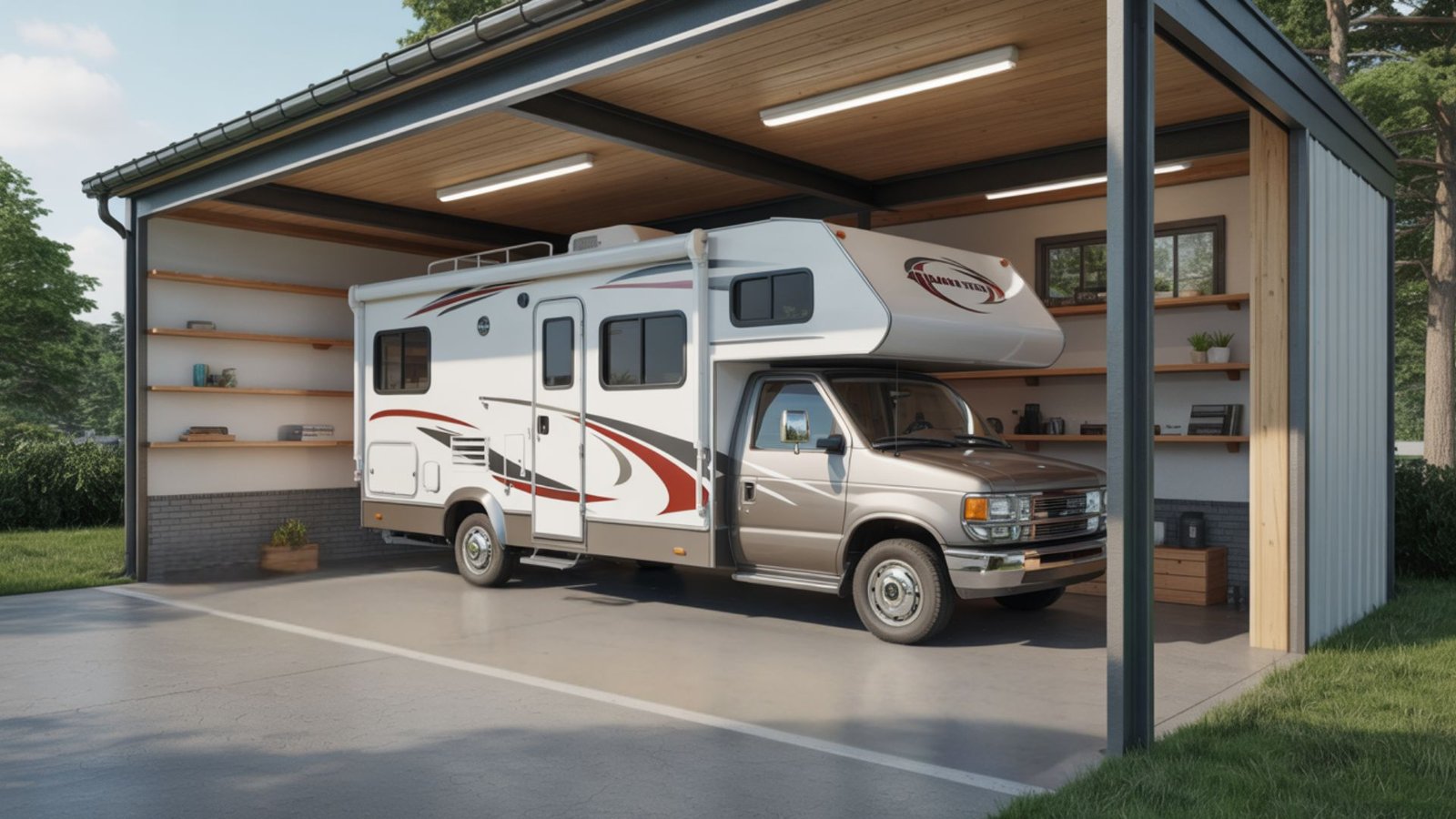
Building an RV garage without knowing the right size can cost you thousands of dollars in mistakes. Too small, and your RV won’t fit through the door.
Too tight, and you’ll struggle every time you try to park or walk around your vehicle. The good news is that getting the correct RV garage dimensions doesn’t have to be complicated or stressful.
This guide will show you exactly what size garage you need for your specific RV. You’ll learn the standard sizes for different RV types, what extra space to add for comfort and safety, and how to measure your vehicle correctly. We’ll cover height clearance, width requirements, and length planning.
By the end, you’ll know exactly how to plan a garage that protects your investment and makes storage simple for years to come.
RV Garage Dimensions by RV Type

The size you need depends on what type of RV you own. Each class has different requirements. Let’s break down the specific RV garage dimensions for each vehicle type.
Garage Size for Class A Motorhomes
Class A motorhomes are the largest RVs on the road, and they need the most space. These big vehicles typically measure between 45 and 50 feet in length. For width, you need at least 12 to 16 feet to fit the vehicle, plus some wiggle room.
Height is where Class A owners really need to pay attention. Most Class A motorhomes stand around 12 to 13 feet tall, but you should plan for 14 feet or more of clearance. This extra height accounts for roof air conditioners, antennas, and satellite equipment that stick up above the roofline.
Garage Size for Class B Camper Vans
Class B camper vans are the smallest motorized RVs, making them easier to store. These converted vans usually run 25 to 30 feet long. They’re also narrower than other RV types, but you still want at least 10 feet of width for easy parking.
The good news for Class B owners is the height requirement. Most camper vans stay under 10 feet tall, but you should still plan for 12 feet of clearance. This gives you room for any roof accessories you might add later, like solar panels or roof racks.
Garage Size for Class C Motorhomes
Class C motorhomes fall in the middle range for size. These RVs typically measure 40 to 45 feet in length. They need 12 feet or more of width to accommodate their body and allow for safe entry and exit.
For height, Class C motorhomes usually need the same 14 feet of clearance as Class A models. The cab over the sleeping area makes them taller than they might look at first glance. Plan for plenty of vertical space to avoid scraping your roof when pulling in.
Garage Size for Fifth Wheels and Travel Trailers
Fifth wheels are among the largest towable RVs. They range from 40 to 50 feet in length and need 14 to 16 feet of width. The height requirement is the biggest challenge, with most needing 16 to 18 feet of clearance because of their raised front section.
Travel trailers are more compact than fifth wheels. Most measure 30 to 40 feet long and need 12 to 14 feet of width. Height requirements typically fall between 14 and 16 feet, depending on the model and roof accessories.
Garage Size for Smaller RV Types
Truck campers are the smallest option for motorized camping. These units sit in the bed of a pickup truck and typically need just 20 to 25 feet of length. Width runs around 8 to 10 feet, and height can reach 10 to 12 feet when mounted on the truck.
Popup campers are even smaller when collapsed. You only need about 15 to 20 feet of length and 8 feet of width. Height when closed is usually just 4 to 5 feet, making them easy to fit in standard garages.
Teardrop campers are the tiniest towable option. These cute trailers measure just 10 to 15 feet long and 5 to 6 feet wide. They stand about 5 to 6 feet tall, so they fit in almost any garage space.
Quick Reference Table
| RV Type | Length | Width | Height |
|---|---|---|---|
| Class A | 45-50 ft | 12-16 ft | 14+ ft |
| Class B | 25-30 ft | 10+ ft | 12+ ft |
| Class C | 40-45 ft | 12+ ft | 14+ ft |
| Fifth Wheel | 40-50 ft | 14-16 ft | 16-18 ft |
| Travel Trailer | 30-40 ft | 12-14 ft | 14-16 ft |
| Truck Camper | 20-25 ft | 8-10 ft | 10-12 ft |
| Popup Camper | 15-20 ft | 8 ft | 4-5 ft |
| Teardrop | 10-15 ft | 5-6 ft | 5-6 ft |
What Affects RV Garage Size?

Knowing your RV’s size is just the starting point. You need to add extra space for practical reasons that make daily use easier.
How Much Height Clearance Do You Need?
Roof-mounted accessories add more height than most people realize. Air conditioning units typically stick up 10 to 14 inches above the roof. If you have multiple AC units, they take even more space.
Antennas and satellite dishes create the biggest height challenges. Some extend 2 to 3 feet above the roofline when raised. The smart move is to add 2 to 4 feet of buffer space above your RV’s actual height. This prevents damage and gives you room to upgrade equipment later.
Extra Width You Should Plan For
Your RV’s width is not the only measurement that matters. You need space to open doors without hitting walls. Most RV entry doors swing out 2 to 3 feet, and you want comfortable access.
Slide-out extensions add several feet to your RV’s width when deployed. Some models have slides on both sides. For safe movement around your vehicle, plan for at least 10 feet of total width inside the garage. Don’t forget that side mirrors stick out 6 to 12 inches on each side and need clearance, too.
Extra Length That Makes Parking Easier
Front and rear bumpers extend beyond the main body of your RV. Add at least 2 feet of space in front and behind for safe parking. This buffer zone prevents you from scraping walls or doors.
Many RVs have rear ladders that need room to swing down. You’ll also want space to store items like hoses, power cords, and leveling blocks. Having a few feet of workspace at the front or rear makes maintenance and prep work much easier.
Why Building a Larger RV Garage Helps?

Building a larger RV garage than you currently need makes sense for several reasons. Future RV upgrades happen more often than people expect. If you decide to buy a bigger motorhome or trailer in five years, you won’t need to rebuild your garage.
Extra space inside your garage serves multiple purposes. You can store camping gear, outdoor equipment, and seasonal items. Many RV owners use the extra room for a workbench or tool storage area. This makes repairs and maintenance more convenient.
Bigger garages also boost your property value. When it’s time to sell your home, buyers see a large garage as a major plus. Even if they don’t own an RV, they’ll find uses for the space. The general rule is simple: build as large as your budget allows.
How to Measure Your RV Correctly?

Getting correct measurements prevents costly mistakes. Start with a long tape measure (at least 50 feet) and a helper to hold the other end. Measure from the very front bumper to the very back, including any racks or carriers.
For height, measure from the ground to the highest point on your roof. This usually means the AC unit or antenna. Include everything that sticks up, even if it seems small. Width should include mirrors in their normal driving position and any awnings or slide-outs you keep extended.
Common mistakes include measuring just the body and forgetting accessories. Always measure with everything attached that will be on your RV when you park it. Take photos of your measurements so you can refer back to them when planning your garage build.
Choosing Materials for an RV Garage
Choosing the right materials affects how long your garage lasts and how much maintenance it needs.
- Steel construction offers superior strength and lasts 30 to 40 years with minimal care. Steel resists fire, pests, and rot better than wood.
- Wood construction costs less upfront but requires regular painting and sealing. Wood can warp or rot in humid climates over time.
- Weather resistance matters most in areas with heavy snow, strong winds, or intense sun. Steel handles extreme weather better than most materials.
- Maintenance requirements for steel are minimal, just occasional cleaning. Wood needs painting every 5 to 10 years and regular inspection for damage.
- Cost effectiveness depends on your long-term plans. Steel costs more initially but saves money over 20 to 30 years due to lower maintenance.
When planning your RV garage dimensions, consider how your material choice affects the building process and final cost.
Helpful Add-Ons for an RV Garage
Adding the right features makes your garage more useful year-round.
- Insulation keeps temperatures stable, protecting your RV from extreme heat and cold. It also prevents moisture buildup that leads to mold.
- Extra doors and windows improve ventilation and natural light. Side doors make it easier to access stored items without moving your RV.
- Lean-to additions attach to the side of your garage and provide covered storage for outdoor equipment, firewood, or a generator.
- Electrical systems should include plenty of outlets for battery charging, power tools, and lighting. Consider adding a dedicated circuit for heavy equipment.
- Lighting solutions make working on your RV easier. LED strips or shop lights provide bright, even coverage throughout the space.
These additions make your garage more than just a parking spot. They turn it into a functional workshop and storage area.
Conclusion
Getting the right RV garage dimensions protects your investment and makes RV ownership more enjoyable. Start by knowing your vehicle’s exact measurements, then add buffer space for height, width, and length. Remember that bigger is almost always better when it comes to garage sizing.
Take the time to measure your RV accurately with all accessories attached. Don’t cut corners by building the minimum size; you’ll regret it later. Consider future needs, extra storage space, and resale value when making your decision.
Ready to start planning? Grab your tape measure and get your RV’s exact dimensions today. Then add at least 2 to 4 feet in every direction for comfortable use. Your future self will thank you for building a garage with room to spare.
Frequently Asked Questions
How Much Extra Space Should I Add to My RV’s Actual Dimensions?
Add at least 2 to 4 feet to the height for roof accessories. Include 2 to 3 feet on each side for width to allow door opening and movement. Front and rear should each have 2 feet of clearance for safe parking and workspace.
Can I Store Multiple Vehicles in an RV Garage?
Yes, if you build a large enough RV garage. Many owners design garages that fit an RV plus a car or truck. Calculate the combined length and add 5 feet between vehicles. The width should accommodate both vehicles side by side with walking space.
Do I Need Special Permits to Build an RV Garage?
Most areas require building permits for structures over 120 square feet. Zoning rules vary by location and may restrict garage height or placement on your property. Check with your local building department before starting construction to avoid fines or required changes.
What Is the Average Cost to Build an RV Garage?
Costs range from $15,000 to $50,000, depending on size and materials. Steel buildings typically cost $15 to $25 per square foot. Wood construction runs $20 to $35 per square foot. Large garages for Class A motorhomes can exceed $60,000 with customization.
How Do I Protect My RV During Extreme Weather Conditions?
Insulated garages regulate temperature and prevent freezing pipes. Proper ventilation stops moisture buildup that causes mold. Install weather stripping around doors to keep out wind and rain. Consider adding a dehumidifier in humid climates to protect interior surfaces and electronics.