
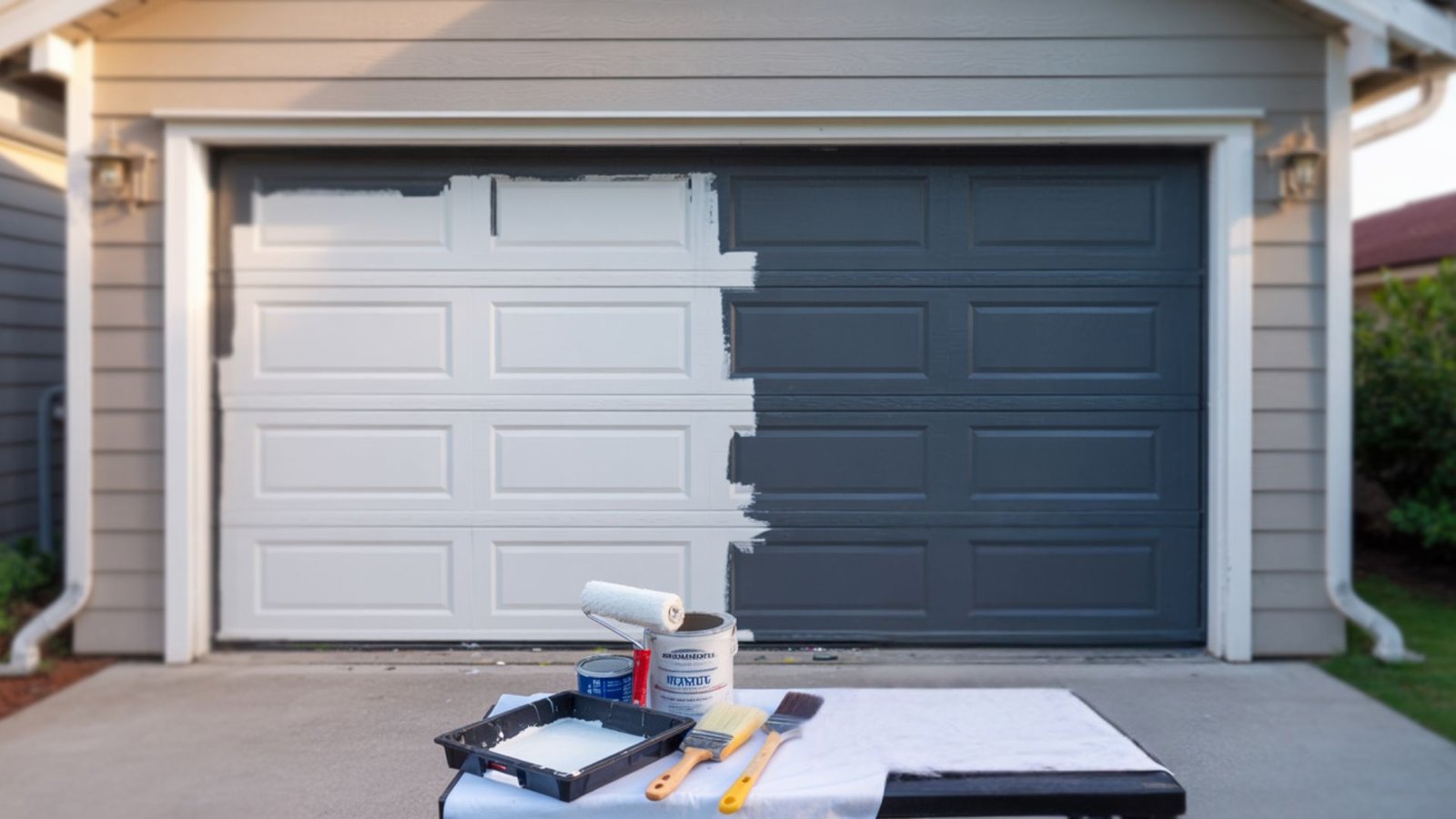
Have you ever painted your garage door, only to find it sticking shut the next day? This frustrating problem affects many homeowners who try to refresh their home’s look. The good news is that you can fix this issue and prevent it from happening again.
When paint causes your garage door to stick, it usually happens because of excess paint in the wrong places, not enough drying time, or using the wrong type of paint. Understanding what makes paint stick will help you solve current problems and avoid future ones.
This guide will show you how to paint a garage door without sticking by covering both quick fixes for doors that already stick and prevention methods for your next painting project. You’ll learn the right techniques, products, and timing to get a smooth result.
Why Garage Door Paint Sticks After Application?

Paint sticking happens most often when too much paint builds up in the grooves between panels and along the edges. These areas trap extra paint that never fully dries. When you close the door, these wet spots press against each other or against the weather stripping.
Another common cause is closing the door too soon after painting. Paint might feel dry to the touch after a few hours, but it takes much longer to fully cure. If panels touch before the paint hardens completely, they can bond together.
The type of paint you choose matters too. Some paints have poor block resistance, which means they stay tacky and stick to surfaces even after they seem dry.
Add in problems like high humidity, cool temperatures, or wood that swells with moisture, and you have the perfect conditions for a sticking door. Paint can also transfer onto rubber weather stripping, creating another sticking point.
How to Paint a Garage Door Without Sticking?
Following these seven steps will help you paint your garage door correctly from start to finish. Each step addresses a specific part of the process that prevents sticking problems.
Step 1: Clean and Prepare the Surface Thoroughly
\

Start by cleaning your garage door completely with a degreaser to remove oil, dirt, and grime. Rinse the door well and let it dry fully before moving forward. This step ensures that paint will adhere properly to the surface and prevents future peeling or sticking issues.
After cleaning, sand the entire surface with medium-grit sandpaper using a palm sander. Focus on panel edges where old paint builds up in thick layers.
Remove as much old paint as possible from these edges and sand down any flaking or rough spots until the surface feels smooth. This creates the right texture for new paint to grip effectively.
Step 2: Apply a High-Quality Oil-Based Primer

Oil-based primers work best for wood garage doors because they soak into the wood grain and create a strong base for your topcoat. They also block moisture that can cause wood to swell and paint to stick.
Good options include Zinsser Coverstain and Benjamin Moore Fresh Start, which offer better adhesion than water-based products.
Don’t skip primer, even if the door was painted before. The primer seals the wood and creates a surface that helps your final paint coat perform better.
This layer prevents moisture problems and gives you a foundation that reduces the risk of sticking between panels when the door is in use.
Step 3: Select Paint with Strong Block Resistance

Block resistance means the paint won’t stick to itself or other surfaces, even when pressed together. This property is critical for garage doors because the panels move and touch each other constantly.
Choose products specifically designed with this feature, such as PPG Breakthrough, Benjamin Moore Command, or Sherwin-Williams SnapDry.
Avoid flat finishes completely, as they attract dirt and have poor block resistance. Instead, opt for satin or semi-gloss finishes that clean more easily and resist sticking better.
If your garage door faces the sun for most of the day, consider lighter colours that reflect heat and prevent the paint from getting too soft in hot weather.
Step 4: Apply Thin, Strategic Coats of Paint

When you start painting, use thin coats instead of thick ones. Heavy paint between panels is a main cause of sticking problems.
Apply paint evenly across the surface, being extra careful around panel joints and edges where paint can build up and create problems.
Most garage doors only need two coats of paint to look good and last long. More coats just add extra thickness that increases the risk of sticking.
Work methodically to keep each coat thin and uniform across the entire door, ensuring no areas have excessive paint buildup.
Step 5: Keep the Door in Proper Drying Position

After painting, leave your garage door about halfway open. This position allows air to reach all sections of the door evenly, helping paint dry faster and more completely.
Good air circulation is key to preventing panels from sticking together during the drying process.
Don’t close the door completely for several days after painting. Even if the paint looks and feels dry, panels pressed together can still stick.
Keep the door in the half-open position or slightly closed but not fully shut to prevent panels from touching while the paint cures.
Step 6: Allow Full Cure Time Before Normal Use

Paint goes through two stages: drying and curing. Paint might be dry to the touch in a few hours, but curing takes much longer.
For acrylic latex paints, full curing takes 15 to 20 days. During this time, the paint hardens completely and develops its final properties that resist sticking.
Weather affects cure time significantly. High humidity slows down the process, and cool temperatures can double the time needed.
In damp or cold conditions, give your paint extra time before you use the door normally. Wait at least 24 hours before partially closing the door, and avoid full closure for a week or more.
Step 7: Perform Regular Maintenance Checks

After you successfully paint your garage door, keep it working well with regular maintenance. Check your door after rainy seasons or periods of high humidity for spots where paint might be softening or where panels seem to stick slightly. Small efforts now prevent big problems later.
Watch for signs of wood expanding or contracting with weather changes, which can create new sticking points that need attention. Monitor paint condition regularly and look for areas where the finish is wearing down or becoming damaged.
Consider repainting with better products when the current paint starts to wear, especially if you used lower-quality paint the first time.
Best Paint Products for Block Resistance
Choosing paint with good block resistance is key to preventing sticking problems. Block resistance means the paint won’t stick to itself or other surfaces, even when pressed together. Here are some top options that work well for garage doors.
- PPG Breakthrough offers excellent block resistance and dries quickly, making it a reliable choice for busy homeowners
- Benjamin Moore Command (Waterborne Acrylic Urethane) provides a hard finish that resists sticking and stands up to weather. Sherwin-Williams SnapDry lives up to its name with fast drying that reduces the chance of sticking between panels.
- Dulux Diamond Exterior is known for its durability and good block resistance that lasts for years.
- Block resistance matters because garage door panels move and touch each other constantly, and without it, even fully dried paint can stick
- Choose satin over flat finishes because flat paint attracts dirt and has poor block resistance, making it a bad choice for garage doors.
Block resistance should be one of your top priorities when selecting paint. Investing in high-quality paint with good block resistance saves you from repeated sticking problems and keeps your door working smoothly.
Long-Term Maintenance Tips
After you successfully paint your garage door without sticking, keep it working well with regular maintenance. Small efforts now prevent big problems later.
- Check your door after rainy seasons or periods of high humidity for spots where paint might be softening or where panels seem to stick slightly.
- Reapply lubricants to problem areas as needed, but remember this is just a temporary help and not a permanent solution
- Watch for signs of wood expanding or contracting with weather changes, which can create new sticking points that need attention.
- Monitor paint condition regularly and look for areas where the finish is wearing down or becoming damaged. ed
- Consider repainting with better products when the current paint starts to wear, especially if you used lower-quality paint the first time.
Sometimes spending more upfront costs less than fixing the same problem multiple times. Investing in high-quality paint with good block resistance saves you from repeated sticking problems down the road.
Conclusion
Dealing with a stuck garage door after painting is frustrating, but you now have the tools to fix it. Use immediate solutions like cleaning excess paint, replacing damaged weather stripping, or applying temporary lubricants to solve current sticking problems.
The real secret to how to paint a garage door without sticking is prevention. Prepare surfaces properly, choose the right primer and paint products, apply thin coats, and give paint enough time to cure fully. These steps take extra time but save you from headaches later.
Invest the effort to do the job right the first time. Your garage door will look good and work smoothly for years. If the project seems too complex or time-consuming, consider hiring a professional painter who knows the proper techniques and has experience with garage doors.
Frequently Asked Questions
Can I Use Flat Paint to Fix Sticking Issues?
Flat paint is not a good choice for garage doors. It attracts dirt easily and has poor block resistance, which can make sticking worse. Use satin or semi-gloss finishes instead. These finishes clean more easily and resist sticking better than flat paint.
Will Waxing or Using WD-40 Permanently Fix the Problem?
No, these are temporary solutions only. Waxing or using WD-40 provides short-term relief but doesn’t fix the root cause. Lubricants attract dust and break down over time. You’ll need to reapply them often, and they can make surfaces greasy or dirty.
Should I Paint the Rubber Weather Stripping?
Never paint rubber weather stripping. Paint doesn’t stick well to rubber and will peel off quickly. If your stripping looks bad, replace it instead. Clean stripping works better than painted stripping and won’t cause sticking problems.
How Long Should I Wait Before Closing My Garage Door After Painting?
Wait at least 24 hours before partially closing the door, and avoid full closure for a week. In humid or cold weather, wait even longer. The paint should feel completely hard and not tacky at all before you close the door fully.
Is It Better to Replace the Weather Stripping or Repaint the Door?
It depends on the condition of each. If only the stripping has paint on it, replacing the stripping costs less and works faster. If the door paint is the problem, you might need to repaint. For DIY projects, stripping and replacement is easier than repainting.