
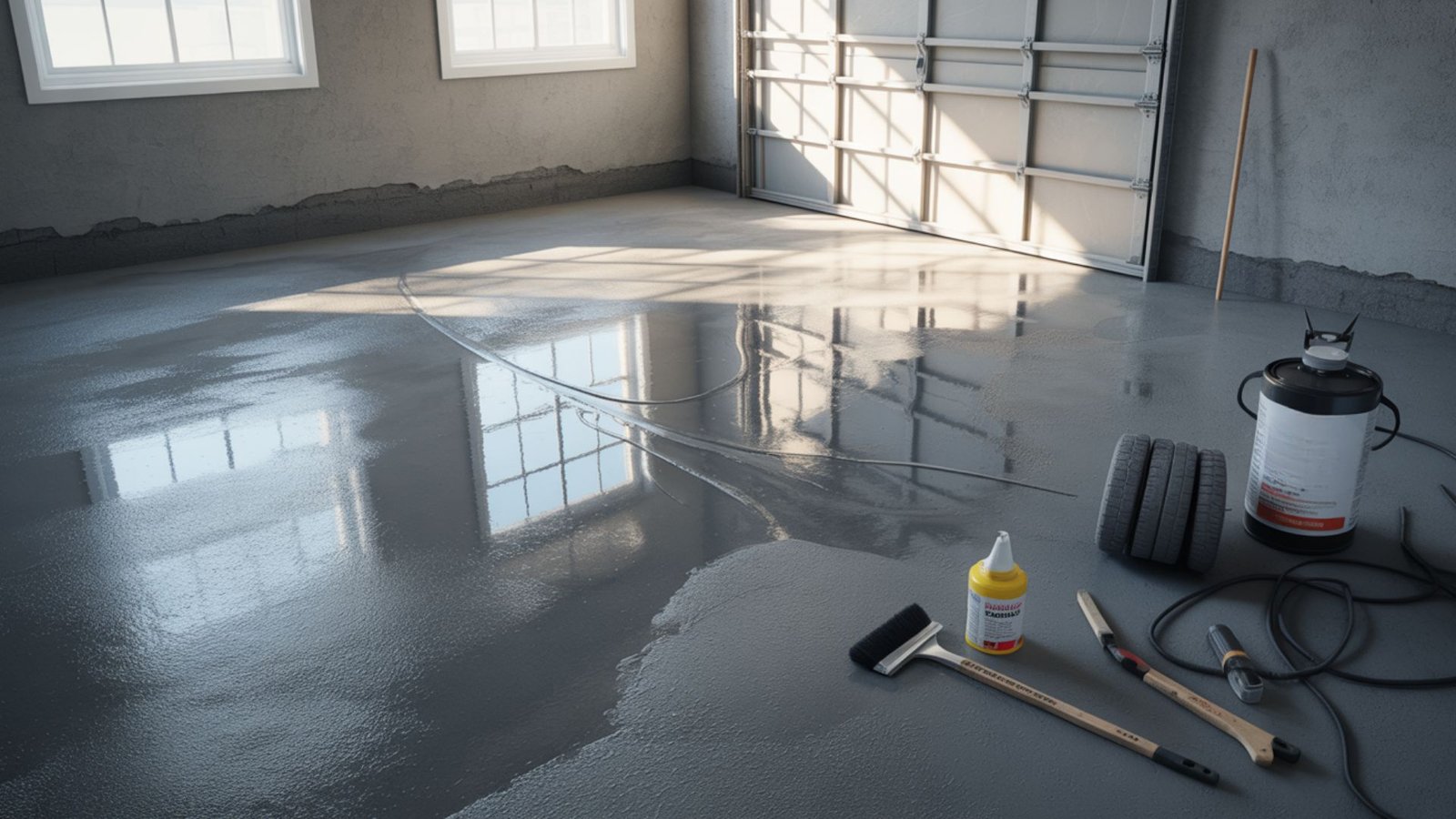
Your garage floor takes a beating every day. Oil drips, tire marks, water damage, and heavy foot traffic all wear down the concrete over time. Many homeowners look for ways to protect their garage floors without spending too much money.
Sealing your garage floor is one option that can shield the concrete from stains and moisture. But it’s not the same as coating, which offers more protection.
Understanding the cost to seal garage floor surfaces helps you make a smart choice for your space.
This guide breaks down the real costs of garage floor sealing. You’ll learn about price ranges, what affects the final cost, and how sealing compares to other options. We’ll also help you decide if sealing is the right choice for your needs.
How Much Does It Cost to Seal a Garage Floor?

The cost to seal garage floor surfaces typically runs from $1 to $3 per square foot. This includes both materials and labor when you hire a professional.
For a standard two-car garage of about 400 square feet, you’re looking at a total cost between $400 and $1,200.
The price depends on several things. The condition of your concrete matters a lot. A floor that needs repairs or deep cleaning will cost more to seal.
The type of sealer you choose also changes the price. Basic acrylic sealers sit at the lower end, while penetrating sealers cost more but last longer.
Garage floor sealers need reapplication every 1 to 3 years. This shorter lifespan means you’ll spend money on resealing regularly.
Factor this into your long-term budget when deciding if sealing makes sense for your garage. The upfront cost may seem low, but the repeated applications add up over time.
Sealing vs. Coating: Quick Cost Comparison

Sealers create a thin protective layer on top of concrete. They block water and stains but don’t add much strength.
Coatings like epoxy and polyurea bond deeply with the concrete and create a thick, durable surface.
They cost more upfront but last much longer and handle heavy use better. Think of sealing as a basic shield and coating as heavy-duty armor for your floor.
| Finish Type | Cost Per Square Foot | Lifespan | Protection Level |
|---|---|---|---|
| Garage Floor Sealing | $1 to $3 | 1 to 3 years | Basic |
| Epoxy Coating | $4 to $10 | 3 to 20 years | High |
| Polyurea Coating | $5 to $10 | 10 to 20 years | Very High |
| Polyaspartic Coating | $5 to $12 | 10 to 20 years | Very High |
Understanding Garage Floor Sealing

Garage floor sealing applies a thin protective layer over your concrete. This layer sits on the surface and acts as a barrier against water, oil, and other liquids.
Sealers are clear or slightly tinted, so they keep the natural look of your concrete while adding some protection.
The main job of a sealer is to stop moisture and stains from soaking into the concrete. Concrete is porous, which means liquids can seep in and cause damage or discoloration.
A sealer fills those pores and creates a protective film. This makes cleanup easier and helps prevent long-term damage from spills.
Sealing works well for garages that don’t see heavy use or harsh chemicals. It’s a good fit if you mainly park cars and want basic protection. However, sealers don’t add impact resistance or handle hot tire pickup well.
They also wear down faster than coatings, especially in high-traffic areas. For garages with heavy equipment, constant vehicle traffic, or frequent chemical exposure, a coating might serve you better.
Cost Breakdown by Garage Size

For a one-car garage of about 288 square feet, the cost to seal garage floor surfaces ranges from $290 to $860. This smaller space costs less overall, but the price per square foot stays the same. One-car garages often work well with sealing since they typically see less traffic than larger spaces.
A standard two-car garage of 400 square feet will cost between $400 and $1,200 to seal. If you have a larger two-car garage around 576 square feet, expect to pay $575 to $1,730.
These are the most common garage sizes in American homes, and they benefit from sealing if you want basic protection on a budget.
Three-car garages at 864 square feet run from $860 to $2,590 for sealing. Larger spaces naturally cost more because of the extra materials and labor time needed.
Keep in mind that bigger garages might see more vehicle traffic, which means the sealer could wear out faster and need replacement sooner than in a smaller space.
Factors That Affect Garage Floor Sealing Cost

Several things can push your garage floor sealing cost up or down. Knowing these factors helps you get accurate quotes and avoid surprise expenses.
Floor Condition
The state of your concrete has a big impact on the final price. Clean, smooth concrete is ready to seal with minimal prep work. But most garage floors need some attention first.
Surface preparation might include pressure washing, degreasing, or light grinding to remove stains and create a clean surface for the sealer.
Cracks, holes, and damaged areas need repair before sealing. Small cracks can be filled with concrete patching compound, while larger damage might need more work. If you have old coating or paint on the floor, it must be removed completely.
Grinding or chemical stripping adds to the labor time and material costs, sometimes doubling the total expense.
Type of Sealer
Acrylic sealers are the most budget-friendly option. They cost less per gallon and are easy to apply, making them popular for DIY projects. These sealers sit on top of the concrete and provide basic protection against water and stains. However, they wear off quickly and need reapplication more often.
Penetrating sealers cost more but offer better durability. Instead of sitting on the surface, they soak into the concrete and react chemically to create protection from within.
These sealers last longer and hold up better to traffic and tire marks. The price difference can be $1 to $2 per square foot, but you won’t need to reseal as often.
Labor vs. DIY
Professional installation typically costs $50 to $70 per hour for labor. Most contractors can seal a two-car garage in 4 to 8 hours, depending on prep work needed.
Hiring a pro ensures proper application and comes with a warranty, but it adds significantly to your total cost. The quality of work usually makes up for the extra expense.
DIY sealing costs much less since you only pay for materials. A gallon of sealer covers about 200 to 400 square feet and costs $30 to $80.
You’ll also need cleaning supplies, repair materials, and application tools. The total material cost for a two-car garage runs $100 to $300. The tradeoff is your time and the risk of mistakes that could require redoing the work.
Comparing Garage Floor Finishes

Different garage floor finishes serve different needs and budgets. Here’s how the main options stack up against each other.
Garage Floor Sealing
Sealing costs $1 to $3 per square foot and lasts 1 to 3 years. It provides basic protection against water and stains, but doesn’t add much strength to the concrete.
The thin layer can scratch or wear through in high-traffic areas. You’ll need to reapply regularly to maintain protection.
This option makes sense for garages with light use, rental properties where you want low-cost protection, or as a temporary fix while saving for a more permanent coating. It’s also good for newer concrete that just needs basic protection.
However, if your garage sees daily use with multiple vehicles or you work on cars with chemicals and oils, sealing might not hold up well enough.
Epoxy Coating
Epoxy coatings range from $4 to $10 per square foot. They create a thick, durable surface that bonds chemically with the concrete.
Quality epoxy can last 3 to 20 years, depending on the product and how much traffic it gets. The longer lifespan means better value over time compared to repeated sealing.
Epoxy resists chemicals, impacts, and abrasion much better than sealers. It also comes in many colors and can include decorative flakes for a finished look.
The main downside is curing time. Most epoxy needs 3 to 7 days to fully cure before you can drive on it. It also yellows when exposed to UV light, which matters if you have windows in your garage.
Polyurea and Polyaspartic Coatings
These premium coatings cost $5 to $12 per square foot. They offer the best durability and can last 10 to 20 years with proper care.
Polyurea and polyaspartic products resist UV light, so they won’t yellow over time. They also handle temperature changes better than epoxy, making them good for garages in areas with extreme weather.
The biggest advantage is the shortest curing time. Most polyurea and polyaspartic coatings cure in just 1 to 2 days, so your garage is back in service quickly. The extra cost makes sense if you plan to stay in your home long term, have a high-end vehicle you want to protect, or need your garage back in use fast. For average garages with normal use, the added expense might not be necessary.
Is Garage Floor Sealing Worth It?

Sealing your garage floor brings several benefits. It makes the concrete look cleaner and newer by adding a slight sheen. Spills wipe up easier because they can’t soak into the concrete.
The sealer also reduces dust from the concrete surface, keeping your garage cleaner overall. For the relatively low cost, these improvements can make your garage more functional.
Choose sealing over coating when you have a newer garage floor in good condition that just needs basic protection. It’s also the right call if you’re on a tight budget or planning to move within a few years.
Rental property owners often prefer sealing because it’s affordable and provides adequate protection for tenants. If you use your garage mainly for parking and light storage, sealing does the job.
However, consider the long-term costs. Resealing every 2 to 3 years adds up. A $600 sealing job done three times over 6 years costs $1,800. An epoxy coating at $2,000 that lasts 10 years costs less over time and provides better protection.
Factor in your plans for the home and how heavily you use the garage. Also, remember that sealers need more maintenance. You’ll need to clean regularly and avoid harsh chemicals that break down the sealer faster.
Conclusion
The cost to seal garage floor surfaces ranges from $1 to $3 per square foot, making it an affordable option for basic concrete protection. A typical two-car garage costs $400 to $1,200 to seal professionally. While less expensive upfront than coatings, sealers need replacement every few years.
Your choice depends on your garage use, budget, and long-term plans. Sealing works great for light-use garages and those on a budget. For heavy use or better durability, coatings cost more initially but provide better value over time.
Get quotes from at least three contractors in your area. Prices vary based on your location and the condition of your concrete. Ask about the products they use, preparation methods, and warranties offered.
Frequently Asked Questions
How Long Does Garage Floor Sealer Last?
Most garage floor sealers last 1 to 3 years before needing reapplication. The exact lifespan depends on traffic levels, concrete quality, and the type of sealer used. Garages with daily vehicle use wear through sealers faster than those used for storage.
Can I Apply Sealer Over Existing Coating?
You cannot apply sealer over epoxy, polyurea, or other coatings. The sealer won’t bond properly to these surfaces. If you have an old coating that’s peeling or damaged, you must remove it completely before sealing. You can apply a new sealer over an old sealer after proper cleaning.
What’s the Difference Between Sealing and Painting a Garage Floor?
Paint sits on top of concrete and adds color but offers minimal protection. It chips and peels easily under vehicle traffic. Sealers are designed specifically for concrete protection and durability. They cost more than paint but last longer and handle garage conditions better.
Do I Need to Seal My Garage Floor Every Year?
Most sealers don’t need yearly reapplication. Wait until you see signs of wear like water soaking in instead of beading up, increased staining, or dull appearance. For average garage use, resealing every 2 to 3 years works well. High-traffic garages might need it annually.
Will Sealing My Garage Floor Make It Slippery?
Most sealers create a smooth surface that can be slippery when wet. You can add anti-slip additives like sand or silica to the sealer for better traction. Many products come with texture options. Ask your contractor about slip-resistant formulas if this concerns you.