
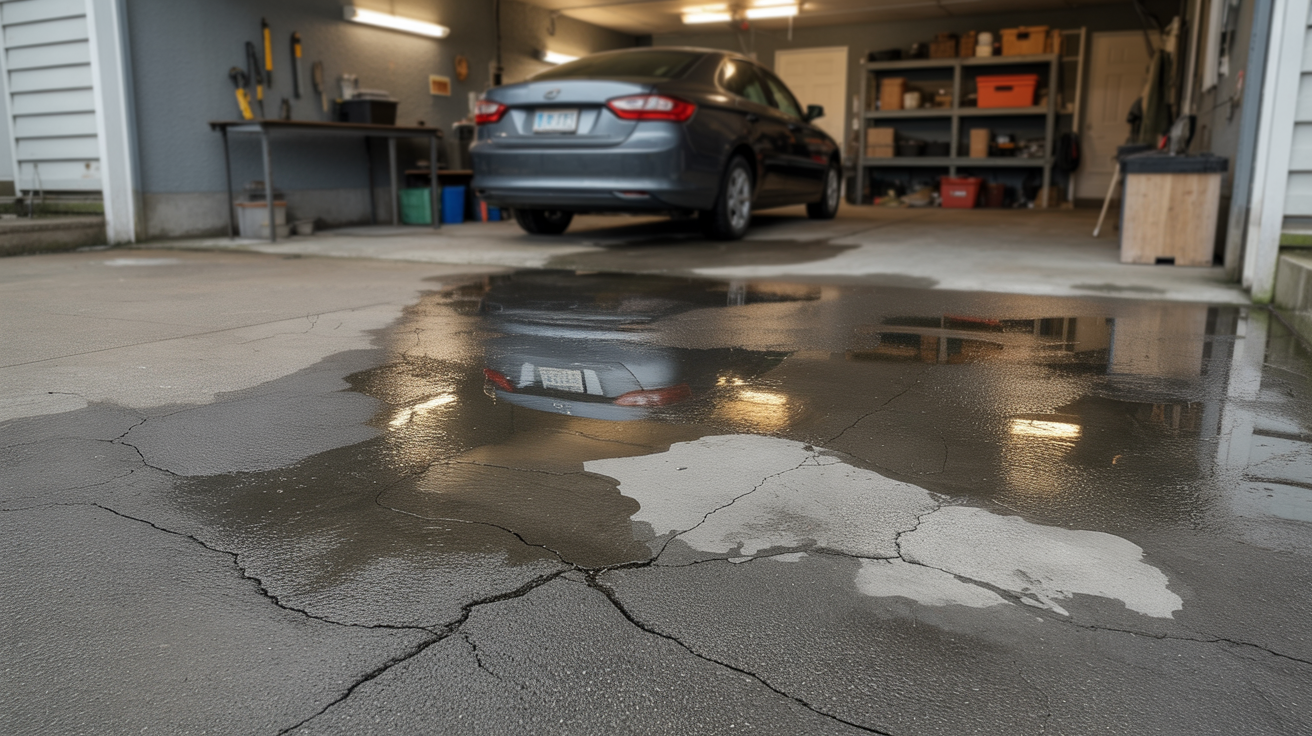
You walk into your garage and notice a wet spot on the floor. At first, you think someone spilled something. But the moisture keeps coming back.
Water seeping up through the concrete garage floor is a problem many homeowners face, and it can lead to serious damage if ignored.
This issue happens more often than you might think. The good news is that you can fix it. In this guide, you’ll learn what causes water to push through your garage floor, how to spot the warning signs, and what steps you can take to stop it.
We’ll cover both simple fixes you can do yourself and when to call in the experts. Don’t worry. There are proven ways to solve this problem and keep your garage dry.
Why Is Water Seeping Up Through Your Concrete Garage Floor?

Before you can fix the problem, you need to know what’s causing it. Several common issues can lead to water seeping up through the concrete garage floor. Let’s look at the main reasons this happens.
Hydrostatic Pressure from Groundwater
Groundwater naturally exists in the soil under your home. When the water table rises, it creates pressure against the bottom of your concrete slab.
This force, called hydrostatic pressure, can push moisture up through tiny pores and cracks in the concrete.
Heavy rainfall and snowmelt make this problem worse. During wet seasons, the ground becomes saturated with water. This extra moisture has nowhere to go but up, forcing its way through your garage floor.
Foundation and Slab Cracks
All houses settle over time. As your home shifts, small cracks form in the concrete slab. These cracks create pathways for water to travel from the soil below into your garage.
Temperature changes also damage concrete. When it gets hot, concrete expands. When it gets cold, it shrinks. This constant movement creates stress fractures. As your garage floor ages, these cracks get bigger and let more water through.
Poor Drainage Around Your Foundation
Water needs somewhere to go when it rains. If the ground around your garage doesn’t slope away from the building, rainwater pools near the foundation. This standing water soaks into the soil and works its way under your garage floor.
Improper grading is a common problem in many homes. The soil should slope at least six inches over ten feet away from your foundation. When this slope is too flat or points the wrong way, water collects where it shouldn’t.
Underground Plumbing Leaks
Pipes run under many garage floors. Over time, these pipes can corrode, crack, or break. A leak from these underground pipes creates constant moisture in the soil beneath your slab.
These leaks are hard to spot because you can’t see the pipes. The water builds up slowly in the ground. Eventually, enough moisture accumulates to seep through the concrete and appear on your garage floor.
Understanding How Water Infiltrates Concrete Slabs

Concrete might seem solid, but it’s actually full of tiny holes. Knowing how water moves through these spaces helps you understand why water seeps up through the concrete garage floor.
Porous Concrete and Deterioration
New concrete is relatively dense. But as it ages, it becomes more porous. Chemicals in the soil, repeated freezing and thawing, and normal wear break down the concrete’s structure.
Freeze-thaw cycles cause significant damage. Water gets into small cracks, freezes, and expands. This expansion makes the cracks bigger. When the ice melts, more water can enter. Each winter, this cycle repeats and makes the problem worse.
The Role of Soil Conditions
The type of soil under your garage matters a lot. Clay soils expand when wet and shrink when dry. This constant movement puts stress on your concrete slab and creates gaps where water can enter.
Erosion can wash away soil from under the slab. This creates hollow spaces or voids. When these voids fill with water, the moisture has direct contact with the underside of your concrete and can push through more easily.
Additional Factors Contributing to Water Seepage

Other issues can make water problems worse. These factors often work together with the main causes to create serious moisture issues.
Inadequate Exterior Water Management
Gutters and downspouts should carry rainwater far from your home. When gutters get clogged with leaves and debris, water overflows and falls right next to your foundation. This creates a constant source of moisture near your garage.
Downspouts that dump water too close to the house cause similar problems. Some drainage systems break or get damaged over time. When these systems fail, water has no proper path away from your foundation.
Settled or Sunken Garage Floors
Soil under your garage should be properly compacted before the concrete gets poured. If the soil wasn’t compressed enough during construction, it can settle over time. This settling creates low spots in your garage floor.
These low areas act like shallow pools. Instead of water draining away, it collects in these depressions. The constant presence of moisture in one spot increases the chance of water seeping up through the concrete garage floor in that area.
High Water Tables in Your Area
Some locations naturally have groundwater closer to the surface. Homes built in low-lying areas or near bodies of water often deal with high water tables. The water table also changes with the seasons.
During spring, snowmelt and rain cause the water table to rise. In some areas, it can come within a few feet of the surface. Homes in flood zones face this challenge regularly, making water intrusion more likely.
How to Fix Water Seeping Through Your Garage Floor

Now that you know what causes the problem, let’s talk about solutions. The right fix depends on the cause and severity of your water issues.
Sealing Cracks and Gaps
For small cracks, sealants can work well. Epoxy and polyurethane crack fillers bond strongly to concrete. These products fill the gaps and create a waterproof barrier.
Concrete sealers coat the entire floor surface. They fill the pores in the concrete and make it less permeable. However, these surface treatments only work for minor moisture issues. They won’t stop water from being forced up by hydrostatic pressure.
Lifting and Leveling the Slab
Polyurethane foam jacking, also called polyjacking, raises sunken concrete. A technician drills small holes in the slab and injects expanding foam underneath. This foam lifts the concrete back to the correct level.
Mudjacking uses a cement mixture instead of foam. It works the same way but uses heavier material. Both methods restore the proper slope so water drains away from problem areas instead of pooling.
Improving Exterior Drainage
Extending your downspouts is often the easiest fix. Make sure water flows at least five feet away from your foundation. Some homeowners add splash blocks or buried drain pipes to carry water even farther.
French drains collect and redirect groundwater. These drains consist of a perforated pipe buried in gravel. They capture water before it reaches your foundation and channel it to a safe discharge area. Regrading the soil around your garage creates a proper slope and prevents water from flowing toward your foundation.
Installing Interior Drainage Solutions
Trench drains cut into the garage floor collect water that does come through. These drains channel the water to a floor drain or outside. This method doesn’t stop water from seeping up through the concrete garage floor, but it controls where the water goes.
Sump pumps work well in garages with basements or crawl spaces beneath them. The pump sits in a pit and automatically removes water when it reaches a certain level. This keeps moisture from building up under your floor.
Professional Foundation Repair
Sometimes the damage is too severe for simple fixes. Foundation specialists can install comprehensive waterproofing systems. These systems might include exterior waterproof membranes, interior drainage systems, and crack injection.
Complete slab replacement is the last resort. This option only makes sense when the concrete is heavily damaged, and other repairs won’t work. A new slab gives you a fresh start with proper moisture barriers installed from the beginning.
Preventing Future Water Seepage Issues
Stopping water problems before they start saves you money and stress. Regular maintenance keeps your garage floor dry and prevents damage.
- Clean your gutters at least twice a year and make sure downspouts direct water at least five feet away from your foundation.
- Check your garage floor every few months for new cracks, damp spots, or standing water
- Maintain proper grading around your garage so the ground slopes away from the building.
- Schedule annual foundation inspections, especially if you live in areas with high groundwater or clay soil.Seal small cracks as soon as you notice them, before they get bigger
Small problems turn into expensive repairs when ignored. Fix issues right away to avoid major damage down the road.
Conclusion
Water seeping up through the concrete garage floor is a fixable problem. The key is finding out what’s causing the moisture. Groundwater pressure, cracks, poor drainage, and hidden leaks are the most common culprits. Each cause needs a different solution.
Don’t just cover up the wet spots. You need to fix the real problem to get lasting results. Surface treatments might hide moisture temporarily, but they won’t stop it from coming back.
If you’re not sure what’s causing your water problem, call a professional. Foundation experts can diagnose the issue and suggest the right repair. With the proper fix, your garage will stay dry, and your foundation will stay strong. Acting now prevents bigger, more costly problems later. The sooner you address water seepage, the easier and cheaper the repair will be.
Frequently Asked Questions
Is Water Coming Up Through My Garage Floor an Emergency?
It depends on the amount of water. Small amounts of moisture need attention but aren’t urgent. Large amounts of water or rapid increases in moisture require immediate help to prevent structural damage.
Can I Fix Water Seepage Through Concrete Myself?
You can handle minor crack sealing and basic drainage improvements yourself. Serious issues like slab lifting, interior drainage systems, or foundation repairs need professional expertise and specialized equipment.
How Much Does It Cost to Repair a Garage Floor with Water Seepage?
Crack sealing costs $300 to $800. Polyjacking runs $500 to $1,500. Exterior drainage improvements range from $1,000 to $5,000. Complete slab replacement can cost $5,000 to $15,000 or more.
Will Sealing My Garage Floor Stop Water from Coming Up?
Surface sealers help with minor moisture issues, but won’t stop hydrostatic pressure. You need to address the root cause, like fixing drainage or relieving pressure, for a lasting solution.
How Long Does Polyurethane Foam Jacking Last?
Polyjacking typically lasts 10 to 15 years or longer. The foam doesn’t break down easily and resists water damage. Results depend on addressing what caused the settling in the first place.