

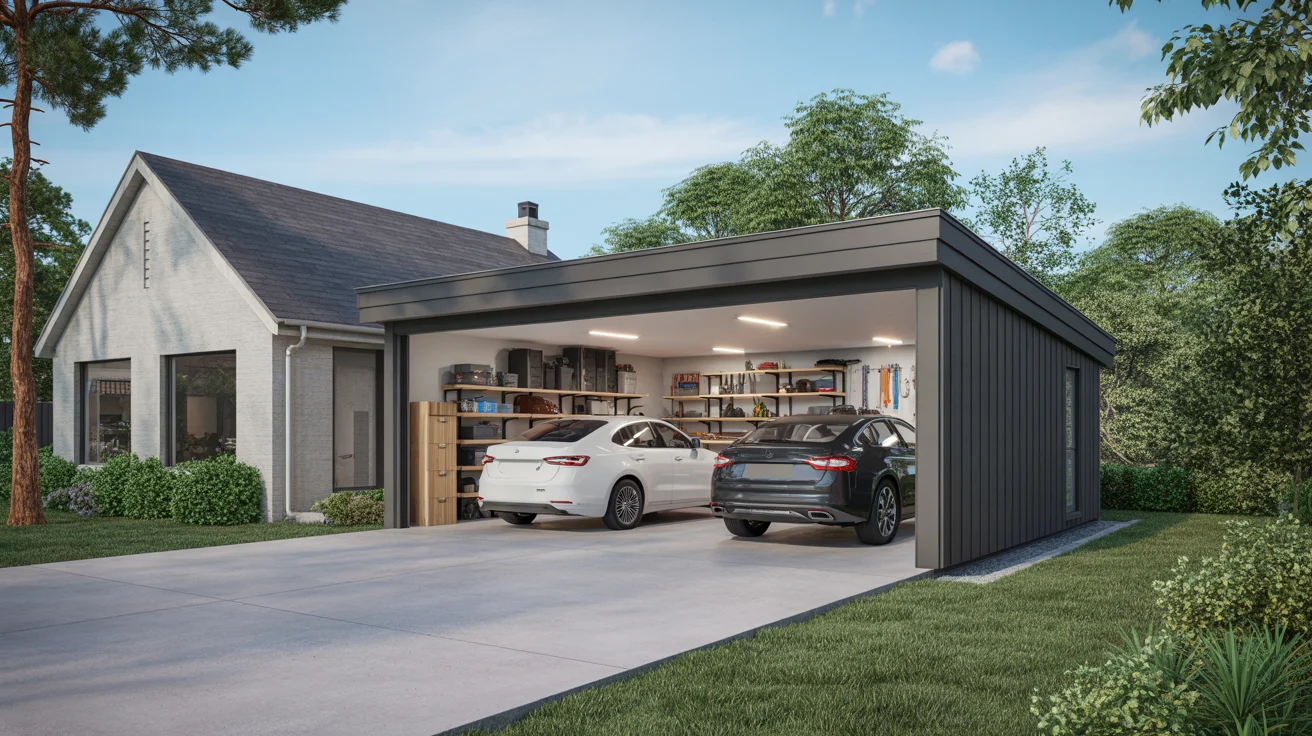
Need more space for your cars, tools, or hobbies? You’re not alone. About 66% of American homes have garages, while 34% don’t have one at all. Many homeowners are now looking at garage additions as a smart way to improve their property and solve space problems.
A garage addition can solve parking problems, create storage space, and even boost your home’s value. The best part? You have many options to choose from based on your budget and needs. Some people want a simple parking space, while others dream of workshops or entertainment areas.
This guide shares garage additions to existing garage ideas that work for both attached and detached builds. We’ll cover creative options, design tips, and important features to consider. Let’s look at practical ways to expand your space and make your home more functional.
Garage Addition Ideas to Transform Your Property
Planning a garage addition opens up many possibilities. Here are nine practical ideas that can work for different needs and budgets.
Multi-Car Garage Addition

Running out of parking space is a common problem for growing families. A multi-car garage addition gives you room for two or three vehicles instead of just one. This means no more fighting over garage spots or leaving cars in the driveway during bad weather.
Beyond parking, extra garage space solves storage issues, too. You can keep lawn equipment, seasonal decorations, and sports gear organized. A larger garage also makes it easier to work on car maintenance projects without feeling cramped.
Detached Garage with Workshop Space

A detached garage gives you freedom to create a dedicated work area away from your home. You can set up power tools, a workbench, and all your equipment without bothering anyone inside. This setup works great for woodworking, car repairs, or any hands-on hobby.
The separate building also means noise and dust stay contained. You can work late on projects without disturbing family members.
Plus, you get plenty of wall space for tool storage and pegboards to keep everything within reach.
Attached Garage with Breezeway Connection

A breezeway creates a covered walkway between your garage and home. This design looks good and keeps you dry when carrying groceries or getting to your car in the rain.
The covered connection adds character to your property while serving a real purpose.
This option costs more than a standard attached garage but offers big benefits. You get weather protection without feeling like you’re walking through a dark tunnel. Many homeowners add plants or seating in the breezeway to make it feel welcoming.
Garage Addition with Above Living Space

Why build out when you can build up? Adding a second story to your garage creates bonus living space without taking up more yard space.
You can use the upstairs area as a guest bedroom, home office, or game room for kids.
This type of garage addition to existing garage ideas works well on smaller lots where ground space is limited.
The room above stays separate from your main house, giving guests privacy. Just make sure your foundation can support the extra weight before you start building.
Garage with Integrated Mudroom

A mudroom between your garage and house keeps dirt and clutter from spreading inside. This transition space gives you a spot to take off muddy boots, hang up coats, and drop bags before entering your main living area.
Built-in cubbies, hooks, and benches make the mudroom even more useful. Kids can grab backpacks on their way out and put away their shoes when they come home.
This small addition makes daily life much easier, especially for busy families.
Modern Metal Garage Addition

Metal garages cost less than traditional wood frame buildings and go up fast. A prefab metal garage can be installed in just a few days, while custom builds take weeks or months. These structures hold up well against weather, pests, and fire.
You can customize metal garages with different colors, door styles, and window placements. They need very little maintenance compared to wood structures.
This makes them a smart choice when you want to save money without giving up quality.
Garage Conversion to Home Office Haven

More people work from home now than ever before. Converting a detached garage into an office gives you a quiet workspace away from household distractions.
You can take video calls without kids running through the background.
The separation helps you keep a better work-life balance, too. When you finish for the day, you can close the door and leave work behind.
Adding insulation, good lighting, and climate control makes the space comfortable year-round.
The Gear Garage for Outdoor Enthusiasts

Love camping, biking, or water sports? A gear-focused garage keeps all your outdoor equipment organized in one place.
You can install bike racks on the walls, ceiling hooks for kayaks, and shelves for camping supplies.
Adding a wash station lets you clean muddy bikes or sandy beach gear before storing them. A small maintenance area with a workbench helps you fix equipment and prep for trips.
This garage addition to the existing garage works perfectly for active families.
Entertainment Ready Garage Addition

Turn your garage into the ultimate hangout spot. An open floor plan with high ceilings, a small bar area, and plenty of seating creates room for parties and gatherings.
Large garage doors that open wide blur the line between indoor and outdoor space.
This setup works great for watching games, hosting barbecues, or just relaxing with friends. You can add speakers, a TV, and comfortable furniture while keeping the casual vibe.
When not entertaining, you still have a flexible space for other uses.
Key Design Considerations for Your Addition
Before you start building, think through these important planning factors. Making smart choices now prevents problems and extra costs later.
- Attached vs Detached: Attached garages cost about 12% less to build and offer easier access to your home. Detached garages give you more privacy and flexibility with placement, but require a longer walk.
- Size Planning: A one-car garage needs about 12 by 20 feet. Two-car garages typically measure 20 by 20 feet. Three-car garages require 30 by 20 feet or more. Add extra depth if you want workshop or storage space.
- Matching Your Home: Your garage should look like it belongs with your house. Use the same siding materials, roof pitch, and trim details. This keeps your property looking cohesive and protects resale value.
- Roof Style Options: Gable roofs are most common and cost-effective. Hip roofs look more finished but cost more. Vertical roofs work best in areas with heavy snow. Choose a style that matches your home and climate.
- Foundation Needs: Most garages need a concrete slab foundation at least 4 inches thick. Frost lines in cold climates may require deeper footings. Poor soil conditions might need extra support.
- Permits and Zoning: Check local rules before you build. Most areas require permits for garage additions. Setback requirements determine how close you can build to property lines. Homeowner associations may have additional restrictions.
Taking time to plan properly makes your project go smoothly. These garage additions to existing garage ideas work best when you match them to your specific situation.
Features to Enhance Your Garage Addition
The right features make your garage more useful and comfortable. Focus on these key elements to get the most from your new space.
- Garage Doors: Choose from steel, wood, or aluminum doors in various styles. Insulated doors help control temperature and reduce noise. Consider smart openers with phone-controlled access.
- Natural Lighting: Windows cut down on electricity costs and make the space feel less like a cave. Skylights work well if wall windows aren’t possible. More light makes the garage safer and more pleasant to use.
- Flooring Choices: Plain concrete works fine, but stains easily. Epoxy coating resists spills and looks professional. Vinyl tiles or rubber mats add comfort and protect your floor.
- Storage Solutions: Mounted wall shelves keep items off the floor. Overhead racks use ceiling space for seasonal storage. Cabinets hide clutter and create a cleaner look.
- Electrical Setup: Install plenty of outlets for tools and chargers. LED lights save energy and last longer. Consider adding a dedicated circuit for power-hungry equipment.
- Security Features: Motion sensor lights deter break-ins. Security cameras let you check on your garage from anywhere. Door and window alarms add extra protection for valuable items.
- Climate Control: Proper insulation keeps the garage comfortable year-round. Good ventilation prevents moisture buildup and fumes. Add heating or cooling if you plan to spend lots of time there.
These features turn a basic garage into a highly functional space. Pick the ones that matter most for how you plan to use your addition.
Conclusion
A garage addition brings real value to your home in multiple ways. Studies show these projects return 78 to 81% of their cost when you sell. Beyond money, you gain everyday convenience, organized storage space, and better curb appeal that makes your property stand out.
Think about what matters most to you and your family. Do you need parking, workspace, or an extra living area? How much can you spend on the project?
What does your property layout allow? These garage additions to existing garage ideas give you a starting point for planning your own project.
Prefab metal garages offer a budget-friendly option that goes up quickly. Custom builds cost more but let you create exactly what you want with specific features. Either way, start by checking local building codes and getting quotes from contractors.
Frequently Asked Questions
How Much Does It Cost to Add a Garage to an Existing Home?
Costs range from $15,000 for a basic one-car garage to $50,000 or more for a two-car custom build. Location, materials, and features affect the final price significantly.
Do I Need a Building Permit for a Garage Addition?
Yes, most cities and counties require permits for garage construction. Local building codes set rules for size, placement, and safety standards. Always check requirements before starting work.
Can a Garage Addition Increase My Home’s Resale Value?
Yes, garage additions typically return 78 to 81% of construction costs at resale. Buyers value covered parking and extra storage space. A well-built garage makes your property more appealing.
How Long Does a Garage Addition Project Take to Complete?
Prefab metal garages can be installed in a few days. Custom stick-built garages take 4 to 8 weeks, depending on size and complexity. Weather and permit delays can extend timelines.
What’s the Difference Between Attached and Detached Garage Additions?
Attached garages connect directly to your home and cost about 12% less to build. Detached garages stand alone, offering more placement options and privacy, but requiring a longer walk to your house.