
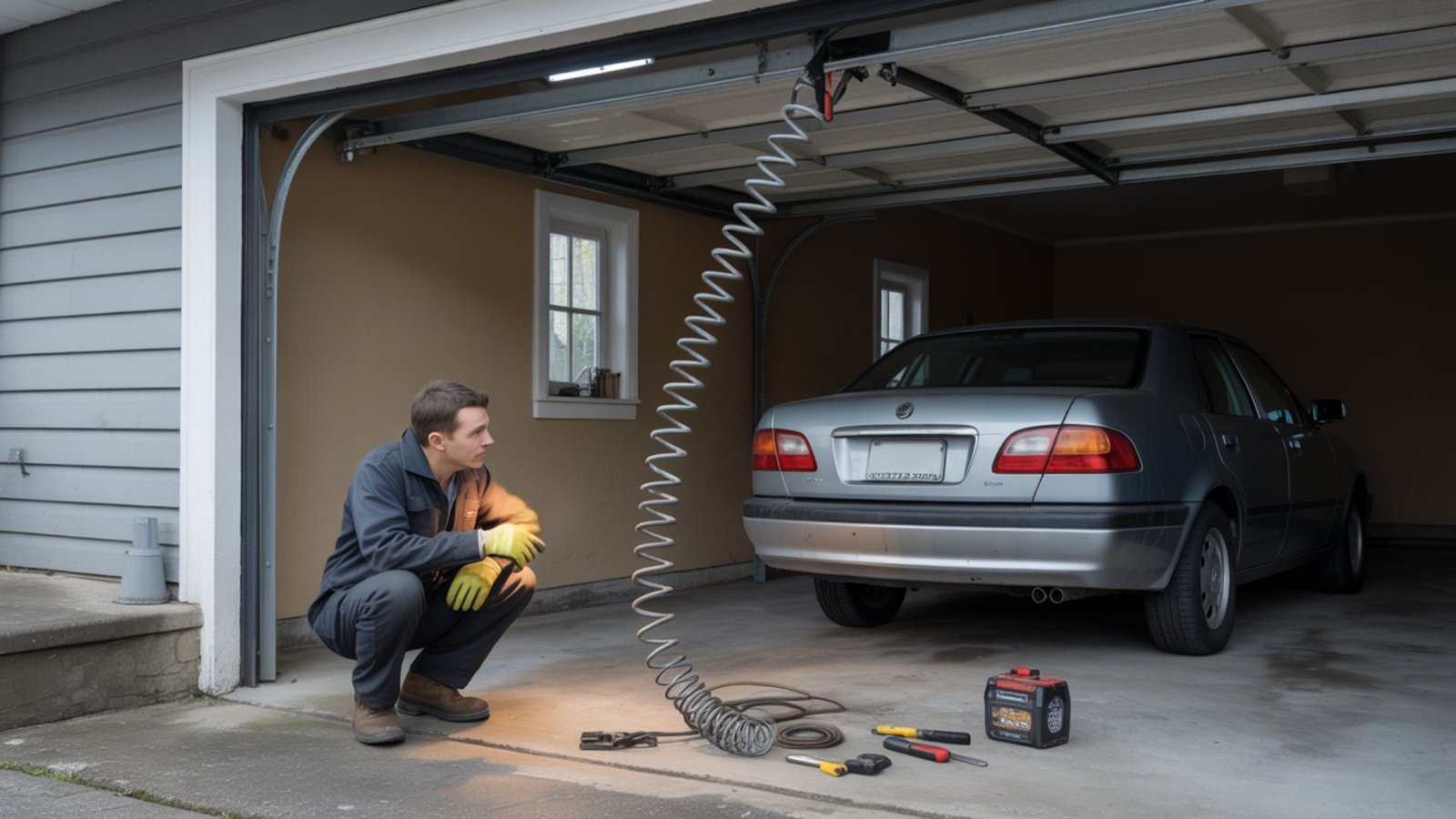
You hear it from inside the house: a loud SNAP echoing from the garage. Your heart sinks because you know what just happened. Your garage door spring broke, and now you’re stuck with a car trapped inside and work starting in 30 minutes.
Garage door springs are critical parts that do the heavy lifting every time you open or close your door. When one breaks, your entire routine comes to a halt. This leads to an important question: can you open a garage door with a broken spring?
The short answer is yes, but it comes with serious risks. This guide will explain how garage door springs work, why opening a door with a broken spring is dangerous, and what to do in an emergency. You’ll learn the safe way to handle this situation and when to call for help.
Can You Open a Garage Door With a Broken Spring?

Yes, you can physically open a garage door with a broken spring. However, experts strongly advise against it. The process requires significant manual effort and puts you at risk for injury. Without the spring’s support, you’re lifting the full weight of the door, which can range from 100 to over 400 pounds.
The only time you should attempt this is during a true emergency. For example, if your car is trapped inside and you absolutely must get to work or handle an urgent situation. Even then, you need at least one other person to help you. Going solo is extremely dangerous.
Professionals warn against this because of the serious hazards involved. You could hurt your back, drop the door on yourself, or damage expensive parts of your garage system. The risks far outweigh the convenience. To understand why this is so dangerous, you first need to know how these springs actually work.
How Garage Door Springs Work?

Garage doors use two main types of springs to function properly. Torsion springs mount above the door and twist to store energy. Extension springs sit on the sides of the door and stretch and contract as the door moves. Both types serve the same purpose, just in different ways.
These springs act as a counterbalance to your door’s weight. A typical residential garage door weighs between 100 and 400 pounds or more. The springs store energy when the door closes and release that energy to help lift the door when it opens. This system makes it possible for you to lift the door with minimal effort.
When this balance is lost, everything changes. The door becomes incredibly heavy and difficult to move. The garage door opener motor is designed to work with the spring system, not replace it. Without springs providing counterbalance, your entire garage door system cannot operate safely or correctly.
What Happens When a Garage Door Spring Breaks?

The most common sign of a broken spring is a loud popping or snapping noise. It can sound like a firecracker or gunshot. This noise often happens when the door is closed, typically during temperature changes that affect the metal. You might also notice your motor running, but the door staying put.
Other warning signs include grinding or straining noises from your opener. The door may appear crooked or uneven. One side might hang lower than the other, especially if only one spring broke and you have a two-spring system. The door could even slip off its tracks if you try to force it open.
The immediate impact is clear: your door becomes extremely heavy and dangerous to operate. All the weight that the spring supported now falls on you or your garage door opener. This makes the door difficult to lift and unpredictable in how it moves. Operating it in this condition puts you at risk.
Why Opening a Garage Door With a Broken Spring Is Dangerous

The weight problem is the most obvious danger. When you try to open a garage door with a broken spring, you’re fighting against 100 to 400 pounds or more of unsupported weight. This puts enormous strain on your back, shoulders, and arms. Many people injure themselves attempting this lift. Back injuries from this scenario can last for months or even become permanent.
An unbalanced door creates additional hazards. If only one spring breaks, the door tilts to one side. This can cause the door to get stuck in the tracks or move in unpredictable ways. The door might suddenly shift or drop, catching you off guard. This unpredictability makes injury even more likely.
Trying to use your garage door with a broken spring also damages other components. The opener motor strains under the extra weight, which can strip its gears or burn it out completely. The tracks can bend or become misaligned. Cables may fray or snap from the extra tension. Door panels can crack from uneven pressure. Each of these repairs adds to your final bill. What starts as a spring replacement can turn into a complete system overhaul if you keep using the broken door.
How to Manually Open a Garage Door With a Broken Spring (Emergency Only)

WARNING: Attempt this only in true emergencies. This process is dangerous and can result in serious injury or property damage. If possible, wait for professional help.
Start by disconnecting your garage door opener from the door. Find the red emergency release cord hanging from the trolley. Make sure your door is fully closed before you pull this cord. Once you pull it, the door disconnects from the motor, and you’re on your own.
Check for any obstructions before you begin. Look over the tracks for debris or anything blocking the door’s path. Remove anything you find. A clear path is critical for safety.
Now comes the hard part: lifting the door. Follow these steps carefully:
- Position at least one helper on each side of the door
- Use a pry bar to get an initial grip underneath the door
- Lift slowly and evenly using your legs, not your back
- Keep the door level as you lift it up
- Maintain constant communication with your helper about weight distribution
- Stop immediately if the door feels too heavy or unstable
- Do not force the door if it resists
Once the door is open, you need to secure it properly. Clamp locking pliers onto the track just below the bottom roller. This prevents the door from sliding down. Use sturdy props or supports if you have them available. Make certain the door is stable before you let go. Never walk away from an unsecured door that has a broken spring.
How to Close a Garage Door With a Broken Spring

Closing the door requires the same level of caution as opening it. You cannot simply let gravity take over because the door could fall and cause damage or injury.
Start by carefully lifting the door slightly to remove it from the horizontal rails if it’s resting on them. With your helper, slowly guide the door down while keeping it level. Here’s what you need to do:
- Keep your hands and feet clear of the bottom edge
- Lower the door in a controlled manner
- Do not let the door crash or fall
- Watch for any binding or resistance
- Stop if anything seems wrong
A door that falls suddenly can damage panels and tracks. More importantly, it can injure anyone in its path. Take your time and maintain control throughout the entire process.
Once the door is fully closed, you can re-engage the garage door opener to the door. Simply push the trolley back until it reconnects. Keep the door closed until a professional completes the repair. Do not attempt to use it again.
When to Call a Professional

Some situations require professional help from the start. Call a garage door repair service if you lack the proper tools, safety equipment, or helper assistance. If the door proves too heavy to safely lift, stop immediately and make the call.
Contact a professional in these situations:
- You feel uncertain about any step in the process
- You need an actual spring replacement (never attempt DIY spring repair)
- You want to prevent causing additional expensive damage to your door system
- You value your safety over saving a few hours
Professionals have specialized tools, training, and experience to handle these repairs safely. Spring replacement involves working with high-tension components that can cause serious injury if mishandled. A qualified technician can often complete the repair the same day you call.
Investing in professional services protects your safety and saves you money in the long run. The cost of a spring replacement is far less than the cost of emergency room visits, additional system damage, or a completely new door.
Conclusion
So, can you open a garage door with a broken spring? Yes, you can manually do it. But should you? Only in true emergencies, when you have no other option and proper help p available.
Safety must always matter more than convenience. The risks of injury are real. The potential for expensive damage to your garage door system is high. One wrong move could cost you thousands in repairs or medical bills.
Keep your door closed and call a qualified professional as soon as you notice a broken spring. Most repair services offer same-day appointments.
Remember, garage door springs are under extreme tension. They can cause serious harm if handled incorrectly. Your safety is worth the cost of professional repair. Contact a licensed garage door repair service today for fast, safe, and proper spring replacement.
Frequently Asked Questions
Can a Garage Door Spring Break Without Warning?
Yes, springs often break suddenly with a loud popping sound. Age, wear, and metal fatigue cause springs to weaken over time. Temperature changes can trigger the final break. Most springs show no visible warning signs before they snap.
How Much Does It Cost to Replace a Broken Garage Door Spring?
Professional spring replacement typically costs between $150 and $350, depending on your door type and spring quality. This price includes labor, parts, and warranty. DIY attempts risk serious injury and often create more damage, making professional service worth the investment.
How Long Do Garage Door Springs Typically Last?
Most garage door springs last 7 to 12 years or about 10,000 cycles. One cycle equals opening and closing the door once. Factors affecting lifespan include usage frequency, climate, maintenance, and spring quality. Regular lubrication and professional tune-ups can extend spring life.
Will My Garage Door Opener Be Damaged if I Try to Use It With a Broken Spring?
Yes, running your opener with a broken spring can strip gears, burn out the motor, and damage the drive mechanism. The opener is not designed to lift the full weight of your door. Always disconnect the opener before attempting manual operation.
Is It Safe to Leave My Garage Door Open With a Broken Spring?
No, leaving your door open with a broken spring is dangerous. The unsupported door could fall unexpectedly, causing injury or damage. It also creates a security risk and exposes your garage to the weather. Keep the door closed until repairs are complete.