
Have you noticed cracks forming above your garage door? That sinking feeling when you see your brickwork starting to separate is real. Your home’s structure depends on every component working together, and the lintel above your garage plays a critical role.
A garage lintel is the horizontal support beam that holds up the brickwork above your garage door opening. When it fails, the results can be serious. Many homeowners ignore early warning signs, leading to expensive repairs down the road. The good news is that most problems can be fixed before they become major issues.
This guide will help you understand what causes lintel problems, how to spot them early, and what the repair process involves. You’ll learn when to call a professional and how to protect your home’s value and safety.
What Is Garage Lintel Repair?

A garage lintel is a steel or concrete beam installed above your garage door opening. It carries the weight of all the bricks, blocks, and materials above it. Without this beam, the wall above your door would collapse.
Garage lintel repair involves fixing or replacing this support beam when it becomes damaged or weak. The repair might include adding steel reinforcements, installing new support angles, or completely replacing the old lintel. Most repairs focus on restoring the structural strength that keeps your wall stable.
The process typically takes one day for standard repairs. A contractor will assess the damage, remove affected brickwork, fix or replace the lintel, and rebuild the masonry. Some cases need more time if the damage is severe or spreads to surrounding areas.
Common Garage Lintel Problems

Garage lintels face constant stress from the weight above them. Over time, several problems can develop that threaten your home’s structure.
The most common issues include:
- Cracking and structural failure: Horizontal or vertical cracks indicate the lintel can no longer support the load
- Sagging or bowing lintels: The beam bends downward under too much weight
- Brick separation above the garage door: Gaps appear between bricks as the lintel shifts
- Rust and corrosion in steel lintels: Moisture causes steel to deteriorate from the inside out
- Water damage and material erosion: Constant exposure to rain and snow weakens the lintel over time
Each problem gets worse without intervention. What starts as a small crack can lead to major structural issues. Regular inspections help catch these problems before they become dangerous.
Warning Signs Your Garage Lintel Needs Repair

Knowing what to look for can save you thousands of dollars in repairs. Your home will show clear signs when the lintel starts failing.
Watch for these red flags:
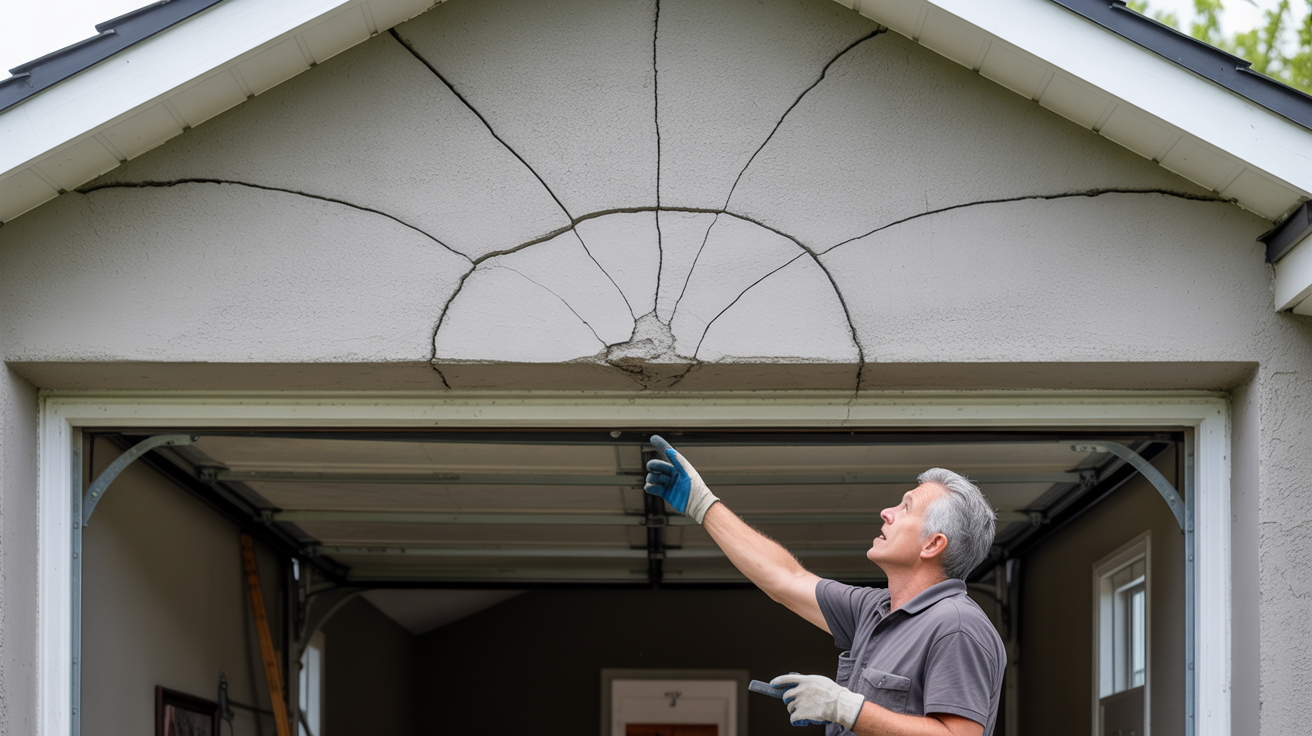
- Visible cracks above the garage door: Cracks appearing at the corners or the center of the opening
- Sagging garage door appearance: The door frame looks like it’s drooping
- Stair step crack patterns in brickwork: Diagonal cracks following mortar joints
- Trim folding or pulling away from the frame: Wood trim separating from the wall
- Gaps between the lintel and the masonry: Space opening up where the beam meets the brick
- Doors or windows sticking: Nearby openings become difficult to open or close
Don’t wait. If you see any of these signs. Early garage lintel repair prevents small problems from becoming big disasters. A quick inspection by a professional can give you peace of mind or catch issues before they worsen.
Why Garage Lintels Fail

Understanding why lintels fail helps you prevent future problems. Several factors contribute to lintel damage over the years.
Common causes include:
- Inadequate building code requirements: Older homes may have been built with undersized lintels
- Improper installation or design: Wrong type of lintel for the span or load
- Natural settling and soil movement: Clay-rich soil expands and contracts, stressing the structure
- Age and material degradation: Steel rusts, concrete cracks, and materials wear out
- Climate factors and moisture exposure: Freeze-thaw cycles and constant moisture speed up deterioration
Your area’s soil type matters more than you might think. Homes built on clay soil often experience more foundation movement, which stresses lintels. Water is another major enemy, finding its way into tiny cracks and expanding when it freezes.
The Garage Lintel Repair Process

Professional repair follows a careful sequence to restore your home’s structural strength. The process protects your investment and keeps your family safe.
Initial Inspection and Assessment
A qualified contractor starts by examining the entire area around your garage door. They look at crack patterns, measure deflection, and check for underlying foundation issues.
This inspection reveals whether the problem is just the lintel or if other structural elements need attention too.
The assessment determines if you need reinforcement or complete replacement. Small cracks might only need additional support, while severe rust or bowing requires a new lintel. Your contractor will explain the findings and recommend the best solution for your situation.
Repair Implementation
The work begins with carefully removing bricks above and around the damaged lintel. Workers support the wall with temporary bracing to prevent movement during repairs. Once exposed, they can see the full extent of damage and address any hidden problems.
Installing new supports involves lag bolts, steel angles, or complete lintel replacement, depending on the damage severity. After securing the new or reinforced lintel, masons rebuild the brickwork and match your existing mortar color. Quality checks ensure everything is level, secure, and properly sealed before the team cleans up the site.
Professional vs. DIY Garage Lintel Repair
Some homeowners consider tackling garage lintel repair themselves to save money. However, this is one project where professional expertise pays off in safety and results.
| Aspect | Professional | DIY |
|---|---|---|
| Expertise | Licensed contractors understand load calculations and building codes | Risk of improper support leading to wall collapse |
| Tools | Specialized equipment for safe brick removal and installation | Most homeowners lack the necessary tools and materials |
| Safety | Trained crews use proper bracing and fall protection | Serious injury risk from falling bricks or unstable walls |
| Warranty | Lifetime warranties available on materials and workmanship | No protection if repairs fail |
| Time | Completed in one to two days | It could take weeks without experience |
| Code Compliance | Work meets local building requirements and passes inspection | May not meet code, affecting home sale or insurance |
Structural work requires engineering knowledge that goes beyond basic home repair skills. A failing lintel supports thousands of pounds of brick and masonry. One wrong move can cause a wall collapse, putting you and your family at risk.
Benefits of Timely Lintel Repair
Acting quickly when you notice lintel problems protects your home in multiple ways. The benefits extend far beyond just fixing cracks.
Key advantages include:
- Prevents further structural damage: Stops small problems before they spread to other areas
- Maintains home value: Buyers want homes with sound structures, not deferred maintenance
- Ensures safety: Eliminates the risk of falling bricks or wall collapse
- Protects against water intrusion: Seals gaps that let moisture damage your home’s interior
- Lifetime warranty options available: Many contractors guarantee their work for as long as you own the home
The cost of repairing a lintel today is much less than rebuilding an entire wall tomorrow. Insurance may cover some damage, but neglecting obvious problems can void your coverage. Taking action now saves money and protects your biggest investment.
Conclusion
Your garage lintel works hard every day, supporting tons of weight above your door. When it starts to fail, the warning signs are clear if you know what to look for.
Cracks, sagging, and brick separation all signal that your lintel needs attention. Waiting only makes repairs more costly and dangerous.
Professional garage lintel repair restores your home’s structural strength and protects your family from potential hazards.
If you’ve noticed any warning signs discussed in this guide, schedule an inspection soon. A qualified contractor can assess the damage and provide options for fixing the problem. Don’t put off this important repair.
Your home deserves the protection that only proper structural repair can provide, and acting now prevents bigger headaches later.
Frequently Asked Questions
How Much Does Garage Lintel Repair Typically Cost?
Costs range from $1,500 to $4,000, depending on damage severity, lintel length, and brick removal needed. Complex cases requiring extensive masonry work cost more.
Can a Failing Lintel Cause My Entire Garage Wall to Collapse?
Yes, a severely damaged lintel can lead to wall collapse. The damage progresses slowly at first but accelerates without repair, creating serious safety risks.
How Long Does a Repaired Garage Lintel Last?
Properly repaired lintels last 50 years or more. Many contractors offer lifetime warranties on materials and workmanship, giving you long-term protection.
Will Lintel Repair Affect My Home’s Curb Appeal?
No, skilled masons match your existing brick and mortar colors perfectly. After repair, the area looks seamless and maintains your home’s appearance.
Is Garage Lintel Repair Covered by Homeowners Insurance?
Coverage depends on the cause of damage. Sudden events like foundation settlement may be covered, while gradual deterioration typically isn’t. Document everything and contact your insurer.