
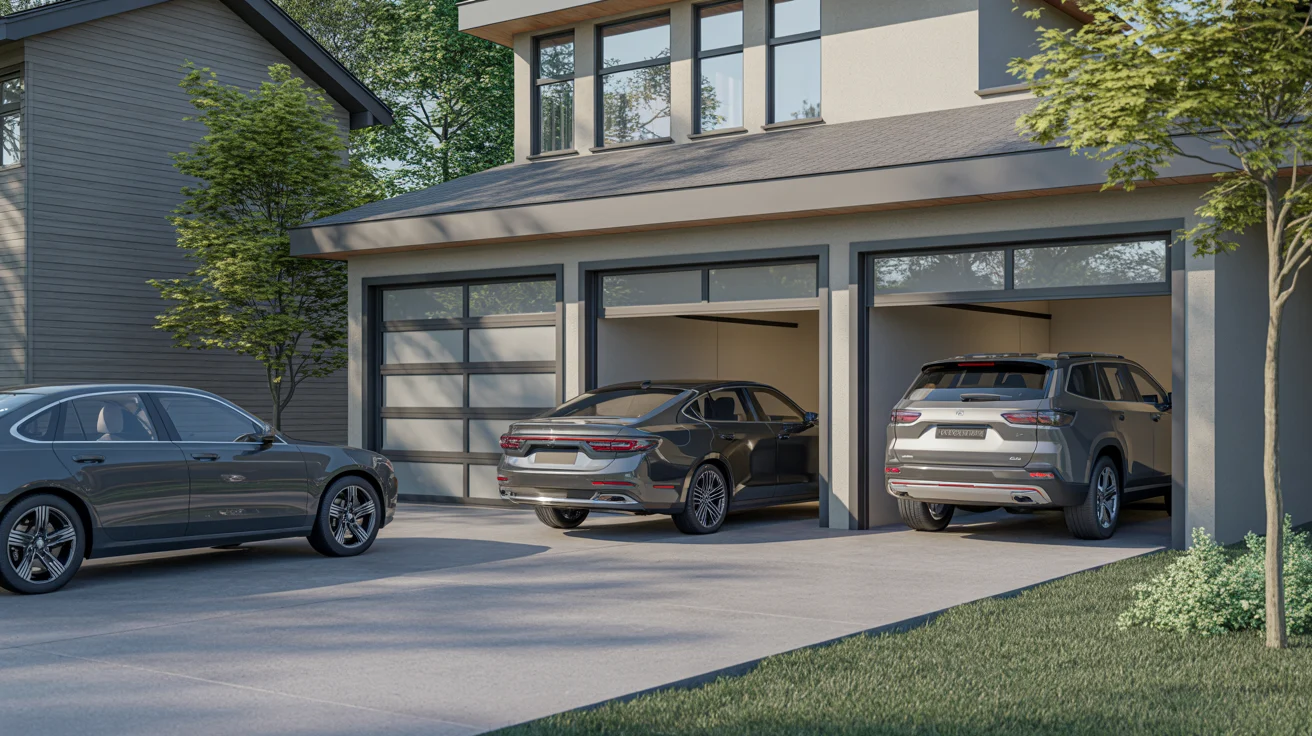
Have you ever squeezed past your car in the garage, scraping your side mirror against the door frame? Getting the right garage door width can save you from years of daily frustration and expensive repairs. Too narrow, and you’ll struggle to park without damage. Too wide, and you might waste thousands on unnecessary space.
This guide covers everything you need to know about garage door widths. You’ll learn the standard sizes for different vehicles, how to measure your opening correctly, and when custom options make sense. We’ll also explain clearance requirements and help you avoid common mistakes.
Most garages use standard width measurements, but customization is possible when needed. By the end of this post, you’ll know exactly what size works best for your home, vehicles, and budget.
Standard Garage Door Widths: Quick Answer

The most common garage door widths are 8 feet, 9 feet, and 16 feet. Single car doors typically range from 8 to 10 feet wide, while double car doors usually measure 16 feet across.
Single Car Garage Door Widths
The standard single-car garage door measures 8 feet wide. This size has been the industry norm for decades and fits most sedans and compact cars comfortably. You’ll find this measurement in older homes and standard new construction across the country.
Many homeowners now choose 9-foot or 10-foot doors instead. These wider options give you more breathing room when parking larger vehicles like SUVs and trucks. The extra foot or two makes a real difference when you’re trying to squeeze in with groceries or kids in tow. Standard heights for single doors run between 7 and 8 feet tall.
Double Car Garage Door Widths
A 16-foot-wide door is the standard for double-car garages. This size lets two average cars park side by side with enough room to open doors and walk between them. Most modern homes come with this measurement as the default option.
Double car garage door widths actually range from 12 to 20 feet, depending on your garage layout. Some people prefer two separate 8-foot doors instead of one wide 16-foot door. This choice affects both function and appearance. The height typically stays at 7 to 8 feet, matching single door standards.
Oversized and RV Garage Door Widths
Oversized single doors range from 10 to 14 feet wide. These work well for large trucks, boats on trailers, or workshop spaces. They give you the clearance needed for vehicles that don’t fit through standard openings.
RV and tall vehicle doors need more height than width in many cases. These doors can reach 12 to 16 feet tall to handle motorhomes and lifted trucks. The width depends on your specific vehicle, but 12 feet is a common starting point. You’ll need professional measurements to get this right.
How to Choose the Right Garage Door Width for Your Vehicle?

Your vehicle type should guide your door width choice. Different cars, trucks, and vans need different amounts of space to park safely and comfortably.
Here’s what you need based on vehicle type:
- Sedans and compact cars: 8 to 9 feet works fine for standard vehicles
- SUVs and crossovers: 9 to 10 feet gives you comfortable clearance
- Pickup trucks: 10 feet for single doors or 16-foot double doors
- Vans and RVs: 12 feet or wider, depending on vehicle size
- Multiple vehicles: 16 to 20 feet for double car parking
Plan for at least 2 feet between parked vehicles if you have a double door. This gives you room to open doors fully without hitting the other car. Side mirrors need extra attention since they stick out farther than the body.
Think about your door opening space inside the garage, too. You need room to fully open car doors without hitting walls or stored items. If you have roof racks or a lifted vehicle, add extra width to prevent scraping. Consider where you’ll store tools, bikes, and seasonal equipment alongside your vehicles.
Measuring Your Garage Opening for Width

Taking accurate measurements is the first step before buying any new door. Wrong measurements can cost you time and money in returns or modifications.
Taking Accurate Width Measurements
Measure the rough opening at its widest point from one side to the other. This gives you the maximum space available for your door. Use a quality tape measure and write down your number immediately to avoid mistakes.
Take measurements at three different heights: top, middle, and bottom. Garage openings aren’t always perfectly square, so you need to know if there are variations. Add 1 inch on each side as a safety buffer when ordering your door. This extra space accounts for small irregularities and makes installation easier.
Side Room Requirements
Most garage door systems need at least 3¾ inches of space on each side. This room allows for the vertical tracks that guide your door up and down. Without enough side clearance, the door won’t operate properly or might not fit at all.
Some advanced door systems require up to 5½ inches per side. Check your chosen door’s specifications before measuring. The vertical track system takes up this space, along with any weatherstripping or edge protection. If your garage doesn’t have enough side room, you might need to modify the opening or choose a different door style.
Custom Garage Door Widths: When Standard Sizes Don’t Fit

Not every garage fits standard measurements. Older homes, custom builds, and special situations often need doors made to exact specifications.
Unusual garage dimensions are common in historic homes or renovated buildings. These structures weren’t built with modern vehicle sizes in mind. A custom door ensures you get a proper fit and function without major construction work.
Some people need extra-wide openings for equipment, boats, or multiple motorcycles. Standard garage door widths won’t accommodate these items safely. Custom sizing lets you create the perfect opening for your specific needs without compromise.
Pricing for custom widths costs more than standard sizes. Expect to pay 15 to 30 percent extra for non-standard measurements. However, this investment pays off when standard doors simply won’t work. Get quotes from multiple suppliers to find the best price for your custom size.
Garage Door Width vs. Garage Opening: Understanding the Difference

The door itself measures smaller than the opening in your wall. This difference confuses many homeowners when shopping for replacements or new installations.
| Measurement Type | What It Includes | Typical Difference |
|---|---|---|
| Garage Opening | Wall-to-wall rough space | Starting measurement |
| Door Width | Actual door panel size | 2 to 3 inches narrower |
| Installation Clearance | Side room needed for tracks | 3¾ to 5½ inches per side |
| Header Space | Top clearance above the door | 10 to 12 inches minimum |
Your door width runs smaller than the opening because you need space for installation hardware. The vertical tracks, jambs, and weatherstripping all take up room on the sides. The header above needs space for the horizontal tracks and the opener mechanism. Understanding these differences helps you order the right size door the first time.
Double Door vs. Two Single Doors: Width Considerations

You have two options for double-car garages: one wide door or two separate doors. Each choice has different benefits and drawbacks worth considering.
| Feature | One Double Door | Two Single Doors |
|---|---|---|
| Space Efficiency | Full opening width available | The center post reduces usable space |
| Door Opener Needed | One unit required | Two units needed |
| Visual Look | Clean, modern appearance | Traditional, symmetric look |
| Total Cost | Lower overall price | Higher due to extra hardware |
| Structural Support | No center post required | The center post provides extra support |
One wide 16-foot door costs less than two 8-foot doors. You only need one opener, one set of springs, and one installation job. The opening gives you maximum flexibility for parking and moving large items in and out.
Two separate doors look more traditional and provide backup access if one door breaks. The center post between doors adds structural strength to your garage. However, the post reduces your effective opening width and limits what you can move through the space.
Conclusion
Most homes use 8-foot, 9-foot, or 16-foot garage door widths as standard sizes. These measurements work well for typical vehicles and parking situations. Single car doors range from 8 to 10 feet, while double doors usually measure 16 feet across.
Always measure your opening twice before ordering a new door. Small mistakes can lead to big problems during installation. Take measurements at multiple points and add buffer space on each side for safety.
Talk to a professional installer before making final decisions. Check your local building codes, too, as some areas have specific requirements for garage doors.
Think about your future vehicle needs, not just what you drive today. You might buy a larger SUV or truck in a few years. Getting a slightly wider door now can save you from expensive modifications later.
Frequently Asked Questions
Can I Install a Wider Garage Door in My Existing Opening?
Yes, but it requires structural work. You’ll need to widen the opening, reinforce or replace the header beam, and possibly add support columns. This renovation costs several thousand dollars. It’s feasible for most garages but requires professional contractors and permits.
What Happens If My Garage Door Width Is Too Narrow?
You’ll struggle to park without hitting mirrors or scratching your car doors. Getting in and out becomes difficult, especially with passengers. Your vehicle’s resale value may drop from repeated minor damage. You can solve this by installing a wider door or parking one vehicle outside.
Do Attached and Detached Garages Have Different Width Standards?
No, both types use the same standard garage door widths. Building codes apply equally to attached and detached structures in most locations. The main difference is flexibility. Detached garages offer more design freedom since they don’t affect your home’s structure.
How Much Does Width Affect Garage Door Cost?
Single 8-foot doors start around $500 to $1,200. Double 16-foot doors cost $1,000 to $2,500. Each additional foot of width adds roughly 10 to 15 percent to the price. Custom widths add another 15 to 30 percent premium. Installation typically costs $200 to $500 regardless of width.
What Width Works Best for Workshops or Storage Garages?
Plan for at least 10 feet even without vehicles. This allows room for workbenches along walls and equipment storage. If you’ll receive material deliveries, consider 12 to 14 feet. Multiple purposes need more space. A 16-foot opening works best for true workshop and storage combinations.