
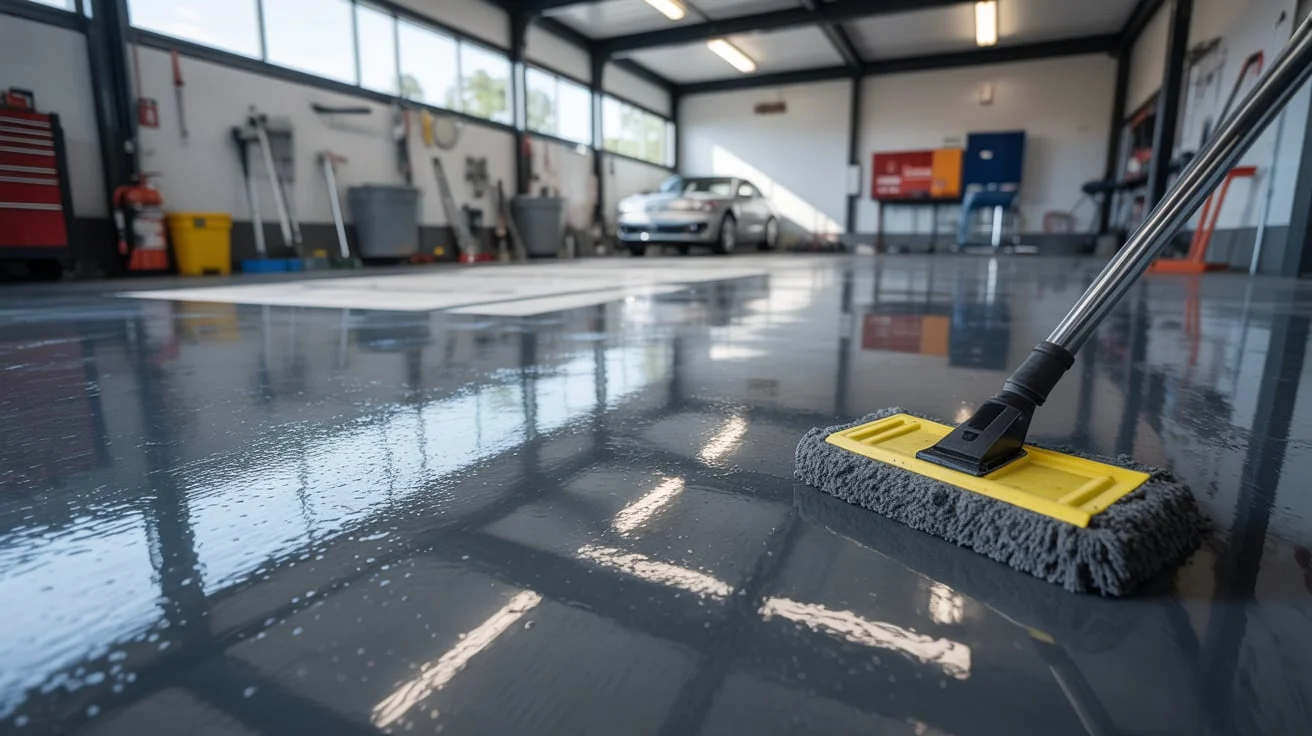
Your garage floor takes a beating every day. Cars drive over it, tools drop on it, and spills happen. If you have an epoxy garage floor, you made a smart choice. These floors are tough, long-lasting, and look great.
But even the best epoxy floors need care. Regular cleaning keeps them shiny and prevents damage. Dirt and grime can wear down the coating over time. Oil stains can seep in if you don’t clean them quickly.
This guide shows you exactly how to clean epoxy garage floor surfaces the right way. You’ll learn simple steps, the best products to use, and what to avoid. By the end, you’ll know how to keep your floor looking like new for years.
How to Clean an Epoxy Garage Floor in Three Simple Steps?
Learning how to clean epoxy garage floor surfaces doesn’t have to be hard. Follow these three steps, and your floor will stay in great shape. The whole process takes about 30 minutes to an hour, depending on your garage size.
Step 1: Clear and Sweep the Floor

Start by removing everything from your garage floor. Move cars, bikes, tools, and storage boxes. This gives you full access to every corner. You can’t clean what you can’t reach.
Next, sweep or vacuum the entire floor. Get rid of loose dirt, sand, and debris. Use a soft-bristle broom or a shop vacuum. Pay extra attention to corners and the areas under cabinets. If you have garage door sensors near the floor, cover them with plastic bags to protect them from water damage.
Step 2: Mop or Power Wash the Floor

Now it’s time to wash the floor. You can use a mop and bucket or a power washer. Both work well when you know how to clean an epoxy garage floor correctly. Pour your cleaning solution across the floor and work in sections. This keeps the cleaner from drying before you can scrub it.
If you use a power washer, be careful with the settings. Hold the nozzle at a 45-degree angle and keep it about 18 inches from the floor. Too much pressure or getting too close can damage the epoxy coating. For mopping, use a heavy-duty cotton mop with a rolling bucket. Scrub in circles to lift dirt and stains.
Step 3: Rinse and Dry

After washing, rinse the floor completely with clean water. Use a garden hose with a spray nozzle. Start at the back of your garage, which is usually the highest point. This lets water flow naturally toward the garage door opening.
Remove standing water with a floor squeegee or clean broom. Push the water out of the garage. Let the floor air dry completely before walking on it or moving items back. This usually takes 1 to 2 hours. Good air flow speeds up drying time.
Cleaning Supplies You Need for Your Epoxy Garage Floor

Having the right tools makes cleaning faster and easier. You don’t need expensive equipment. Most items are things you already own or can buy at any hardware store.
Here’s what works best:
- Soft-bristle broom or dust mop
- Heavy-duty cotton mop with rolling bucket
- Floor squeegee (18 or 24 inches wide)
- Garden hose with spray nozzle
- Soft cloths or paper towels for spills
- Shop vacuum (helpful but not required)
Keep these supplies in your garage so they’re ready when you need them. Having everything on hand means you can clean spills right away. Quick action prevents stains from setting in.
Best Cleaning Solutions for Epoxy Floors

The right cleaner protects your floor while getting it clean. Wrong products can damage the epoxy coating. Stick with safe options that won’t cause problems.
For Regular Mopping
For everyday cleaning, simple solutions work best. Mix clear ammonia with water at a ratio of 5 ounces per gallon. This cuts through dirt without harming the epoxy. You can also use mild dish soap in warm water. Just a few drops per gallon is enough.
pH-neutral cleaners are another good choice. These are gentle but effective. They clean without stripping the glossy finish. Many floor cleaning products at the store are pH-neutral. Check the label to make sure.
For Tough Stains and Grease
Sometimes you need stronger cleaners for oil spills and tire marks. Diluted degreasers work well for these jobs. Mix half a cup of Simple Green or Goof Off per gallon of water. Apply it to the stain and let it sit for a few minutes before scrubbing.
For small spots, spray Windex with ammonia directly on the stain. Wipe it clean with a cloth. Always choose cleaners that are safe for the environment. Biodegradable and non-toxic options protect your garage and the planet.
Routine Cleaning vs Deep Cleaning Your Epoxy Garage Floor

Different cleaning tasks happen at different times. Knowing when to do light maintenance versus deep cleaning helps you plan. This keeps your floor in top condition without wasting time.
| Cleaning Type | Frequency | What to Do | When to Do It |
|---|---|---|---|
| Daily and Weekly Maintenance | • Daily (if garage is used frequently)
• Weekly damp mopping |
• Sweep or dust mop (takes just a few minutes)
• Damp mop with pH-neutral cleaner • Clean up spills immediately • Keep paper towels and cleaner handy |
Use this light cleaning approach to stop dirt from building up and prevent stains from setting in |
| Deep Cleaning | • Every 3-4 months for most garages
• Monthly for high traffic/workshop spaces • After big messy projects |
• Thorough top-to-bottom cleaning
• Complete sweep, wash, and rinse process • Address stubborn stains |
Watch for signs like dullness, stubborn stains, or a sticky feeling that indicate it’s time for a deep clean |
Spot Cleaning Spills and Stains

Quick action saves your floor from permanent marks. The faster you clean a spill, the easier it comes up. Keep cleaning supplies where you can grab them quickly.
When something spills, wipe it up right away with paper towels. Blot liquid spills instead of spreading them around. This soaks up the mess without making it bigger. Different spills need different cleaners, so use the right one for oil versus chemicals.
After removing the spill, wash the area with an ammonia-based spray or degreaser. This gets rid of any residue left behind. Rinse the spot with clean water and dry it with a towel. Taking these extra steps prevents stains from forming.
Important Dos and Don’ts for Epoxy Floor Care
Knowing what helps and what hurts your floor makes a big difference. Good habits extend the life of your epoxy coating. Bad habits can cause damage that’s expensive to fix.
What You Should Do
Smart practices keep your floor looking great. Following these tips protects your investment and reduces how often you need to clean. Good care is easier than fixing damage.
- Keep your floor clear of debris by sweeping regularly
- Use mats at workstations and entry doors to catch dirt
- Clean up spills as soon as they happen
- Lift heavy equipment instead of dragging it across the floor
These simple actions prevent scratches and stains. They only take a few seconds but save hours of cleaning work. Make them part of your regular garage routine.
What You Should Avoid
Some products and actions damage epoxy floors. Knowing what to skip protects your floor from harm. Avoid these common mistakes.
- Don’t use citrus, acidic, or vinegar-based cleaners
- Avoid Magic Erasers because they will scratch the finish
- Never use metal tools to scrape stuck-on messes
- Don’t use wire bristle brooms or harsh scrub brushes
- Avoid leaving nails, screws, or hard objects on the floor
Harsh chemicals and rough tools strip away the protective coating. They make your floor dull and more likely to stain. Stick with gentle methods, and your floor will last longer.
Conclusion
Knowing how to clean epoxy garage floor surfaces properly keeps them looking good for years. The three-step process of sweeping, washing, and rinsing works every time. With the right supplies and cleaning solutions, the job is quick and easy.
Regular maintenance prevents big problems. Daily sweeping and weekly mopping take little time but make a huge difference. Deep cleaning every few months handles tougher dirt and stains. The more consistent you are, the less work each cleaning session requires.
Set up a cleaning schedule that fits your garage use. Stick to it, and your floor will stay shiny and strong. A clean garage floor makes your whole space more pleasant to use. Start your cleaning routine today and enjoy a spotless garage.
Frequently Asked Questions
Can I Use a Pressure Washer on My Epoxy Garage Floor?
Yes, but use caution. Keep the pressure under 3000 PSI. Hold the nozzle at a 45-degree angle, about 18 inches from the floor. Too much pressure damages the coating.
How Often Should I Deep Clean My Garage Floor?
Most garages need deep cleaning every 3 to 4 months. High-traffic garages or workshop spaces may need it monthly. Light-use garages can go longer between deep cleans.
What Causes Yellowing or Dullness on Epoxy Floors?
UV light exposure, harsh cleaners, and built-up dirt cause yellowing. Prevent it by using pH-neutral cleaners, keeping the floor clean, and minimizing direct sunlight on the coating.
Is It Safe to Use Bleach on Epoxy Flooring?
No, avoid bleach on epoxy floors. It breaks down the coating and causes discoloration. Harsh chemicals damage the protective layer. Stick with ammonia-based cleaners or pH-neutral products instead.
Can I Apply a New Coat of Epoxy Over My Existing Floor?
Yes, you can recoat epoxy floors. First, clean and lightly sand the surface. Remove any loose coating. Apply the new epoxy following the manufacturer’s instructions. Recoat every 5 to 10 years.