
The power goes out, and you need to get your car out of the garage. You pull the red cord to open the door manually. But now the power is back, and your garage door won’t work with the remote. This happens to thousands of homeowners every year.
Learning how to re-engage garage door systems is a skill every homeowner should have. The good news is that this process is simple and takes just a few minutes. You don’t need special tools or technical knowledge to do it right.
This guide will walk you through each step of the re-engagement process. You’ll learn what to do, what to avoid, and how to fix common problems. We’ll also cover safety tips and when to call for help. By the end, you’ll feel confident handling your garage door in any situation.
How to Re-engage Your Garage Door Opener (Quick Steps)?
Getting your garage door opener back in working order is easier than most people think. Follow these five simple steps to reconnect your door to the automatic system.
Before You Begin

Make sure your garage door is fully closed before starting. An open door poses serious safety risks during the re-engagement process. Check that the door sits flat against the ground with no gaps.
If you lost power earlier, confirm that electricity is back on. Look at the opener unit to see if the light is working. Also, take a quick look at the door and tracks for any obvious damage like bent panels or broken springs.
Step 1: Close the Garage Door Completely

This step is critical for your safety. The automatic system can only reconnect when the door is in the closed position. Trying to re-engage an open door can cause the heavy door to drop suddenly.
If your door is open, you’ll need to close it by hand. Lift from the bottom and guide it down slowly. The door should feel balanced and move smoothly. If it feels too heavy or won’t stay closed, stop and call a professional.
Step 2: Locate and Pull the Red Emergency Release Cord

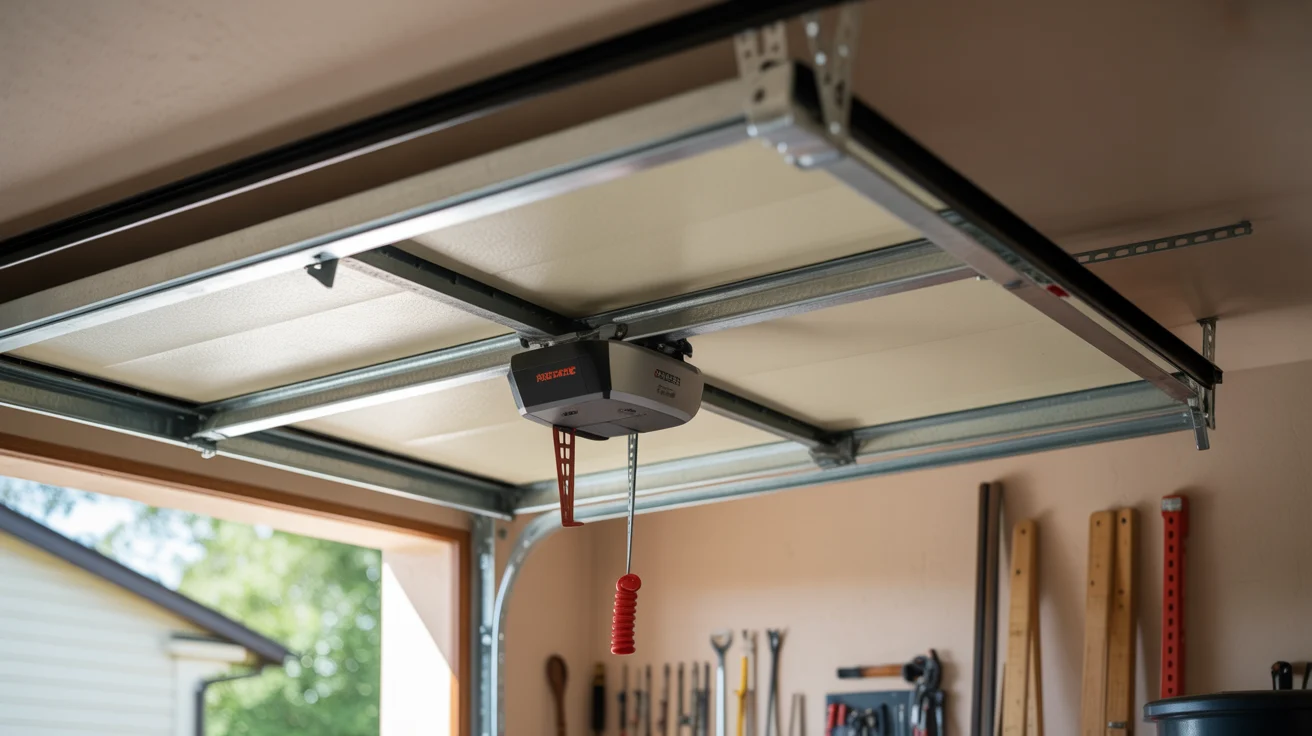
Look up at your garage door opener track. You’ll see a red cord hanging down from the trolley mechanism. This cord is usually within reach, but you might need a stepladder for higher ceilings.
Grab the handle at the end of the cord. Pull it down and toward the garage door, moving away from the motor unit. You should feel some resistance, then the cord will release. This disconnects the trolley from the automatic opener.
Step 3: Listen for the Click

After pulling the cord, you should hear a distinct clicking sound. This click tells you that the spring mechanism inside the release has gone back to its original position. The sound confirms that the system is ready to reconnect.
Look at the trolley on the track. You should see that the spring is no longer stretched out. The arm should look relaxed and in place. This visual check helps confirm everything is working correctly.
Step 4: Reconnect the Trolley

You have two ways to reconnect the system. The first and easiest method is to press your wall button or remote control. The motor will re-engage and automatically pull the trolley back into place.
If that doesn’t work, you can reconnect manually. Gently push or pull the garage door along its track. Move it just a few inches. The trolley should click back into the re-engaged position. You’ll feel and hear it lock into place.
Step 5: Test Your Garage Door

Press the button on your remote control. The door should start moving up smoothly. Let it go all the way up, then press the button again to bring it back down.
Watch and listen as the door operates. It should move steadily without jerking or making grinding noises. The door should stop cleanly at both the top and bottom positions. If something seems wrong, repeat the re-engagement steps.
Understanding the Emergency Release System

The red cord you pull is connected to a spring-loaded release mechanism. When you pull it, this mechanism disconnects the trolley from the opener carriage. Think of it like uncoupling train cars. The trolley is the part that moves along the track, and the carriage is what the motor pushes.
This system exists for safety and access reasons. During a power outage, you need a way to open your door manually. The release lets you do this without tools or electricity. Once you pull it, the door becomes free from the motor.
The spring inside the release handle is what makes re-engagement possible. When you pull the cord, the spring extends. When you let go, it retracts, and the mechanism is ready to lock back together. This design is standard across almost every garage door brand.
All modern garage door openers use this same basic system. The color of the cord might vary, but it’s usually red for visibility. The location and function remain the same whether you have a chain drive, belt drive, or screw drive opener.
When Do You Need to Manually Disengage Your Garage Door?

Power outages are the most common reason to use the manual release. When the electricity goes out, your automatic opener won’t work. Pulling the red cord lets you open the door by hand to get your car in or out.
Mechanical problems can also require manual operation. If your opener stops working due to a broken gear or motor issue, you’ll need to disconnect the door. This lets you continue using your garage while you wait for repairs. Emergencies sometimes demand quick access. If someone needs to get in or out fast and the remote isn’t working, the manual release provides immediate access. Some people also use it during routine maintenance tasks like lubricating the tracks or replacing weather stripping.
Common Re-Engagement Problems and Solutions
Sometimes the process of getting your garage door to re-engage doesn’t go smoothly. Here are the most frequent issues and how to fix them.
The Trolley Won’t Reconnect
First, double-check that your door is completely closed. Even a small gap can prevent proper reconnection. The trolley and carriage need to line up perfectly.
Try manually aligning the parts. Look at where the trolley meets the carriage on the track. Push the door slightly to help them meet. Sometimes they’re just millimeters apart and need a gentle nudge.
Check for anything blocking the track or trolley. Dirt, debris, or a bent piece of metal can stop the mechanism from engaging. Clean the area and try again.
No Click Sound When Pulling the Cord
You might be pulling in the wrong direction. Remember to pull toward the door, not toward the motor. The angle matters for the spring to release properly.
Inspect the spring mechanism on the release handle. If it looks damaged or broken, don’t force it. A broken spring means the release system needs repair before you can re-engage.
Some issues require professional help. If you’ve tried multiple times and nothing works, call a garage door technician. Forcing a damaged mechanism can make the problem worse.
Remote Control Doesn’t Re-engage the Motor
Check if the opener unit has power. Look for lights on the motor housing. If there are no lights, check your circuit breaker or plug connection.
Try resetting the opener. Unplug it from the outlet and wait 30 seconds. Plug it back in and test the remote again. This simple reset fixes many electronic glitches.
Your remote might just need new batteries. Replace them and try operating the door. If the remote still doesn’t work, you may need to reprogram it to the opener.
Door Moves But Feels Disconnected
This usually means partial Re-engagement. The trolley might be catching, but not fully locking in place. You’ll notice the door feels loose or the motor runs without moving the door properly.
Go through the re-engagement process again from the start. Make sure the door is closed, pull the cord correctly, and use the remote to reconnect. Sometimes a second attempt solves the issue.
If the problem continues after multiple tries, call for a professional inspection. There might be worn parts in the trolley or carriage that need replacement.
Safety Precautions For Garage Door Operation
Working with garage doors requires attention to safety. These doors are heavy and can cause serious injury if handled incorrectly.
- Never try to re-engage while the door is open or partially open
- Keep your hands and fingers away from pinch points between panels
- Make sure children and pets are out of the garage during the process
- Use a sturdy ladder with someone spotting you if the cord is high
- Stop immediately if you see damaged springs, cables, or bent tracks
- Don’t force any part that doesn’t move easily
- Wear safety glasses when working overhead
Remember that garage doors can weigh 200 to 400 pounds. Even with springs helping, that’s a lot of weight above your head. Treat every step with respect and caution. When in doubt, call a trained technician.
Maintaining Your Garage Door System
Regular care keeps your garage door working smoothly and makes re-engagement easier when needed.
- Lubricate the trolley and track every six months with garage door-specific lubricant.
- Check the emergency release cord monthly to make sure it moves freely
- Test the photo eye sensors by placing an object in the door’s path
- Listen for unusual sounds during normal operation
- Tighten loose bolts and screws on the track and door panels
- Clean the tracks to remove dirt and debris
These simple maintenance tasks take less than an hour every few months. They can prevent costly repairs and extend the life of your system. Mark your calendar to remind yourself, or do it when you change your clocks twice a year.
Conclusion
Now you know how to re-engage garage door systems like a pro. The process is straightforward when you follow the steps in order. Start with a closed door, pull the red cord correctly, listen for the click, and let the system reconnect. Most people can do this in under five minutes.
Safety should always come first. Take your time and don’t rush through the steps. If something doesn’t feel right or look correct, stop what you’re doing. Your well-being matters more than convenience.
Don’t hesitate to call a garage door professional if you run into problems. Some issues need expert attention and special tools. Regular maintenance will keep your system running well and make the re-engagement process smooth every time you need it.
Frequently Asked Questions
Can I re-Re-engage My Garage Door While It’s Still Open?
No, never try this. The door must be fully closed for safe re-engagement. An open door can drop suddenly when the motor Re-engages, causing serious injury or property damage.
What If My Garage Door Won’t Stay Closed After Re-engagement?
This often indicates broken or weak springs. The door may be out of balance. Stop using the automatic opener and call a repair technician to inspect the spring system.
How Often Should I Test My Emergency Release Cord?
Test it once a month to make sure it works smoothly. Pull the cord while the door is closed and check for the click. This helps you catch problems early.
Will Reengaging Damage My Garage Door Opener?
No, reengaging won’t cause damage when done correctly. The system is designed for this process. Just follow the proper steps with the door closed, and you’ll be fine.
What’s the Difference Between Wall-Mounted and Ceiling-Mounted Openers?
Wall-mounted units attach to the wall beside the door, while ceiling-mounted units hang from the garage ceiling. The method to re-engage garage door systems is basically the same for both types.