

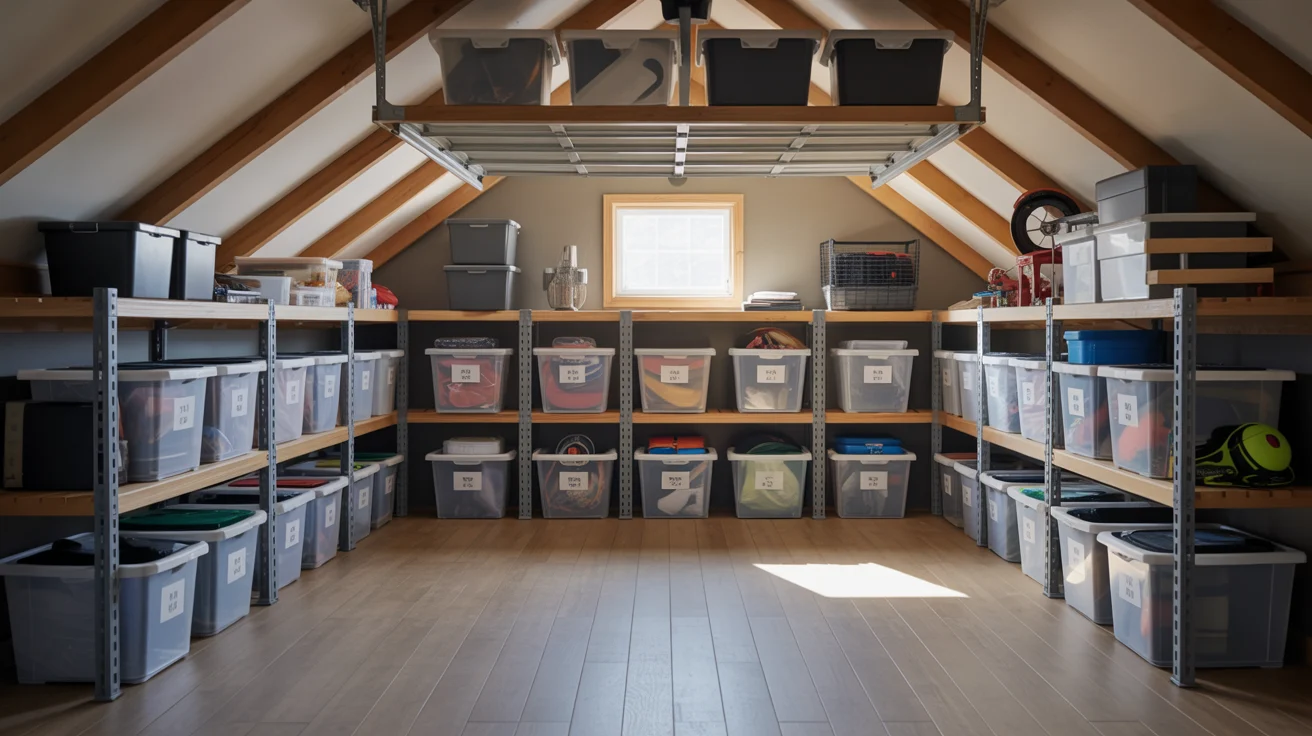
Most homeowners have a hidden storage goldmine right above their garage. This space sits empty while boxes pile up in closets and rooms feel cramped. Your garage attic could be the answer to your storage problems.
Smart garage attic storage ideas can free up space throughout your home. You can store seasonal items, sports gear, and other belongings you don’t use every day. This keeps them safe but out of the way.
In this guide, you’ll learn practical ways to set up storage in your garage attic. We’ll cover creative organization methods, safety tips, and what you need to know before you start.
You’ll also learn how to check if your space can handle the weight and how to keep your items in good condition.
Smart Garage Attic Storage Ideas to Maximize Your Space
The right storage setup can turn wasted space into an organized storage area. These garage attic storage ideas work for different needs and budgets.
1. Install a Custom Storage Deck or Platform

A solid floor makes your attic space much more useful. You can build a deck using plywood or OSB boards laid across the joists. This gives you a stable surface to walk on and place items safely.
Tongue and groove boards work even better because they lock together. This creates a stronger floor that won’t shift over time. Make sure to secure all boards properly so they can support the weight of your stored items.
2. Use Stackable Clear Storage Bins

Clear plastic bins let you see what’s inside without opening them. This saves time when you need to find something specific. You can spot your holiday lights or camping gear at a glance.
Stack these bins to make the most of your vertical space. Put heavier bins on the bottom and lighter ones on top. Label each bin on the side so you can read it when they’re stacked.
3. Add Wall-Mounted Shelving Systems

Custom shelves fit perfectly in awkward corners and spaces. You can build them to match the exact size and shape of your attic. This means no wasted space between the shelf and the wall.
Always attach shelves to wall studs, not just drywall. This is extra important if you plan to store heavy tools or equipment. Use a stud finder and heavy-duty screws to keep everything secure.
4. Install Ceiling-Mounted Bike Hooks

Bikes take up a lot of floor space, but hang nicely from the ceiling. Strong hooks attached to ceiling joists can hold several bikes. This keeps them off the ground and protected.
Make sure to check the weight limits of your ceiling joists first. Distribute bikes evenly across different joists instead of hanging them all in one spot. This prevents too much weight in one area.
5. Create Labeled Seasonal Decoration Zones

Give each holiday its own designated area in your attic. Put all Christmas items together, Halloween decorations in another spot, and so on. This makes it easy to find what you need when each season comes around.
Use colored bins or labels for each holiday. Red bins for Christmas, orange for Halloween, and pastels for Easter work well. Write the contents on each label so family members can help find things too.
6. Use Vacuum Sealed Bags for Soft Items

Vacuum bags compress clothing, linens, and stuffed toys to a fraction of their normal size. You can fit more items in less space. These bags also protect your belongings from dust and moisture.
The sealed plastic keeps pests away from your stored fabrics. This works great for winter coats, extra bedding, and kids’ old toys. Just make sure items are clean and dry before sealing them up.
7. Install Pegboard Systems for Sports Equipment

Pegboards turn vertical wall space into organized storage. Hooks and holders snap into the board wherever you need them. You can rearrange the layout as your needs change.
Hang frequently used items like tennis rackets, baseball gloves, and helmets where they’re easy to grab. This system works well for keeping sports gear sorted by family member or by sport.
8. Add Adjustable Modular Shelving Units

Modular shelves can be moved and reconfigured as your storage needs change. You can make shelves taller for big items or add more levels for smaller things. This flexibility is helpful as kids grow or their hobbies change.
These units fit well in odd-shaped spaces under sloped roofs. Adjust each shelf to different heights so nothing goes to waste. Metal shelving units are sturdy and can hold quite a bit of weight.
9. Install Pulley Lift Systems

A pulley system lets you raise heavy items to the ceiling with minimal effort. This works great for kayaks, large storage containers, or seasonal items you only need once a year. You pull a rope to lift and lower the platform.
This reduces strain on your back and makes storage safer. You won’t need to lift heavy boxes over your head anymore. The items stay secure up high until you need them again.
10. Create a Secret Access Door from the Interior Closet

Some homes have a closet that backs up to the garage attic space. You can cut through and add a door for indoor access. This means you don’t have to go outside to reach your stored items.
This hidden entry point keeps your attic storage convenient and out of sight. It’s especially helpful in bad weather or when you need something quickly. Just make sure the wall isn’t load-bearing before cutting.
11. Use Standing Racks for Ball Sports and Equipment

Vertical racks keep balls organized and off the floor. You can store basketballs, soccer balls, and footballs in one compact area. The rack holds each ball in place so they don’t roll around.
This prevents your sports equipment from getting damaged or dirty. It also makes it easy for kids to put things away after practice. Choose a rack with adjustable sections for different ball sizes.
How to Access Your Garage Attic Storage Safely?
You need a safe way to get up and down from your attic storage area. Climbing on a wobbly ladder or unstable boxes is dangerous. The right access solution makes using your storage space much easier.
Attic ladders come in several styles. Folding ladders are common and tuck away when not in use. Scissor ladders are sturdy and good for frequent trips. Fire-rated doors are available if your local codes require them.
Motorized lift systems work well if you use your attic storage often. Electric stairways with remote controls offer the most convenience. Look for safety features like high weight capacity, non-slip treads, and handrails on both sides.
How Much Weight Can Your Garage Attic Safely Hold?
Not all attics can hold the same amount of weight. Most garage attics are built to support between 10 and 40 pounds per square foot. You need to know your attic’s limit before adding storage.
Rafters and trusses work differently. Rafters are strong beams that can usually handle storage weight. Trusses are engineered frameworks that may not be designed for storage loads. Never cut or modify trusses without professional help.
Check for signs that your attic structure is weak. Look for sagging beams, cracks in wood, or visible damage. If you see any of these problems, talk to a structural engineer before storing anything up there. Always spread weight evenly across the floor instead of putting everything in one corner.
Insulation and Temperature Control for Garage Attic Storage
Insulation protects your stored items from extreme temperatures. Garages get very hot in summer and cold in winter. Without insulation, these temperature swings can damage what you store.
Good insulation keeps temperatures more stable year-round. This is important for electronics, photos, and anything that doesn’t do well in heat or cold. It also stops moisture from building up and causing mold on your belongings.
You have three main insulation choices. Spray foam seals completely but costs more. Fiberglass batts are affordable and easy to install yourself. Blown-in cellulose fills gaps well and works around obstacles.
If your attic already has some insulation, you can add more on top or work around what’s there. Better insulation also helps your garage use less energy for heating and cooling.
Why Ventilation Matters for Garage Attic Storage?
Good airflow keeps moisture from building up in your attic. Without it, humidity can cause mold and rot. Proper ventilation protects both your stored items and your garage structure.
Your garage attic needs air to move through it, Here’s what to consider:
- Install soffit vents along the edges and ridge vents at the peak
- Keep ventilation paths clear when placing storage items
- Don’t block the air from flowing from the bottom to the top
- Make sure insulation doesn’t cover vent openings
- Check that stored boxes aren’t pushed against vent areas
Good ventilation prevents wood rot and helps your roof last longer. It also keeps the air fresh, so stored items don’t get musty. You need to balance insulation with airflow for the best results.
Garage Attic Storage Rules, Permits, and Safety Requirements
Your local building department has rules about attic storage modifications. Following these codes keeps you and your family safe. It also prevents problems if you ever sell your home.
Check what your area requires before starting work:
- Find out if you need permits for structural changes
- Install smoke detectors if required by code
- Use fire-rated doors where the code says you must
- Follow electrical rules if you add lights or outlets
- Make sure there’s an emergency exit if needed
- Get inspections done at the right times
These rules exist for good reason. They prevent fires, collapses, and other dangers. Taking the time to do things right protects your investment and your family.
Conclusion
Your garage attic can become a valuable storage space with the right planning. These garage attic storage ideas give you many options to choose from. You can start small with bins and shelves or go bigger with decks and lift systems.
Safety should always come first when working with attic storage. Check your structure’s weight capacity before adding items. Make sure you have safe access and proper ventilation.
Start by having a professional assess your attic’s condition. This tells you what’s possible and what’s safe. Then pick the garage attic storage ideas that fit your needs and budget.
You can complete this project in stages if needed. Even small changes make a big difference in organizing your home. With proper planning, you’ll have a functional storage space that lasts for years.
Frequently Asked Questions
Can I Store Temperature-Sensitive Items in My Garage Attic?
Only if you add proper insulation and climate control. Garage attics get extremely hot and cold without these upgrades. Electronics, photos, and candles need stable temperatures to stay in good condition.
How Much Does It Cost to Convert a Garage Attic for Storage?
Basic setups with a ladder and flooring cost $500 to $1,500. Adding insulation, ventilation, and motorized access can run $3,000 to $8,000. Costs depend on your attic’s current condition and what features you want.
Do I Need a Permit to Install Attic Stairs in My Garage?
Most areas require permits for structural changes like adding stairs or cutting openings. Check with your local building department first. They’ll tell you what paperwork you need and what inspections are required.
What Items Should Never Be Stored in a Garage Attic?
Don’t store flammable liquids, paint, propane, or gasoline up there. Keep food away since it attracts pests. Valuable documents and irreplaceable photos should stay inside your climate-controlled home where they’re safer.
How Often Should I Inspect My Garage Attic Storage Area?
Check your attic storage space twice a year, in spring and fall. Look for water stains, pest droppings, damaged insulation, or sagging beams. Catching problems early prevents bigger issues and protects your stored belongings.