
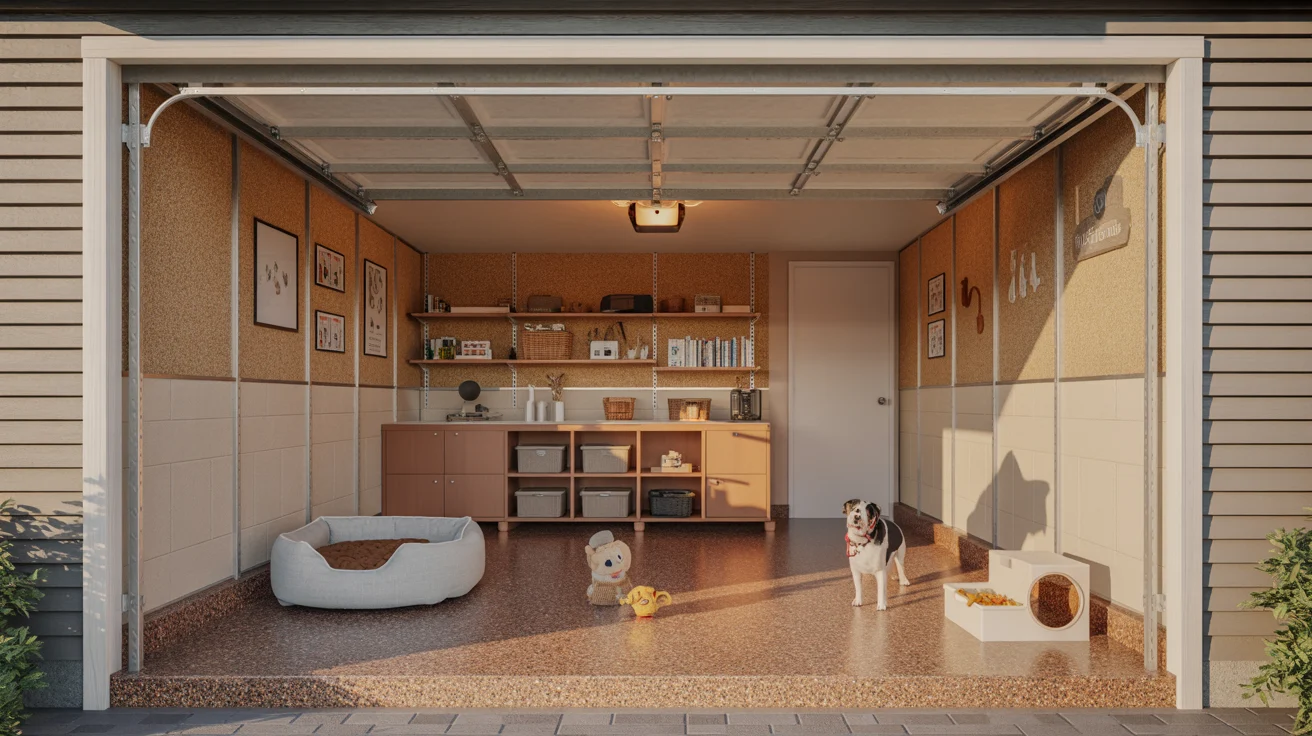
More pet owners are looking at their garages in a new way. That dusty storage space could become a safe, comfortable area for your furry friend. Converting your garage into a dog space makes sense for many families who need extra room or want better control over their pet’s environment.
The idea of a dog area in a garage has grown popular over the past few years. Pet parents want spaces that work for both humans and animals. Your garage might be sitting empty most of the time, so why not put it to good use?
This guide will show you practical ways to turn your garage into a space your dog will love. You’ll learn about safety tips, climate control, flooring options, and smart storage. We’ll cover everything you need to know to make this project a success.
Why Create a Dog Area in Your Garage?
Your garage offers a controlled space that solves many common pet problems. Unlike backyards with unpredictable weather and escape risks, garages give you full control over the environment. You can keep your dog safe from extreme temperatures, wild animals, and other outdoor dangers.
Most garages sit unused or just hold storage items and cars. This space has real potential for pet care needs. Modern garages are not like the cold, dark spaces from decades ago. With the right updates, they can be warm, bright, and comfortable for your four-legged family member.
A garage dog area works best for families who need a temporary space during work hours or bad weather. It’s also great for dogs who need a calm environment away from household chaos. However, this setup isn’t right for every situation.
Dogs still need regular outdoor time, social interaction, and shouldn’t stay in garages for very long periods. Think about your dog’s personality, your family’s schedule, and safety factors before making changes.
Dog Area in Garage Ideas to Set Up Your Space
These nine ideas will help you create a space that keeps your pet safe and happy. Start with safety, then add comfort features based on your budget and needs.
1. Pet Proof Your Garage for Safety First

Before anything else, remove all toxic chemicals, antifreeze, paint, and cleaning products from your dog’s reach. These items can poison pets even in small amounts. Store them in locked cabinets or move them to a different location completely.
Check your garage door sensors and make sure they work correctly. Sharp objects, nails, tools, and small items that dogs might swallow need to go into secure storage.
If your garage connects to other areas, install safety gates to control where your dog can go. Walk through the space at dog eye level to spot dangers you might miss from your height.
2. Install Smart Storage Solutions

Wall-mounted systems like slatwall panels keep leashes, collars, and toys off the floor and within easy reach.
You can hang everything you need at the right height. This keeps supplies organized and your floor clear for your dog to move around.
Lockable cabinets are a must for storing anything dangerous. Overhead racks work great for seasonal items you don’t use often.
Create one dedicated area just for pet supplies like food bags, treats, bowls, and grooming tools. When everything has its place, cleanup becomes much faster, and you’ll never hunt for supplies.
3. Upgrade Insulation and Climate Control

Dogs can’t handle extreme temperatures the way humans can. Your garage needs proper insulation to stay comfortable year-round. Without it, summer heat and winter cold will make the space unsafe for your pet.
Add insulation to walls, the ceiling, and garage doors. This keeps temperatures stable and reduces your heating and cooling costs.
Install a small heater for winter and a fan or portable AC unit for summer. Good airflow stops moisture buildup and keeps the air fresh.
Check the temperature regularly with a thermometer to make sure it stays in a safe range for dogs.
4. Choose Pet-Friendly Flooring

Bare concrete is cold, hard, and stains easily. Polyaspartic floor coatings create a smooth, sealed surface that’s simple to clean and resists scratches.
These coatings also prevent concrete dust that can irritate your dog’s paws and nose.
Add washable rugs or rubber mats in areas where your dog rests. These give cushioning and warmth while staying easy to maintain.
Look for materials that don’t trap odors or hair. If your dog has accidents, you want surfaces you can wipe clean in minutes without lasting damage or smells.
5. Improve Lighting for Comfort and Safety

Dark garages make it hard to spot hazards and keep the space clean. Natural light through windows or skylights makes a huge difference for both you and your dog.
Bright spaces feel more welcoming and help you notice any messes or problems right away.
Switch old bulbs to LED lights that give clear, bright coverage. Better lighting helps you see if your dog has knocked something over or gotten into something they shouldn’t.
Many dogs feel calmer in well-lit spaces, too. Good visibility means safer conditions and faster cleaning routines.
6. Design a Dedicated Pet Corner

Pick a quiet spot away from the garage door and vehicle traffic for your dog’s main area. This gives them a sense of security and routine. Set up comfortable bedding, like a dog bed or blankets, in this corner.
Place food and water bowls in a stable spot where they won’t tip over. Add your dog’s favorite toys and maybe an old shirt with your scent to help them feel at home.
Keep this area consistent so your dog knows where to go for rest and meals. A predictable setup reduces stress for pets adjusting to a new space.
7. Set Up a Dog Grooming and Washing Station

Garages make perfect grooming areas because you don’t have to worry about getting the house wet or dirty. Install a raised dog washing tub with steps or a ramp for easy access. This saves your back and makes bath time simpler for both of you.
Use water-resistant materials around the washing area to prevent damage from splashes. Mount a handheld shower attachment to rinse your dog thoroughly.
Store shampoo, brushes, towels, and other grooming supplies in nearby shelves or cabinets. Having everything in one spot turns grooming from a dreaded chore into a quick routine.
8. Create a Dog Walking Station

Set up a station near the door where you keep all walking gear together. Hang leashes, harnesses, and extra collars on hooks at a convenient height. This stops the morning scramble when you’re trying to get out for walks.
Add a small bench where you can sit while putting on shoes or wiping muddy paws. Keep a container of poop bags, treats for training, and a towel for rainy days.
A well-organized walking station makes it easier to stick to regular exercise routines. Everything you need is ready to grab as you head out.
9. Consider Crate Training Integration

Crates give dogs a den-like space where they feel secure, not trapped. If you use crate training, place the crate in your dog’s designated corner with the door left open. This lets your dog choose when to go inside for rest or quiet time.
Never use crates as punishment or leave dogs locked up for too long. The crate should be big enough for your dog to stand, turn around, and lie down comfortably.
Many dogs naturally seek out their crates when they want to nap or get away from activity. This matches their instinct to find cozy, protected spots for sleep.
Maintaining Your Dog-Friendly Garage
Setting up a dog area in the garage is just the start. Regular care keeps the space safe and clean for long-term use.
Let your dog get used to the garage slowly over several days or weeks. Start with short visits while you’re there, then gradually build up time.
This prevents anxiety and helps your pet see the garage as a positive space.
- Clean the floor and surfaces at least once a week to prevent odor buildup
- Check for new hazards like loose items, spills, or things your dog might have moved
- Test garage door safety features monthly to confirm they’re working
- Never leave dogs alone with vehicles running due to carbon monoxide danger
- Use pee pads or outdoor breaks for bathroom needs
- Set up a pet camera so you can check on your dog remotely
Stay consistent with your maintenance routine. A clean, safe space keeps both you and your dog happy.
Conclusion
Your garage can become a comfortable, secure space for your dog with the right changes. Focus on safety first by removing hazards and controlling the climate. Add comfort through good flooring, lighting, and a cozy pet corner.
The best dog area in the garage ideas match your specific situation. Think about your dog’s size, age, and personality. Consider your budget and how much time your dog will spend in this space. Not every garage needs every upgrade we covered.
Start with the basics like safety and temperature control. Add other features over time as your budget allows. Your dog deserves a space that meets their needs while giving you peace of mind. Take it step by step, and you’ll create a garage area that works for your whole family.
Frequently Asked Questions
Is It Safe to Keep My Dog in the Garage During Winter?
Yes, if you properly insulate the space and add heating. Keep temperatures between 60 to 75 degrees Fahrenheit. Use a thermometer to monitor conditions and never leave dogs in freezing temperatures without adequate warmth.
How Much Does It Cost to Make a Garage Dog-Friendly?
Basic safety updates cost $200 to $500 for storage and minor fixes. Mid-range projects with insulation and flooring run $1,000 to $3,000. Full renovations with climate control and washing stations can reach $5,000 or more, depending on size.
Can Puppies Be Left Alone in a Garage?
Puppies under six months need constant supervision and can’t control their bladders for long periods. Use crate training and limit alone time to two hours maximum. Older puppies may handle longer periods once properly trained and comfortable.
What Temperature Should I Maintain in My Dog’s Garage Area?
Keep the temperature between 60 to 75 degrees Fahrenheit for most dogs. Breeds with thick coats tolerate cooler temperatures, while short-haired dogs need more warmth. Never let the space drop below 45 or rise above 85 degrees.
Do I Need to Hire a Professional for Garage Modifications?
Simple projects like adding storage, rugs, and pet supplies are easy DIY tasks. Hire professionals for electrical work, major insulation jobs, plumbing for wash stations, or structural changes. This keeps your space safe and up to code.