
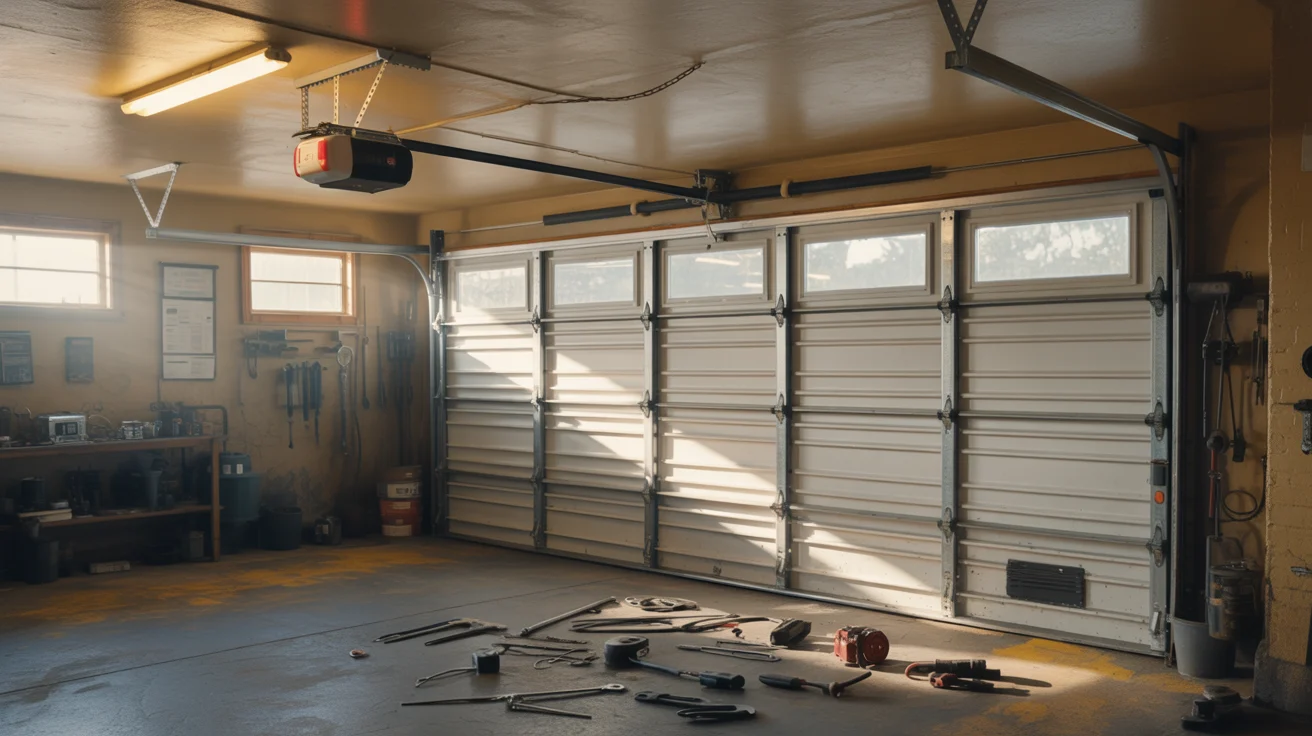
You press the button. The motor starts humming. But your garage door just sits there, completely still.
If you’re dealing with a garage door not opening but the motor running, you’re not alone. This problem frustrates thousands of homeowners every year.
The good news? Most cases have simple fixes that real people have already figured out.
In this guide, you’ll learn what’s really going on when your motor runs but nothing moves. We’ll share actual stories from homeowners who solved this exact problem.
You’ll get step-by-step checks you can do yourself in just a few minutes.
The solutions come from real experiences, not just theory. Many homeowners have been exactly where you are right now, and they found their way through it.
What’s Actually Happening When Your Motor Runs But Nothing Moves

When you have a garage door not opening but the motor is running, two main things could be wrong. Either the opener isn’t connected to the door anymore, or something is blocking the door from moving.
Think of it like a car engine running in neutral. The motor works fine, but the power doesn’t reach the wheels.
One homeowner described it perfectly: “I could hear the motor humming, but my door wouldn’t budge an inch.”
The first step is figuring out if the problem is with the opener or the door itself. This simple check saves you time and money. Look at the red emergency release cord hanging from your opener. If someone pulled this cord recently, the opener disconnected from the door.
This is actually the most common reason people find when searching online forums about this problem.
Real Stories: What Fixed It for Other Homeowners

Let’s look at what actually worked for people dealing with this frustrating issue.
One homeowner had a 22-year-old Genie Intellicode opener that suddenly stopped working. The motor ran fine, but the door stayed closed.
They started by watching if the drive mechanism moved at all when they pressed the button. It did move, which meant the motor and gears worked. The problem was the connection between the opener and the door.
The fix was simple. They reconnected the trolley that links the opener to the door. After pulling the red cord to release it, they moved the trolley back to the closed position.
Then they pushed the wall button, and the opener grabbed onto the trolley again. The whole repair took less than five minutes.
When the Drive System Stops Moving
Sometimes the chain, belt, or screw that moves your door fails. You’ll notice the motor runs, but the drive system doesn’t move at all.
One homeowner found stripped gears inside their opener after it stopped working. The plastic gears had worn down over the years of use.
This happens more often with openers that are 10 years old or older. The motor spins, but it can’t turn the gears that move the chain or belt.
The Manual Test That Reveals Everything
Here’s a test that helps you figure out exactly what’s wrong. Pull the red emergency release cord to disconnect the opener. Then try lifting your garage door by hand.
If the door lifts easily and stays up when you let go halfway, your springs work fine. The problem is probably with the opener. But if the door feels super heavy or won’t stay up, you likely have broken springs.
One person shared: “This test saved me from replacing the wrong part. I almost bought a new opener when I really needed new springs.”
Hidden Issues Community Members Found

Sometimes the real problem hides behind the obvious symptoms. Here’s what people learned after digging deeper.
Broken Springs Masquerading as Opener Problems
This is huge. Many people think their opener is broken when really, their springs failed. Look at the springs above your door. Torsion springs run along a bar above the door. Extension springs hang on the sides. If you see a gap in a spring or one side looks different from the other, that spring is broken.
Springs usually show warning signs before they break completely. Your door might get harder to lift manually. It might close too fast. Or you might hear a loud bang one day. That bang is a spring breaking.
Never try to replace garage door springs yourself. Multiple forum members warn about serious injuries from attempting this repair. The springs hold hundreds of pounds of tension.
Track and Roller Problems
Your door runs on metal tracks with rollers that slide up and down. If something gets stuck in the track or if the track bends, your door won’t move even when the motor runs.
One homeowner spent hours trying to figure out why their garage door was not opening. The motor running situation kept happening. They finally found a small pebble wedged in the track. Once they removed it, everything worked again.
Check your tracks for rocks, sticks, dirt buildup, or dents. Also, look at your rollers. If they’re worn out or one comes off the track, that stops the door cold.
The Weight Mismatch Problem
Did you recently replace your garage door or opener? Sometimes a new door weighs more or less than the old one. The opener’s force settings might not match anymore.
Some openers let you adjust how hard they pull. Check your owner’s manual for force adjustment dials or settings. Several forum members fixed their problem by tweaking these settings.
But be careful. If you set the force too high, you could hurt someone if the door closes on them. When you’re not sure about adjustments, call a professional.
Less Common But Important Scenarios

These issues don’t happen as often, but they’re worth knowing about.
Chain Tension Issues
Your opener’s chain needs the right amount of tension. Not too tight, not too loose. When someone over-tightens the chain during maintenance, it can grind down the gears over time.
How do you know if this is your problem? Listen closely when the motor runs. You might hear a grinding or clicking noise. The chain might look too tight with no sag in the middle. Garage door technicians say you should see about half an inch of sag in the chain when the door is closed.
Cable and Pulley Failures
Cables work with your springs to lift the door. They run along the sides of your door and over pulleys. Look for frayed cables, cables that came off the pulley, or cables hanging loose.
This is dangerous. Multiple homeowners warn that broken cables can cause the door to fall suddenly. If you see cable damage, don’t use your door at all. Get professional help right away. A falling garage door can cause serious injuries or damage your car.
Jammed Emergency Release
This doesn’t happen often, but it’s really annoying when it does. The emergency release mechanism can get stuck in the disconnected position.
You’ll know this is the problem if the red cord won’t pull back up after you release it. Or the trolley won’t reconnect when you press the button. The mechanism might be bent, rusted, or jammed with debris. This repair usually needs an expert because you have to take apart the trolley assembly to fix it.
Age Matters: What the Community Learned About Opener Lifespan

Most garage door openers last between 10 and 15 years with regular use. After that, parts start wearing out faster.
When your opener is near the end of its life, you face a choice. Do you repair it or replace it? Many people in the situation from Document 2 chose to replace their 22-year-old opener.
Parts for older models get harder to find. Plus, newer openers have better safety features and smart home connections.
Signs your opener is dying include frequent breakdowns, loud grinding noises that don’t go away, and trouble opening or closing every time you use it. When repairs cost more than half the price of a new opener, replacement makes more sense.
Safety Warnings From Those Who Learned the Hard Way
Garage doors have high-tension components that can cause serious injury. The springs hold enough force to break bones or worse.
Even professional technicians use special tools and take extreme safety steps when working with springs and cables.
Here’s what the community agrees you should never do yourself:
- Replace or adjust torsion springs
- Fix broken cables
- Repair bent tracks that are under tension
- Work on the door when it’s in a raised position without proper support
- Try to force a stuck door open or closed
Many insurance companies classify garage door work as high risk. Some policies won’t cover injuries from DIY garage door repairs. Know when to step back and call someone who has the right training and tools.
Conclusion
When you have a garage door not opening but the motor is running, the cause is usually a disconnected trolley or a mechanical failure somewhere in the system. Most problems fall into a few categories: opener issues, broken springs, track problems, or worn-out parts.
Start with the simple checks first. Look at the emergency release cord. Try the manual lift test. Check for obvious obstructions or damage.
Some fixes are easy enough for most homeowners. Reconnecting the trolley or clearing debris from the tracks takes just a few minutes. But other repairs require professional help. The community strongly agrees, don’t risk your safety trying to fix high-tension components like springs and cables. When you’re not sure what to do, calling a garage door technician is always the smart choice.
Frequently Asked Questions
Can I Still Use My Garage Door If the Opener Motor Is Running But Nothing Happens?
You can operate the door manually by pulling the emergency release cord. Only do this if the door lifts easily by hand. If it feels heavy, the springs might be broken, and using it is dangerous.
How Do I Know If My Garage Door Opener Gears Are Stripped?
Listen for the motor running without the chain or belt moving. You might hear grinding or clicking sounds. Open the opener cover and look at the plastic gears. Stripped gears have worn or broken teeth.
Will Lubricating the Chain Fix a Motor That Runs Without Opening the Door?
Lubrication helps with squeaking and slow operation, but it won’t fix a garage door not opening or a motor running problem. Lubrication can’t repair stripped gears, broken springs, or disconnected parts. Regular lubrication prevents some problems, though.
Should I Replace My 20-Year-Old Garage Door Opener or Try to Repair It?
Consider the repair cost versus the new opener price. Parts for 20-year-old models are hard to find and expensive. Newer openers have better safety features, quieter operation, and smartphone controls. Replacement usually makes more sense for openers this old.
What’s the Difference Between the Door Being Too Heavy and the Spring Being Broken?
Do the 115-pound lift test. Disconnect the opener and lift the door manually. It should lift easily and stay up halfway. If it drops down or feels like it weighs more than 15 pounds, the springs are broken or weak.