
You’re running late for work, and suddenly your garage door won’t budge. You look up and see a twisted cable hanging loose. This frustrating problem happens to thousands of homeowners every year, but the good news is that you don’t need to panic or empty your wallet.
Garage door cables work with your springs to lift and lower your door smoothly. Most people think they need to call an expensive repair service right away, but many cable problems can be fixed at home with basic tools.
In this guide, you’ll learn how to fix a garage door cable yourself and save hundreds of dollars in repair costs. We’ll cover quick fixes for common issues, walk through a complete repair process step by step, and explain when you should repair versus replace.
Quick Fixes for Common Garage Door Cable Problems

Before you start a full cable replacement, check if your problem needs a simpler fix. Many cable issues can be solved in just a few minutes without removing anything.
Cable Slipped Off the Drum
If your garage door suddenly hangs crooked or refuses to move, check the cable drums at the top corners of your door.
You might see that one cable has unwound and slipped off its drum. This happens when springs lose tension or when someone tries to open the door manually while it’s engaged with the opener.
You can often rewind a slipped cable without replacing it. First, release the tension on your springs completely. Then, manually wind the cable back onto the drum in neat, tight loops. Make sure each wrap sits next to the previous one without overlapping.
Once the cable is back on the drum, restore the spring tension slowly. This fix works when the cable itself isn’t damaged.
The Cable Came Off the Pulley
Extension spring systems use pulleys to guide the cables. Sometimes these cables jump off the pulley wheels due to worn bearings or misaligned tracks. Look at the pulleys on both sides of your door to see if the cable is running through the groove properly.
To fix this, you need to release all tension from the springs first. Never try to adjust cables while the springs are tight. Once the tension is off, guide the cable back into the pulley groove.
Check that the pulley wheel spins freely and isn’t bent or cracked. If the pulley is damaged, replace it before putting the cable back on. A worn pulley will just cause the cable to slip off again soon.
When to Replace vs. Repair
Not every cable problem can be fixed by simply repositioning it. Look closely at your cables for signs that they need replacement instead of repair.
Fraying is a major red flag. If you see broken wire strands sticking out from the cable, it’s time for a new one.
Rust and oxidation also mean your cables are near the end of their life. Rusty cables can snap without warning, which is dangerous. Check the full length of each cable, not just the visible parts.
If you see significant wear, damage, or corrosion anywhere on the cable, replace it rather than trying a quick fix. The small cost of new cables isn’t worth the risk of injury or property damage.
7 Step Process to Fix Your Garage Door Cable
Learning how to fix a garage door cable completely means following a careful process. This method works for both extension and torsion spring systems with some small differences.
Step 1: Disconnect and Secure the Door

Safety comes first when working on garage doors. Unplug your garage door opener from the wall outlet so nobody can accidentally activate it while you’re working.
Pull the emergency release cord that hangs from the opener trolley. This disconnects the door from the automatic opener.
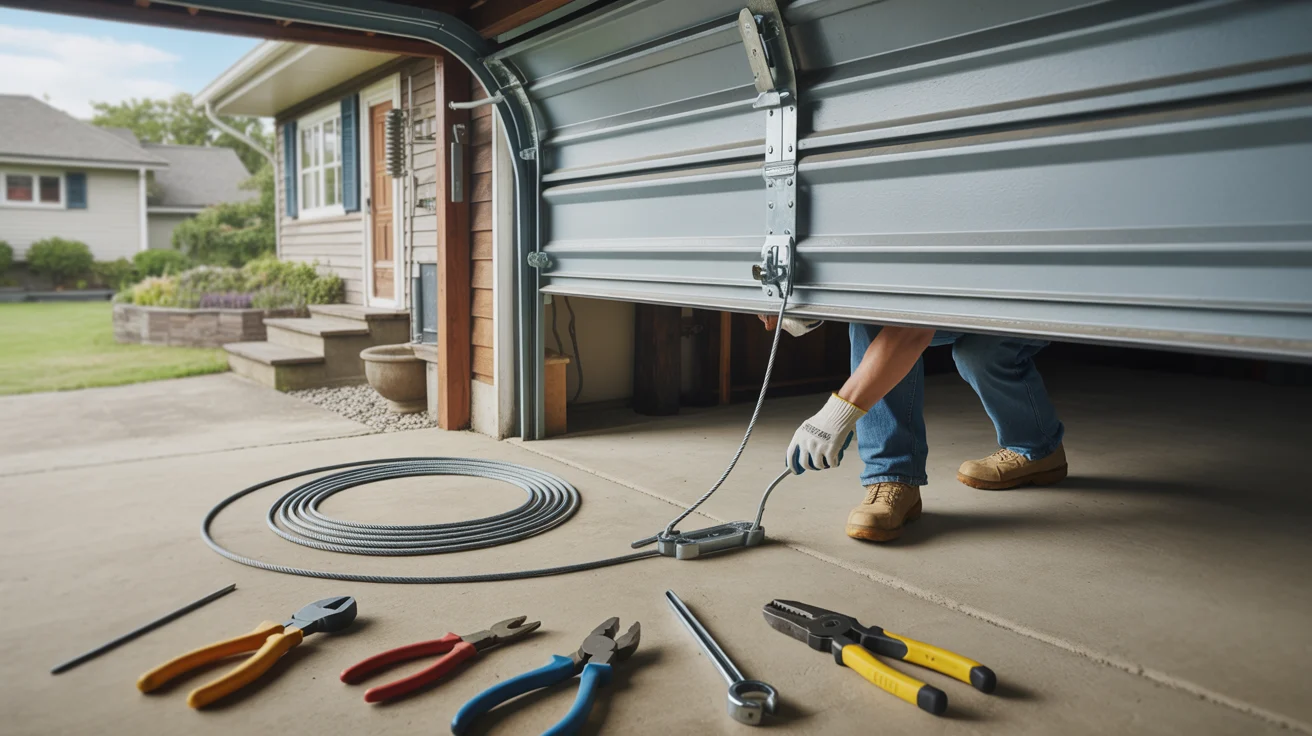
Now you need to secure the door so it can’t fall. Open the door about three to four feet off the ground. Clamp a pair of vice grips or locking pliers onto the track just below one of the bottom rollers on each side.
This holds the door in place while you work. Make sure these grips are tight and secure before moving to the next step.
Step 2: Release Spring Tension

This is the most dangerous step, so take your time and stay focused. Find the set screws on the winding cone at the end of your torsion spring. Use a wrench to loosen these screws by a quarter turn, but don’t remove them completely yet. Insert two winding bars into the holes on the winding cone.
Keep both hands on the winding bars at all times. The spring will want to unwind with a lot of force. Turn the cone slowly, letting it unwind one quarter turn at a time.
Count how many turns you make so you can restore the same tension later. Keep going until you feel no more resistance and the spring is completely loose.
Step 3: Remove the Damaged Cable

Once all spring tension is gone, you can safely remove the old cable. Loosen the set screws on the cable drum where the cable attaches at the top.
Carefully unwind the cable from the drum by turning it. Keep track of how the cable was positioned.
Follow the cable down to the bottom bracket at the floor level. There should be a lag screw holding the cable to the bracket on the door jamb.
Remove this screw with a socket wrench. Pull the cable out of the bottom bracket. If the cable is stuck or kinked, you may need to wiggle it free carefully.
Step 4: Install the New Cable

Take your new cable and start at the bottom. Thread the end through the bottom bracket and secure it with the lag screw.
Make sure the cable is attached firmly and won’t slip out. Some brackets have a slot, and others have a hole. Match what the old cable did.
Feed the cable up through any pulleys it needs to pass through. For extension springs, make sure they go through the pulley wheel properly.
For torsion systems, route it straight up to the cable drum. Keep the cable straight and untwisted as you work your way up the track.
Step 5: Secure Cable to Drum

At the top, find the slot or hole in the cable drum where the cable attaches. Insert the cable end into this opening.
Some drums have a set screw hole that lines up with the cable slot. Begin winding the cable onto the drum by turning it counterclockwise.
Wind the cable in neat, tight wraps around the drum. Each loop should sit directly next to the previous one with no gaps or overlaps.
Keep winding until the cable is taut and all the slack is taken up. Tighten the set screws on the drum to hold the cable in place, but don’t crank them down too hard or you’ll damage the cable.
Step 6: Repeat for the Other Side

Before you move to the other side, use a vice grip on the metal shaft to hold the drum you just finished.
This keeps everything in position while you work on the opposite side. When learning how to fix a garage door cable, many people make the mistake of letting the first side slip while fixing the second.
Follow the same steps on the right side of the door that you did on the left. Remove the old cable, install the new one, and secure it to the drum.
Take your time and don’t rush through this side just because you’ve done it once already.
Step 7: Restore Spring Tension and Test

Now it’s time to put tension back on your springs. Use your winding bars to turn the cone clockwise. Add tension slowly at quarter-turn increments. Count your turns to match what you removed earlier. Most garage doors need about 30 quarter turns, but this varies by door weight and spring size.
Remove all the locking pliers and vice grips from the tracks. Grab the emergency release cord and pull it toward the door until you hear two clicks.
This reconnects the opener trolley. Plug your opener back in. Test the door by raising and lowering it several times. The door should move smoothly and evenly on both sides.
Tools and Safety Equipment
Having the right tools makes learning how to fix a garage door cable much easier and safer. Don’t try to improvise with tools that aren’t meant for this job.
The wrong equipment can lead to injuries or damage to your door.
- Vice grip or locking pliers (at least two pairs)
- Replacement cables sized correctly for your door height
- Winding bars (two steel bars, not screwdrivers)
- Wrenches and socket set
- Ratchet with various socket sizes
- Step ladder tall enough to reach the top of your door comfortably
- Heavy work gloves to protect your hands
- Safety glasses to shield your eyes from debris
- Proper work boots with closed toes
- Remove loose clothing, jewellery, watches, and anything that could get caught.
The most important safety tip is to watch for sharp edges on the cables and metal parts. New cables are stiff and can have pointed wire ends that will cut you.
Old cables often have broken wire strands sticking out like needles. Treat all cables with respect and assume they can cut you.
Professional Tips for Garage Door Cable Maintenance
Regular maintenance prevents most cable problems before they start. Set a reminder to inspect your garage door system at least once per year.
Look for early warning signs so you can fix small issues before they become big repairs.
- Rust or corrosion on the cable surface
- Fraying or broken wire strands poking out
- Broken individual wires within the cable bundle
- Heavy oxidation that makes the cable look crusty
- Cables that look thin or worn in spots
- Weather affects cables more than you might think. Humidity causes rust. Extreme cold makes metal brittle. Hot summers can dry out any lubrication.
- Check your pulley bearings by spinning the wheels. They should turn smoothly and quietly.
- Look at your track alignment. Crooked tracks put extra stress on cables.
- Keep cables lightly lubricated with garage door lubricant spray once or twice per year.
Catching problems early extends cable life and keeps your door safe. A cable that looks slightly worn today might break next month. Replace cables at the first sign of serious wear.
Conclusion
Now you know how to fix a garage door cable from start to finish. We covered quick fixes for slipped cables, the complete seven-step replacement process, and the tools you need to do it safely. This repair might seem intimidating at first, but thousands of homeowners handle it successfully every year.
You can save several hundred dollars by doing this repair yourself instead of calling a technician. The job typically takes two to three hours for someone doing it for the first time. With practice, you can finish even faster.
Make garage door maintenance part of your regular home care routine. A quick monthly visual check and an annual detailed inspection will help you spot problems early. Take care of your garage door, and it will take care of you for many years to come.
Frequently Asked Questions
Can I Fix Just One Cable, Or Do Both Need Replacing?
Always replace both cables at the same time, even if only one is broken. Cables wear at the same rate, so the second one will likely fail soon. Balanced cables keep your door operating smoothly and safely.
What Size Cable Does My Garage Door Need?
Cable length depends on your door height. A seven foot tall door needs an eight and a half foot cable. Eight foot doors need nine and a half foot cables. Measure your door and buy cables accordingly.
Why Does My Garage Door Cable Keep Coming Off?
Cables come off repeatedly due to worn cable drums, damaged pulleys, or spring problems. Check these components for damage. Misaligned tracks also cause cables to slip off. Fix the root cause of repeated failures.
How Long Do Garage Door Cables Typically Last?
Most garage door cables last seven to ten years with normal use. Heavy use, harsh weather, and poor maintenance shorten this lifespan. Inspect your cables yearly and replace them when you see signs.
Is It Dangerous To Work On Garage Door Cables Myself?
The main danger comes from spring tension, not the cables themselves. If you release spring tension properly and follow safety steps, cable repair is safe for DIY. Call professionals if you’re unsure about spring work.