
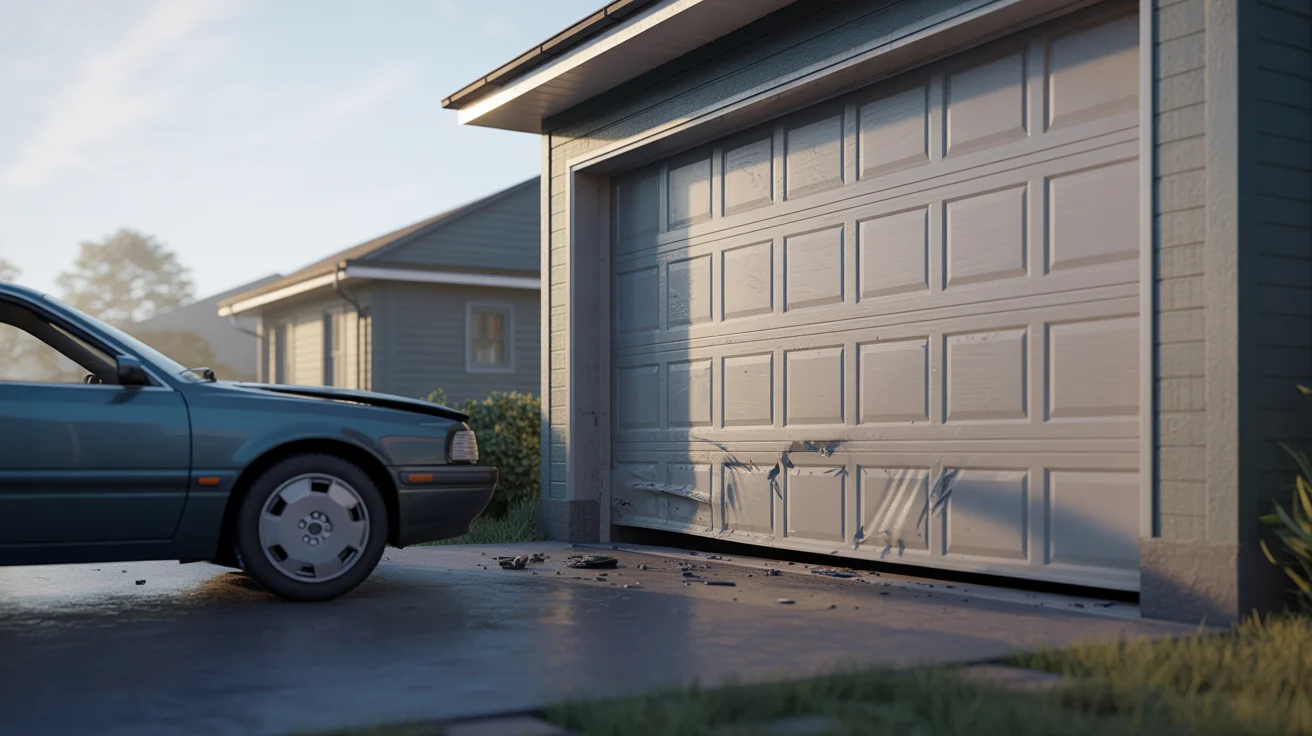
You backed out in a rush, and now you hear that terrible crunch. You just hit your garage door, and panic sets in immediately.
Take a deep breath. This happens more often than you think, and the good news is that it can be fixed. Thousands of drivers face this same problem every year, and most garage doors can be repaired without breaking the bank.
This guide will walk you through what to do right after the accident, how to check the damage, when to call for help, and how to prevent this from happening again. You’ll also learn about repair costs and what your insurance might cover. By the end, you’ll know exactly how to handle this stressful situation safely and smartly.
What to Do Immediately After You Hit Your Garage Door
When you hit your garage door, the next few minutes matter. Taking the right steps now can prevent more damage and keep everyone safe.
Check for Injuries and Put Your Vehicle in Park

Before you do anything else, make sure you and your passengers are okay. Even a minor collision can cause injuries, so check everyone quickly. If anyone feels hurt or shaken up, get medical help right away.
Once you know everyone is safe, put your car in park and turn off the engine. Set the parking brake to keep your vehicle from moving.
This keeps the situation from getting worse and gives you a stable starting point to check the damage.
Keep the Garage Door Closed

After you hit your garage door, do not try to open or close it again. A damaged door can have broken springs, bent tracks, or loose parts that make it dangerous to move. Running the opener on a broken door can cause way more damage to the motor and other parts.
If the door is off its tracks, it could fall suddenly and hurt someone or damage your car further. Leave it in whatever position it stopped in. Safety comes first, and a professional needs to look at it before anyone touches it again.
Inspect and Document the Damage

Walk around and look at both the inside and outside of the door carefully. Check if any panels are dented, cracked, or pushed in. Look at the metal tracks on both sides to see if they’re bent or twisted.
Check the rollers, springs, cables, and hinges for any signs of damage. Take lots of photos from different angles, including close-ups of any broken or bent parts.
Write down everything you see wrong. This documentation will help when you talk to repair companies and insurance providers later.
Attempt Manual Operation (Only If Safe)

If the damage looks very minor, like a small dent with no bent parts, you might be able to test the door manually.
Pull the red emergency release cord to disconnect the opener, then try lifting the door slowly by hand. If it moves smoothly without catching or grinding, the damage might be mostly cosmetic.
However, if you see any bent tracks, broken springs, or if the door won’t budge, do not force it. Garage doors are heavy and have parts under high tension. Trying to move a badly damaged door can cause serious injuries or create more expensive problems.
Call a Professional Repair Company

Getting a pro to look at the door is the smartest move you can make. Trained technicians know how to spot problems that aren’t obvious and can fix them safely. They have the right tools and replacement parts to get your door working again.
When you call, tell them exactly what happened and describe the damage you can see. Let them know if the door is stuck open, closed, or somewhere in between.
Ask about their availability and whether they charge for the initial inspection. Most companies will come out quickly for emergency repairs.
Common Damage Types from Hitting a Garage Door
The type of damage you’ll see depends on how hard you hit the door and where the impact happened. Here are the most common problems.
Surface Scratches and Dents

Light impacts often leave scratches in the paint or small dents in the panels. These are mostly cosmetic issues that don’t affect how the door works. You might be able to fix minor scratches with touch-up paint.
Small dents in steel or aluminum panels can sometimes be popped out or filled. While these don’t stop the door from working, they can make your home look less appealing and might lower its value.
Broken or Bent Panels

The bottom panel takes the most hits because that’s usually where cars make contact. A cracked or severely bent panel will need to be replaced. Sometimes you can replace just one panel instead of the whole door.
Older doors or custom designs might have panels that are hard to find. If your door is old or the manufacturer doesn’t make parts anymore, you might need to replace the entire door to get a good match.
Misaligned Rollers and Off-Track Issues

When you hit your garage door hard, the impact can knock the rollers out of their tracks. This makes the door hang crooked or get stuck partway. The rollers might also break or come loose from their brackets.
An off-track door is dangerous and should never be used. The door could fall without warning, crushing anything underneath it. The cables might snap, and the springs could release with enough force to cause serious harm.
Damaged or Bent Tracks

Strong impacts can bend the vertical tracks that guide the door up and down. Even a small bend can make the door stick or operate roughly. Bent tracks put extra strain on the opener motor and can wear out other parts faster.
If the tracks are badly damaged, they’ll need to be replaced completely. Sometimes technicians can straighten minor bends, but severe damage requires new tracks to make sure the door works safely.
Should You Repair or Replace Your Garage Door?
Deciding between repair and replacement depends on several factors. Look at how bad the damage is and how old your door is right now.
If the damage is limited to one or two panels and the tracks and mechanical parts are fine, repair usually makes sense.
This is true for newer doors that still have many years of life left. Getting replacement panels and fixing the affected area costs less than buying a whole new door.
However, if the door is already 15 to 20 years old, has rust problems, or needs major structural work, replacement might be smarter.
When repair costs add up to more than half the price of a new door, starting fresh often makes more financial sense. A new door also comes with a warranty and better energy efficiency.
Understanding Garage Door Repair Costs and Insurance
Knowing what affects repair costs and what insurance covers helps you plan your budget. Here’s what you need to know.
What Influences Repair Costs
The biggest factor is what got damaged. Replacing a single panel might cost $150 to $400, while fixing bent tracks or broken springs costs $200 to $500. If you need multiple repairs, costs add up quickly.
Your door’s age and material also matter. Custom wood doors cost more to fix than standard steel doors because parts are harder to find. If your door is an unusual size or an old model, expect to pay more for special-order parts and extra labor time.
Will Your Insurance Cover the Damage?
Your insurance might cover garage door damage if it happened during a covered event. Most policies include collision damage from vehicles. Check your policy details or call your insurance agent to find out what’s covered under your specific plan.
Your auto insurance could pay for damage to both your car and the garage door if you have collision coverage. You’ll need to file a claim and pay your deductible first. Think about the total repair cost versus your deductible amount before filing. Sometimes paying out-of-pocket costs less than the increase in premiums after a claim.
Preventing Future Garage Door Accidents
Once your door is fixed, you’ll want to avoid going through this again.
These simple steps can help prevent future accidents:
- Wait for full door opening: Always confirm the garage door is completely up before backing out. Give yourself an extra 10 seconds instead of rushing.
- Install parking guides: Use tape, painted lines, or rubber stops on your garage floor to show exactly where to park and maintain a safe distance from the door.
- Use depth markers: Hang a tennis ball from the ceiling so it touches your windshield when you’re in the correct position.
- Check before moving: Build a habit of looking at the door in your mirrors before you shift into reverse, even when you’re in a hurry.
- Upgrade to smart openers: Consider smart garage door openers with phone alerts that warn you if the door isn’t fully open or closed.
Conclusion
Hitting your garage door feels awful in the moment, but remember that this problem has a solution. The most important things are making sure everyone stays safe and getting professional help to fix the damage correctly. Trying to repair it yourself or ignoring the problem only makes things worse and more costly.
Don’t try to force a damaged door to work, and don’t put off calling a repair company. Quick action prevents small problems from turning into big, expensive ones that could affect your home’s security.
With proper repairs and some smart prevention habits, you can get back to normal and avoid this headache in the future. Take what happened as a learning moment, fix what’s broken, and move forward with more confidence.
Frequently Asked Questions
How Long Does Garage Door Repair Take After a Collision?
Simple repairs like replacing one panel or realigning tracks usually take 2 to 4 hours. More complex damage involving multiple parts or off-track doors might need a full day. Emergency services can often come out the same day you call.
Can a Garage Door Fall If It’s Been Hit by a Car?
Yes, a damaged garage door can fall without warning. Broken springs, bent tracks, or damaged cables can all cause the door to drop suddenly. This is why you should never use or stand under a door after an accident until a professional checks it.
Will Hitting My Garage Door Void the Warranty?
Most warranties don’t cover damage from accidents or improper use. They typically only cover defects in materials or workmanship. Check your warranty paperwork or contact the manufacturer to see what’s covered. Collision damage usually isn’t included under standard warranty terms.
Should I File a Police Report After Hitting My Garage Door?
You generally don’t need a police report for hitting your own garage door on your own property. However, if you need to file an insurance claim, some companies might ask for documentation. Call your insurance provider first to see what they require for your specific claim.
How Can I Tell If My Garage Door Is Safe to Use After Being Hit?
Don’t use the door if you see bent tracks, broken springs, loose cables, or if it won’t open smoothly. If panels are cracked or the door hangs crooked, keep it closed. Only a trained technician can properly assess safety after impact damage.